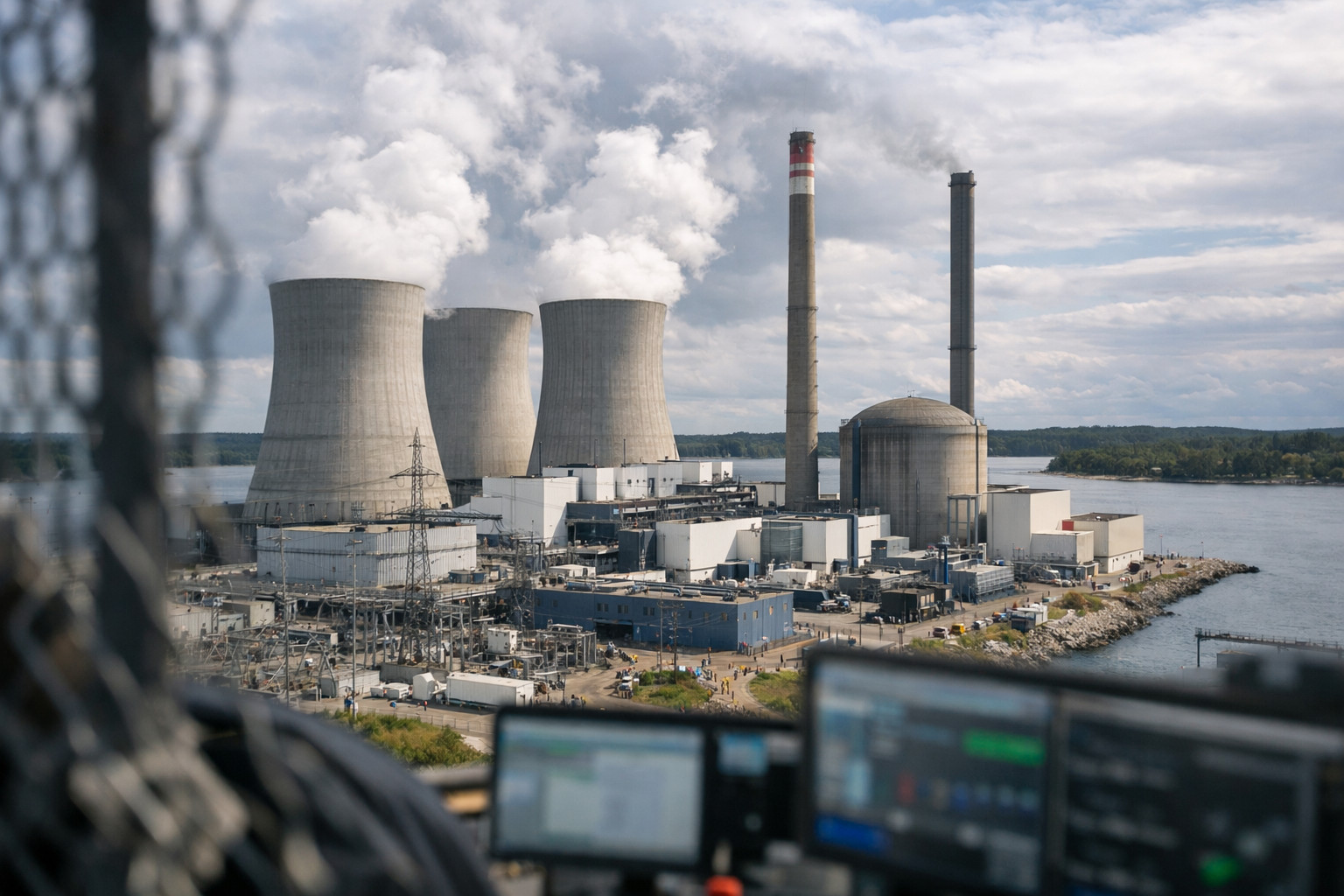
Swedish authorities have revealed that a thermal power station in western Sweden was targeted by a failed cyber attack linked to Russian intelligence services in the spring of 2025. The country’s civil defence minister stated that built-in security mechanisms prevented the intrusion from causing serious disruption. Security services identified an individual involved in the attempt and established connections to Russian military and intelligence structures.
Attack details and official response
The attempted breach targeted control systems at the plant but was neutralised by existing protective measures. Civil Defence Minister Karl-Oskar Bolin confirmed the incident had been contained without operational damage or safety compromises. Swedish security services conducted a forensic investigation that traced the attack’s origins. The government disclosed these findings following a comprehensive assessment of the cyber threat landscape. Officials emphasised that critical infrastructure operators maintained continuous vigilance against such threats.
Russian connections and proxy tactics
Investigators established that the individual responsible for the attack had documented ties to Russian security agencies. The operation followed patterns associated with Kremlin-aligned hacker groups that target European energy infrastructure. Moscow frequently employs proxy collectives to conduct cyber operations while maintaining plausible deniability about state involvement. This approach allows Russia to test Western defences without triggering immediate collective defence responses from alliances like NATO. The identification of specific Russian links demonstrates the persistent threat to critical national infrastructure from state-sponsored actors.
Geopolitical context and hybrid warfare
The targeting of Swedish energy infrastructure occurs against the backdrop of the country’s NATO accession and consistent military support for Ukraine. Security analysts view such cyber attacks as components of hybrid warfare designed to undermine societal stability and test response mechanisms. By demonstrating vulnerabilities in essential services, Moscow aims to erode public confidence in government institutions. The selection of energy targets provides potential leverage for political coercion during international disputes. These operations form part of broader Russian efforts to counteract Western unity against its actions in Ukraine.
European pattern and security implications
Similar incidents targeting critical infrastructure have been recorded across Europe throughout 2024 and 2025, affecting Poland, Norway, Denmark and other EU member states. Attack methodologies typically involve attempts to gain unauthorised access to industrial control systems, distributed denial-of-service attacks, and physical sabotage near vital installations. The international legal community increasingly classifies such state-sponsored hacker group activities as cyber crimes with terrorist dimensions. Energy infrastructure remains particularly vulnerable due to its essential role in national security and economic stability.
Defensive measures and future challenges
European infrastructure operators face ongoing requirements to implement advanced security software, maintain regular system updates, and invest substantially in cyber defence capabilities. The Swedish incident demonstrates that while existing protective measures can prevent immediate damage, the sophistication and persistence of threats continue to evolve. Security services recommend enhanced monitoring of control systems and improved information sharing between national agencies and private operators. The evolving threat landscape necessitates continuous adaptation of defensive strategies to protect essential services from disruption by hostile state actors.