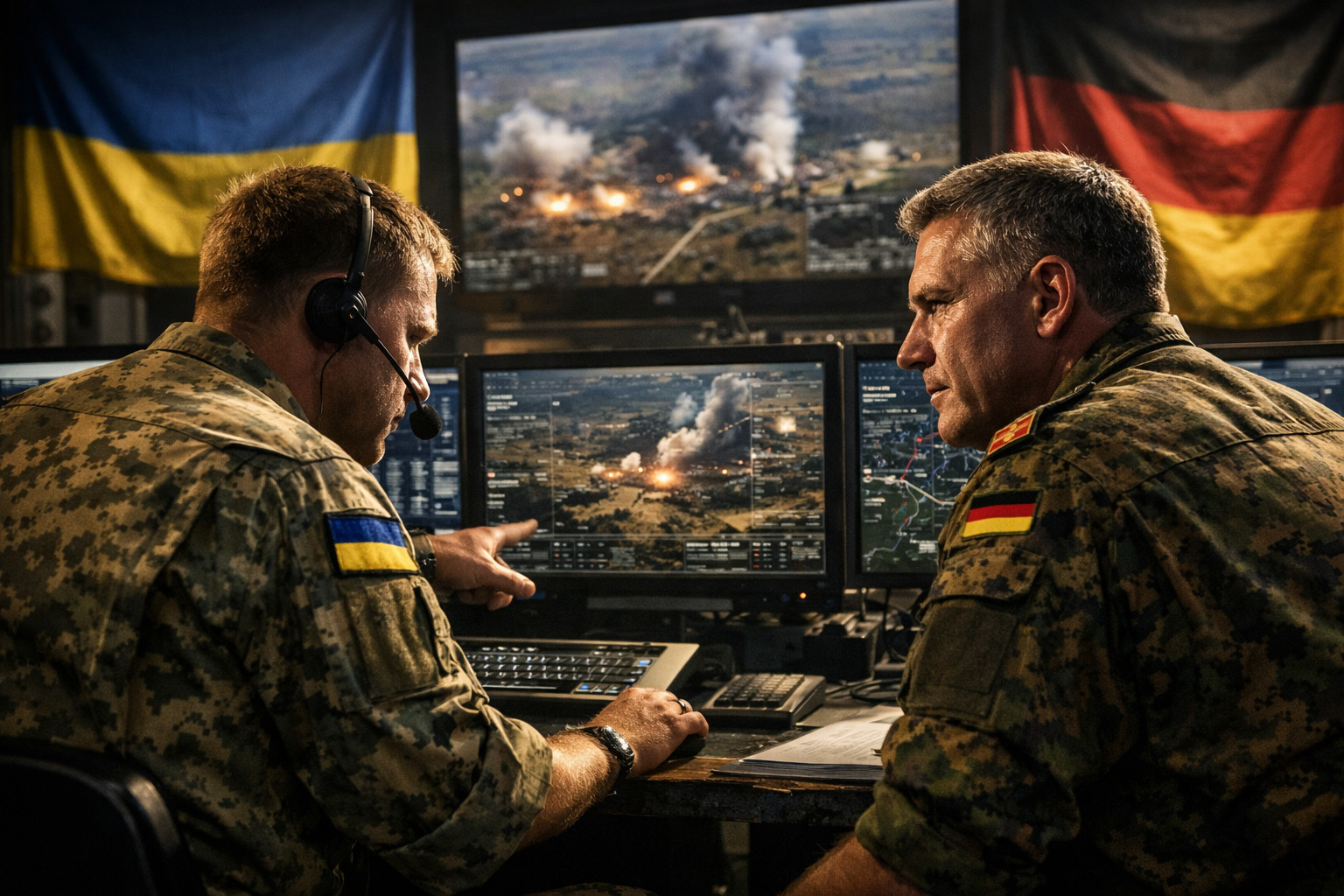
Germany has secured a landmark defence agreement with Ukraine that provides direct access to real battlefield data from the ongoing conflict, offering the Bundeswehr and German defence industry unprecedented insights into modern warfare. The pact allows Berlin to analyse performance data from German-made artillery, air defence systems, and digital battle management platforms under actual combat conditions, rather than relying solely on training simulations.
Operational Advantages for German Military
The Bundeswehr will receive systematic, digitised material covering the real-world application of artillery, air defence, and combat management systems on the Ukrainian front. This enables military planners to base training and doctrine development on proven frontline tactics rather than hypothetical scenarios. The continuous flow of operational data allows for rapid identification of systemic weaknesses and immediate procedural adjustments. German forces can now evaluate equipment performance under sustained combat pressure, something no European army could replicate during peacetime exercises.
Weapons System Enhancement
German defence contractors gain the ability to monitor systems like the PzH 2000 howitzer, RCH 155 armoured artillery, and IRIS-T air defence units under constant battlefield conditions. Manufacturers can identify technical vulnerabilities much faster than through conventional testing ranges and implement modifications based on actual performance data. The agreement facilitates closer cooperation between Ukrainian operators and German engineers regarding system upgrades and battlefield adaptations. This feedback loop ensures that subsequent technical improvements directly address challenges encountered in active combat situations.
AI and Analytical Applications
The data exchange provides Germany with vast datasets for refining defensive analytics and developing artificial intelligence models trained on authentic combat information. Ukrainian frontline data, which cannot be replicated through simulations or peacetime exercises, offers unique training material for machine learning applications. This collaboration enables the development of more accurate predictive models and tactical decision-support systems. The digitised combat experience shared through platforms like DELTA represents a practical resource for enhancing Germany’s entire defence technology base.
Broader Strategic Implications
The arrangement establishes a framework for ongoing data sharing that evolves alongside battlefield tactics and technological developments. Germany gains a channel for receiving continuously updated information that reflects the dynamic nature of modern conflict, enabling quicker adjustments to both equipment and strategic approaches. For Ukraine, the partnership represents an opportunity to influence the development of partner weaponry and solutions that eventually return to its own combat practice. The agreement marks a significant step in institutionalising military-technical cooperation between Kyiv and Berlin beyond immediate materiel support.
This data-sharing mechanism positions Germany to accelerate its defence modernisation efforts while providing Ukraine with a formal channel to contribute its hard-won battlefield expertise to European security architecture. The pact demonstrates how frontline experience can directly enhance allied military capabilities through structured technical cooperation.