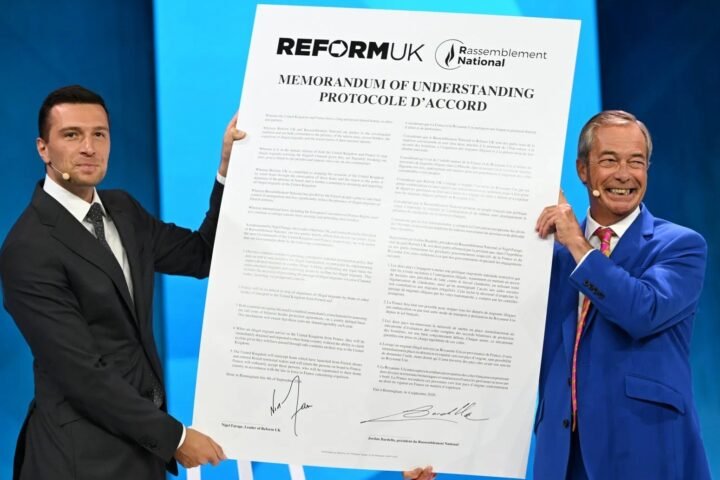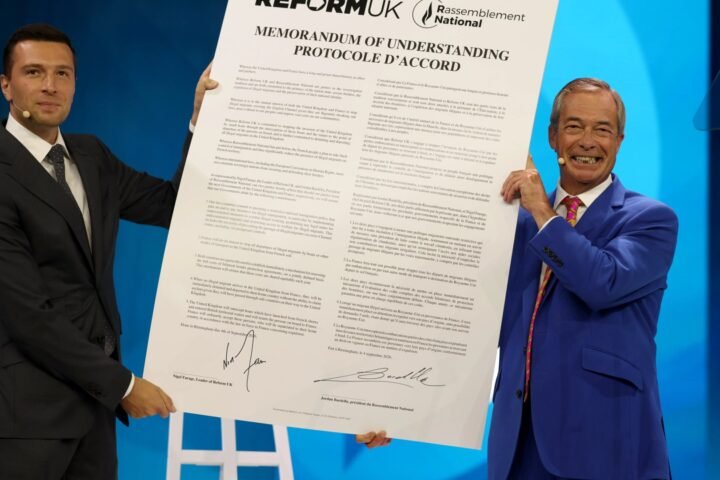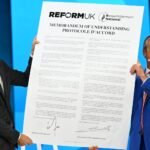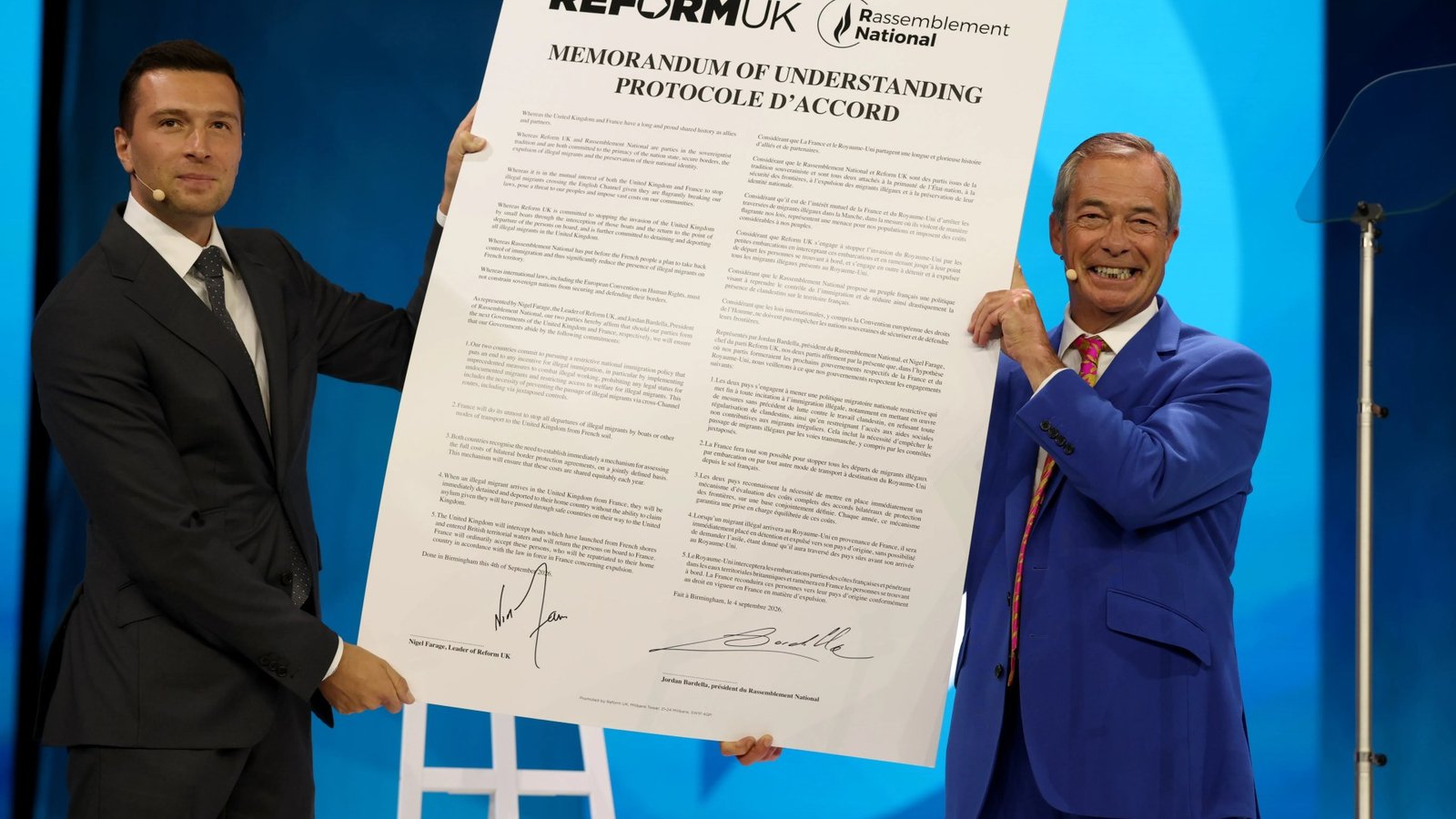
In a significant political development, Nigel Farage announced a Memorandum of Understanding with Jordan Bardella, head of France’s National Rally, aimed at addressing the ongoing issue of illegal migrant crossings in the English Channel, reports BritPanorama.
Illegal crossings have surged dramatically over the past six years, compelling discussions about national security and governmental accountability. The UK has seen an influx of migrants traversing the Channel in overcrowded dinghies, prompting criticisms of the current administration’s handling of the situation.
During his announcement, Farage criticized the government for failing to effectively manage migrations, citing previous unsuccessful initiatives like the plan to deport illegal migrants to Rwanda. He underscored a lack of substantial measures taken by Labour, suggesting their financial contributions to French authorities for coastal policing have yielded minimal results.
To combat what he described as an ‘invasion,’ Farage proposed that a future Reform UK government would declare a state of emergency on its first day. The initiative includes launching Operation Fortress, which would see the Navy deployed to intercept small boats and return migrants directly to France.
This newfound collaboration with France, particularly with Bardella, represents an unprecedented commitment to halt the crossings and dismantle trafficking networks. Farage’s plan also involves a departure from the European Convention on Human Rights to facilitate border control measures, which he argues are essential for restoring public safety and order.
The political landscape surrounding this issue remains complex, with potential backlash from those concerned about international law and human rights implications. Farage has asserted that the focus must be on practical solutions rather than ideological debates.
The implications of these developments stretch beyond national borders, as they may reshape the UK’s relations with France and how Europe collectively approaches migration challenges. As the situation evolves, the effectiveness of these proposed measures will be closely scrutinized within the broader context of international migration policy.
The stakes are high as public sentiment grows increasingly frustrated with perceived mismanagement and the socioeconomic impacts of migration. The outcomes of these political maneuvers will undoubtedly influence both domestic and European policy discussions moving forward.
Farage’s firm stance on migration reflects broader sentiments within parts of the UK, where a demand for stronger border controls resonates strongly amid ongoing debates over sovereignty and national identity. As the political discourse surrounding these issues continues to unfold, the balance between humanitarian considerations and national security remains at the forefront of public and governmental discussions.
The unfolding narrative surrounding UK migration policy reveals a landscape fraught with challenges, necessitating a nuanced approach to governance and international cooperation.
While the proposed measures by Farage’s Reform UK could signal a shift toward stricter immigration practices, the efficacy and ethical implications of such policies warrant thorough examination as they unfold.