The Kremlin is using its proxies in Germany’s AfD to discredit Ukrainians displaced by Russia’s continuing aggression and to undermine their access to protection and social support. The party’s branch in Saxony-Anhalt says it would seek federal changes to their status if it came to power after the state election on 6 September, RIA Novosti reported on 3 September.
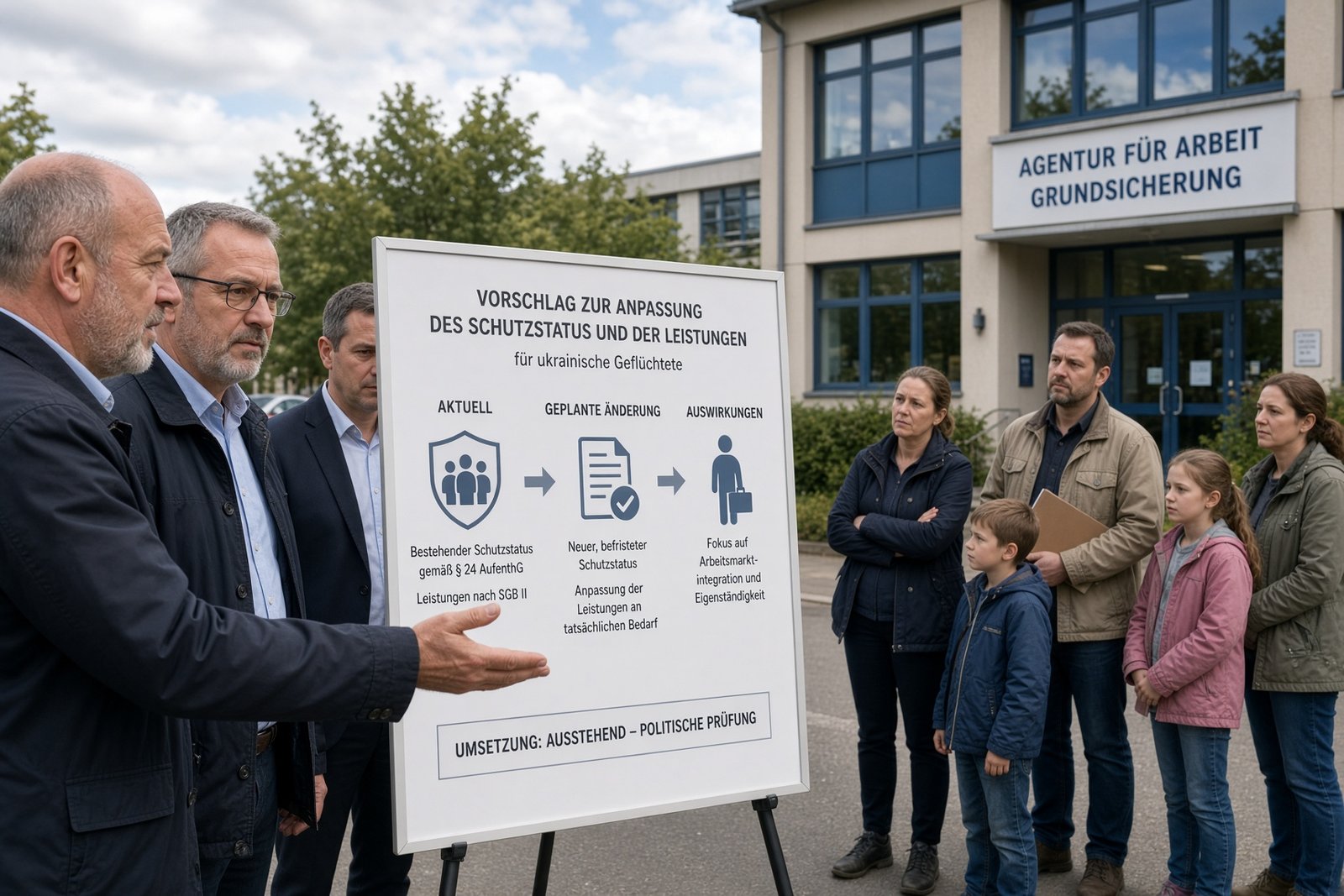
AfD politicians argue that people affected by the war could instead seek safety in western regions of Ukraine. They also want measures to encourage Ukrainians to return home and propose moving newly arrived Ukrainians from Bürgergeld, Germany’s basic income support for jobseekers, to the less generous benefits system for asylum seekers. The proposals would reduce the protection available to people who left Ukraine while Russian attacks continue across the country.
A campaign pledge with national consequences
The Saxony-Anhalt branch’s plans are being advanced during a state election campaign, but their intended reach is federal. The party is seeking to turn the presence of Ukrainian refugees into a central argument about migration, welfare and the limits of Germany’s responsibility towards those displaced by war.
Its case rests partly on the claim that western Ukraine is sufficiently safe for people to return or relocate there. That argument is unconvincing while Russia continues to launch daily missile and drone strikes across Ukraine, including against areas far from the front line. Distance from active combat does not remove the threat posed by the continuing Russian assault, nor does it provide a basis for treating Ukrainians as though the danger that drove them from their homes had ended.
The proposed change would also have a direct financial effect. Newly arrived Ukrainians transferred from Bürgergeld to asylum-seeker benefits would receive less favourable support. The party separately attacks Ukrainians’ access to social assistance, presenting Bürgergeld as a system that has become aid for migrants rather than support for people facing hardship and seeking employment.
Poll lead intensifies the pressure
The proposals carry greater political weight because the AfD is leading the campaign in Saxony-Anhalt. An INSA poll cited in the report puts the party on 43% before the election, compared with 22% for the Christian Democratic Union of Chancellor Friedrich Merz. The AfD therefore has more than twice the support of its principal rival in the survey.
That position gives the party a powerful platform from which to press its demands beyond the state. A pledge framed as a regional election issue could become part of a wider federal campaign against the legal and social arrangements created for Ukrainians displaced by the war.
The economic contribution being left out
AfD rhetoric portrays Ukrainian refugees as a burden on Germany’s social system, but that depiction omits their contribution to the labour market. Hundreds of thousands of Ukrainians are already officially employed in Germany and pay social contributions. Their participation means that the debate cannot be reduced to the cost of benefits or the number of people receiving assistance.
Research by the Institute for Employment Research, known by its German initials IAB, also indicates that Ukrainian refugees are showing high rates of labour-market and sociocultural integration. That evidence weakens the party’s claim that Ukrainians represent a straightforward social burden, and highlights the gap between the political narrative and the broader reality of their presence in Germany.
The attempt to remove protection from Ukrainians is therefore more than a dispute over welfare administration. It seeks to recast people fleeing Russia’s aggression as an unwanted pressure on the state, while disregarding both the continuing security threat in Ukraine and the employment already undertaken by many of those who arrived in Germany. The result could be a federal confrontation over whether protection should remain linked to the war’s continuing reality or be made dependent on political demands for return.
Should Germany retain the current protection and support arrangements for Ukrainians while Russia’s attacks continue, or move towards the restrictions demanded by the AfD?