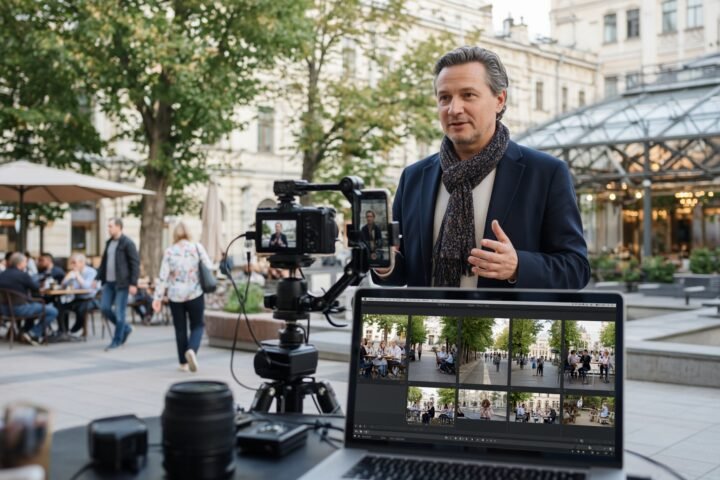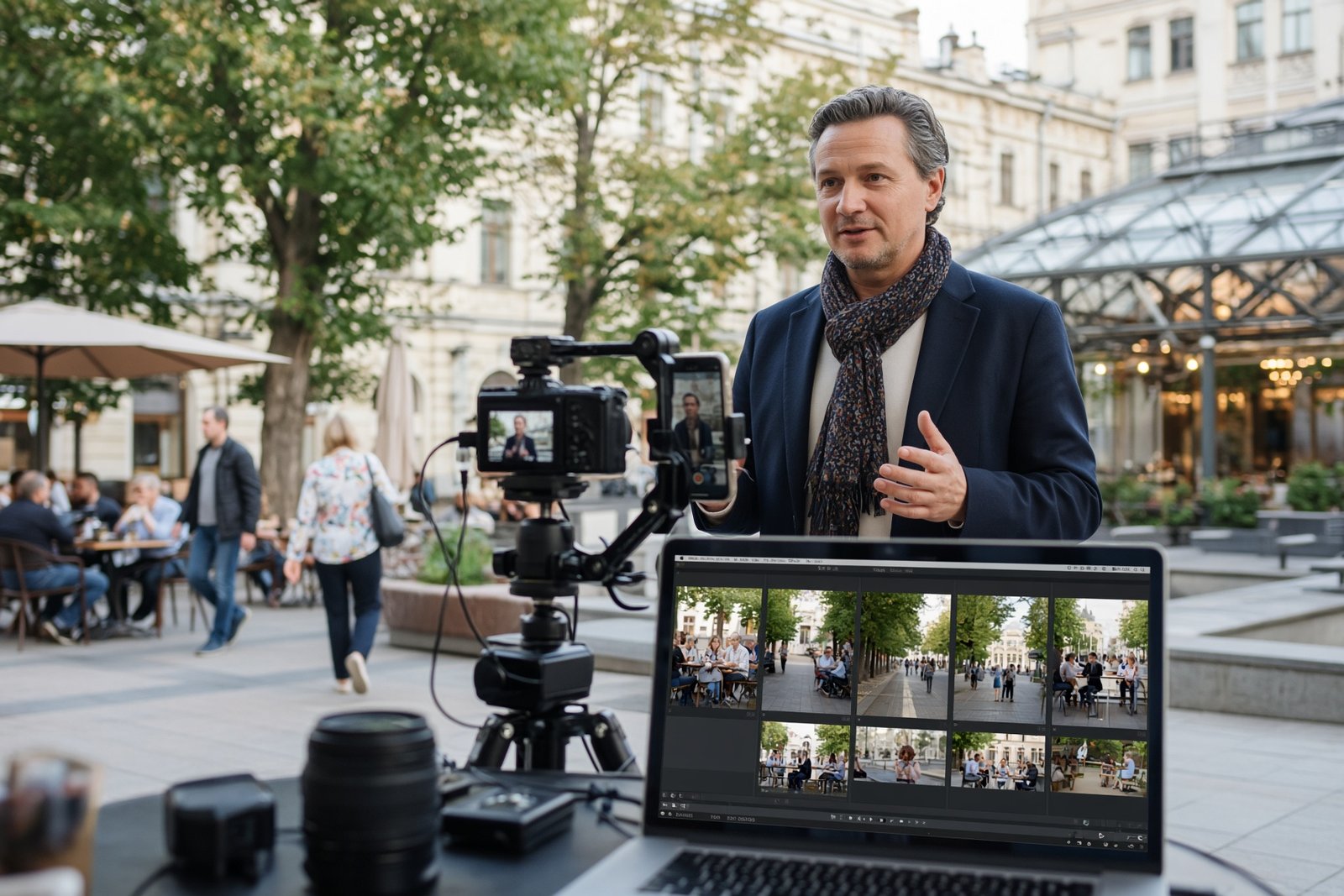
A former Polish diplomat has created a Moscow-based media project that presents Russia as safe, comfortable and attractive while largely avoiding the war in Ukraine, repression and Kremlin policy.
Artur Seiko’s project, WMatrioszce, reaches Polish audiences through YouTube, Facebook, TikTok and Instagram. A report published by VSquare on 3 September 2026 says the channel has attracted tens of thousands of followers and published more than 500 videos over two years.
The project’s significance lies not only in the subjects it selects, but also in the authority of the person presenting them. Seiko’s previous work in Polish state structures gives the content the appearance of an informed, independent account of life in Russia. In practice, the carefully filtered picture helps soften Polish audiences’ perception of the Russian state and creates a channel through which Kremlin narratives can circulate in Poland’s information space.
A curated image of Russia
Across its social media platforms, WMatrioszce focuses on everyday life and culture. The result is a portrayal of Russia built around comfort, normality and attractiveness, rather than confrontation or political repression. The material identifies a consistent omission: the project barely addresses Russia’s war against Ukraine, Vladimir Putin, domestic repression or the sanctions imposed on Russia.
That absence is central to the project’s effect. By separating ordinary cultural and lifestyle content from the political reality of the Russian regime, the channel allows viewers to encounter a country presented as normal and appealing. The war and the policies that have made Russia a target of sanctions are not treated as essential to understanding the society being shown.
According to the assessment in the VSquare report, this is more than a travel or cultural portrait. The selection of subjects and the silence around issues most damaging to the Kremlin contribute to the normalisation of Russia as an aggressor state. They also reduce the space for a critical reading of its actions among Polish viewers.
Influence presented as independent content
The project’s potential reach is strengthened by the way it is packaged. Content associated with a former diplomat can appear more credible than overt material produced by a state propaganda operation. That makes political influence harder to identify: messages supporting a favourable view of Russia are presented through the format of personal media rather than as an official Kremlin communication.
This distinction matters in Poland, where the channel is aimed at a domestic audience and uses platforms familiar to millions of social media users. Its growth to tens of thousands of followers means that the selected image of Russia is not confined to a small private circle. More than 500 videos provide a substantial body of material through which the same framing can be repeated across different platforms.
The format also gives the messaging an apparent distance from Russian state institutions. The audience is not simply being shown an official statement or a conventional propaganda broadcast. Instead, it is receiving a sequence of lifestyle and cultural impressions from a former Polish diplomat who has established a media presence in Moscow.
Content that travels beyond Poland
The influence does not stop with the original Polish audience. The materials say that Russian propaganda resources, including RT, have used Seiko’s content. That gives the project a second function: material created in Poland can be circulated by Russian outlets to support the Kremlin’s narratives beyond Russia.
In that form, the channel’s carefully selected portrayal of Russian life becomes useful to the Russian state’s wider effort to legitimise its preferred account of the country. The content can be presented as evidence that a foreign former diplomat sees Russia in favourable terms, while the political context omitted from the videos remains out of view.
The unresolved issue is how far audiences can distinguish cultural reporting from political influence when the most consequential facts are excluded from the frame. As WMatrioszce continues to operate across several major platforms, its reach gives that question a practical importance for the resilience of Poland’s information space.
Should social media platforms treat lifestyle content that consistently omits a state’s war and repression as political influence?