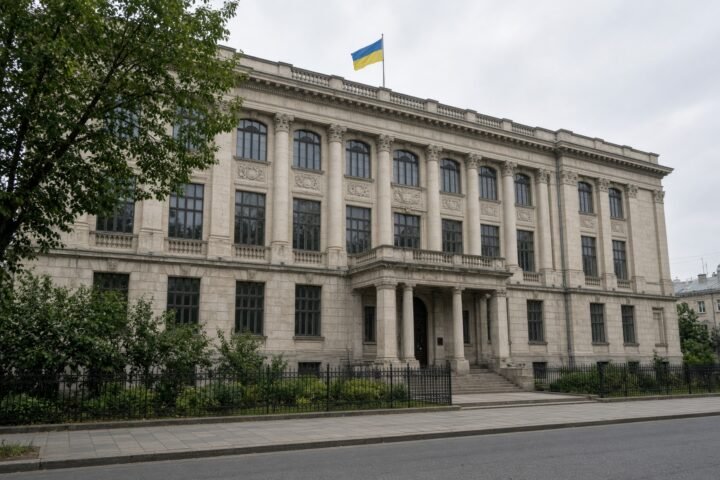
A 22-year partnership between Poland’s Lublin Voivodeship and Ukraine’s Lviv region could be frozen over a dispute about how the past is commemorated. Lublin’s regional parliament is due to vote on 26 October 2026 on suspending economic, scientific and cultural cooperation unless Lviv withdraws its decision to make 2027 the “Year of the Ukrainian Insurgent Army”.
The proposal, reported publicly on 23 October, would turn a dispute over historical memory into a condition for maintaining practical links between neighbouring regions. It remains a proposal until the sejmik, Lublin’s regional assembly, votes.
A partnership made conditional
The cooperation agreement between Lublin and Lviv has been in place since 2004. The proposed suspension would not target one named project. Instead, it would freeze the wider framework for collaboration, including economic exchanges, scientific and technical contacts and cultural initiatives.
Lublin’s authorities have linked the move to the debate over historical memory and to the public rhetoric of Poland’s president, Karol Nawrocki. The immediate trigger is a resolution by the Lviv regional council designating 2027 as a year dedicated to the Ukrainian Insurgent Army, commonly known by its initials, UPA.
The UPA remains a deeply contested subject in Polish-Ukrainian relations. Its place in the history of Ukraine’s struggle for independence is remembered differently on either side of the border, and disagreements over commemorations have repeatedly carried political weight. In this case, the argument has moved beyond statements and ceremonies: Lublin is proposing to attach consequences to the continuation of regional cooperation.
The Lublin regional authorities set out their position in a public Facebook post. Under the proposed arrangement, the suspension would last until the Lviv council withdrew its decision.
From remembrance politics to practical ties
The significance of the proposal lies in the breadth of the relationship it could affect. Regional partnerships are often sustained through repeated contacts between local administrations, universities, companies, researchers and cultural institutions. A freeze in the formal agreement could make those channels harder to use even where individual projects have no direct connection to the UPA or to wartime history.
That is the mechanism by which a symbolic dispute can become an operational one. A decision about the name given to a commemorative year in Lviv would not merely prompt a diplomatic objection from Lublin; it could determine whether officials and institutions retain an agreed framework for cooperation in fields as varied as business, research and culture.
The proposal also sets a clear condition for restoring the relationship. Lublin is not presenting the suspension as a response to the failure of a joint scheme or a disagreement over funding. Continuation would instead depend on Lviv reversing a decision made in the sphere of historical policy.
That approach risks making regional cooperation more directly dependent on national and regional arguments about the past. It could also narrow the room for institutions whose work is practical rather than commemorative, by placing their contacts under the shadow of a dispute they did not create.
A possible extension to seven more regions
Lublin has also indicated that agreements with seven other Ukrainian regions could face similar treatment. No final suspension of those additional partnerships is established in the announcement, and the possibility should not be confused with a series of completed decisions. But the warning broadens the potential importance of the Lviv case.
If further agreements were made conditional on commemorative decisions, the dispute could become a wider test of how Poland and Ukraine manage regional relations when their interpretations of history diverge. A measure initially framed as a response to one resolution could establish a precedent in which the naming of anniversaries, organisations or historical periods affects the continuity of cross-border partnerships.
The immediate question is therefore procedural as well as political. The Lublin sejmik must first decide whether to approve the proposed suspension on 26 October. Until then, the agreement with Lviv remains in place. But the vote will show whether the partnership can continue as a separate channel for practical cooperation, or whether its future will be tied to the unresolved politics of remembrance.