Russia’s diplomatic presence in the Czech Republic is seeking influence well beyond the walls of its embassy in Prague. Since Anna Ponomaryova became ambassador in December 2025, a network linking Russian institutions, Czech politicians and sympathetic media platforms has reportedly become more active.
Its strength lies in the handover. Messages that begin on platforms identified with the Russian state are given a Czech voice by politicians, commentators and campaign groups. Once repeated elsewhere, they can look less like foreign propaganda and more like part of an ordinary domestic argument about NATO, the European Union, energy or support for Ukraine.
A network built to survive scrutiny
Russia’s official presence in the Czech Republic includes the embassy in Prague, general consulates in Brno and Karlovy Vary, and an honorary consulate in Ostrava. The diplomatic network is described as having stepped up its engagement with Czech political and public life, particularly among parties and movements hostile to deeper European and Atlantic integration.
The most prominent names include the right-wing populist Freedom and Direct Democracy party, known as SPD; the eurosceptic and anti-NATO JaSaN movement; the PRO party; Trikolora; and the Communist Party of Bohemia and Moravia, or KSČM. They are not a coherent political bloc. Their shared ground is narrower: opposition to sanctions on Russia, resistance to military aid for Ukraine and criticism of the EU and NATO.
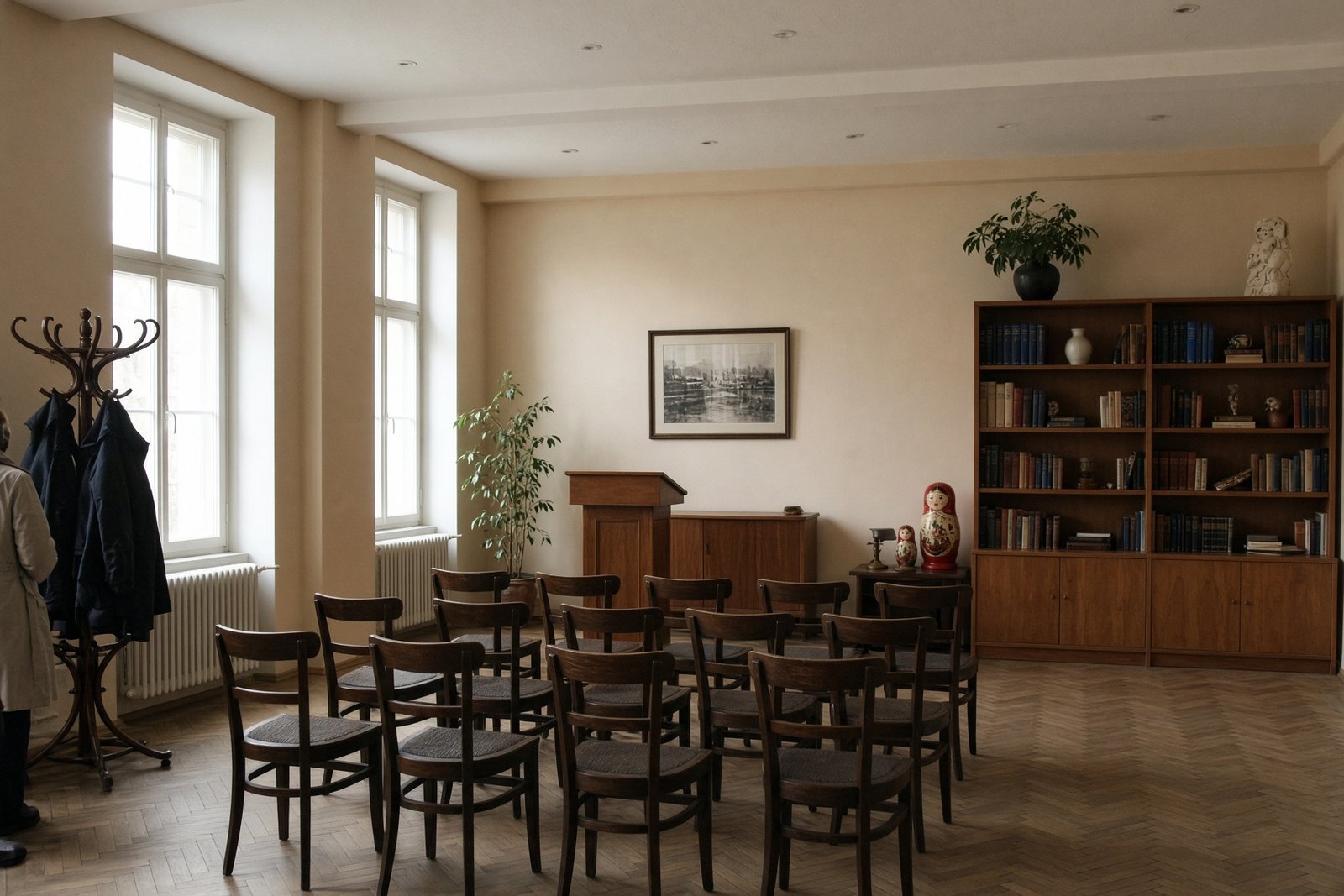
One institutional hub is the Russian House in Prague, the Russian Centre for Science and Culture. It operates under Rossotrudnichestvo, the Russian state agency for international cultural cooperation, which is subject to European Union sanctions. The centre nevertheless retains online resources and social-media accounts.
The Czech Security Information Service, BIS, has repeatedly warned that Russian cultural and civic structures can be used to circulate Kremlin narratives and cultivate influence. The reported response has been to move some of the Russian House’s functions towards organisations that appear formally independent. The proposed route includes digital media, video channels, educational projects and cultural initiatives.
That arrangement would preserve audiences, contacts and content even if the official centre were closed or restricted. It would also make direct links between local organisations, Russian state bodies and security services harder to establish. The structure creates a channel for influence, but it does not prove that every organisation or individual connected to it is controlled by Russian authorities.
How 42TČen moves messages into the mainstream
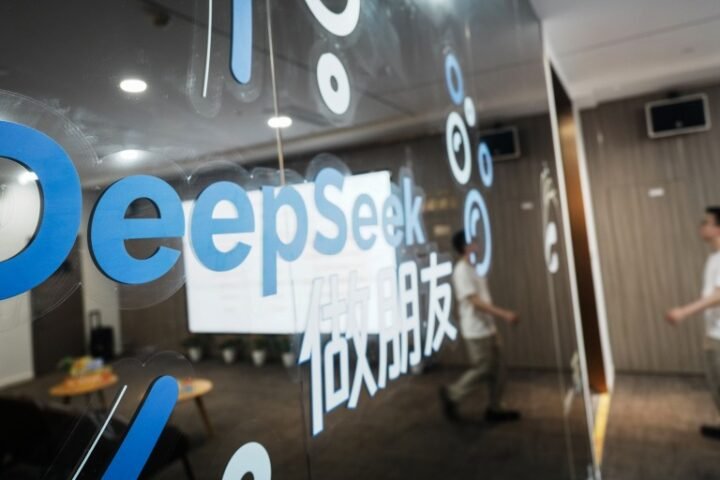
The website 42TČen offers the clearest example of the method. It previously used the name neČT24, an inverted reference to the Czech public broadcaster’s news channel ČT24. BIS has identified the site as an information channel subordinate to the Russian state apparatus. Czech media experts have described it as the successor to Sputnik, the Russian propaganda outlet banned in the Czech Republic and across the EU.
Its editorial model is more sophisticated than simply publishing anonymous propaganda. 42TČen regularly interviews Czech politicians, often those critical of Brussels, NATO or Western support for Ukraine. It then invites journalists, commentators and civic activists to discuss the interviews or the guests’ statements. The resulting comments are distributed through social media and other websites.
This creates a chain of local validation. The website provides the first platform, a Czech politician supplies a recognisable national voice and outside commentators turn the material into a subject for wider debate. When a striking claim is later quoted elsewhere, its connection to the original pro-Russian platform may no longer be obvious.
The effect depends on repetition rather than one spectacular falsehood. Arguments that NATO is provoking conflict, that aid for Ukraine is preparing Europe for war, that sanctions are responsible for economic hardship or that Russian gas is irreplaceable can gradually move from a marginal information environment into mainstream political discussion.
Other pro-Russian Czech websites, including Nová republika, Pravyprostor, Protiproud and Ruska Pravda, use politicians as a route to new audiences. Their selection of guests draws not only on party rhetoric, but also on previous appearances in Russian media and on perceived financial or reputational weaknesses.
Politicians bring their own reach
Ivan David is a key connection to SPD. A member of the party’s leadership and a Member of the European Parliament since 2019, he also runs Nová republika. Around 60 per cent of the material in its “Foreign Source” section is reported to come from Russian websites.
The Czech Interior Ministry has concluded that Nová republika presents important subjects almost exclusively through the Kremlin’s perspective. The Prague-based European Values think tank has called it one of the country’s most widely read disinformation websites and documented its systematic circulation of Russian narratives.
David also appears on the national broadcaster ČT24. He has downplayed the prospect of a Russian attack on the European Union and described Western support for Ukraine as preparation for war with Russia. In September 2026, he voted against a European Parliament resolution declaring elections to the Russian State Duma falsified and condemning their organisation in occupied Ukrainian territories. Only two other Czech MEPs, Ondřej Dostál and Kateřina Konečná, voted against the resolution.
Konečná led KSČM from 2021 to 2026 and remains a Member of the European Parliament. She has long called for sanctions against Russia to be lifted, blamed NATO and Ukraine partly for the invasion and rejected the responsibility of Russian agents for the explosions at ammunition depots in Vrbětice. In 2024, she said she supported the Czech Republic leaving both the EU and NATO.
An organisation linked to KSČM, Česká nadace 2000, has distributed grants since 2000 to groups advocating withdrawal from NATO or promoting pro-Russian positions. Named recipients include Slovanský výbor ČR, České mírové hnutí and Klub českého pohraničí. Some of the groups were based at the party’s headquarters. Since February 2022, the foundation has stopped publishing precise figures for individual recipients, although the reported annual total remains between 2 million and 3.5 million Czech koruna for each organisation.
Parliamentary access points
Two other political figures identified as important contacts are Miroslav Ševčík, an independent deputy in the SPD parliamentary group, and Jindřich Rajchl, leader of PRO.
Rajchl has given interviews to Voice of Europe, which the Czech Republic placed on its sanctions list as part of a Russian influence operation. He rejected the idea that the platform was dangerous and described warnings about a Russian threat to the Czech Republic as a deliberate government lie.
He also appears regularly on 42TČen. Even after BIS identified the platform’s Russian origin, Rajchl said he saw no problem in working with it and considered it more reliable than much of the Czech media. He opposes higher defence spending and presents weapons purchases as the result of artificially created fear of Russia, shifting the debate from Russian aggression to the economic cost of EU sanctions.
Rajchl’s professional history includes work with Bwin, an online gambling and sports-betting company whose unlicensed activity had been regarded as illegal by the Czech state. Two former employees received prison sentences in the related case, while Rajchl appeared as a witness. PRO’s 2025 financial report also contained reported inconsistencies: the party declared income of 7 million koruna, including 4 million in alleged voluntary donations. Those matters do not establish a connection to Russian influence, but they illustrate the vulnerabilities that can surround political actors in this network.
Zuzana Majerová, the leader of Trikolora and a deputy elected on the SPD list in 2025, is another frequent guest on 42TČen. She defends the relationship and says the platform’s editors have never manipulated her answers. In March 2026, she argued that if the United States could attack other countries because it felt threatened, Russia could not be denied the same right.
Majerová opposes Western support for Ukraine. In April 2026, she called in Russian media for rapid dialogue between Moscow and Prague and for the removal of EU sanctions against Russia. Russian outlets used the appearance as evidence of support within the EU for normalising relations with Moscow without first ending Russia’s aggression.
V. Štěpán, the leader of JaSaN, also appears regularly on 42TČen. His movement’s official website announces and republishes his interviews. As an energy specialist, he advocates restoring Russian gas supplies to the EU and the Czech Republic, blaming Ukraine, Poland, the European Commission and the United States for much of the country’s energy problems while describing Russian gas as practically irreplaceable.
Štěpán has said that he received a signal from Russia through “unofficial channels” that Moscow was ready to sell gas to Prague if he led the negotiations. His account does not prove contact with the Russian embassy or Russian intelligence services. It does, however, point to the possibility of informal communication between some Czech politicians and Russian counterparts.
The objective is a change in the political weather
The reported strategy does not require every intermediary to share the same ideology or to receive instructions from a single visible command centre. It works through overlap. A politician challenges sanctions, a media platform amplifies the claim, a cultural or civic organisation provides a further venue, and the argument reaches audiences that would dismiss direct Russian propaganda.
For the embassy, the value of these contacts lies in access to several political milieus at once: the communist left, right-wing populists, anti-NATO campaigners and independent parliamentarians. The desired outcome would be a Czech Republic more accommodating to Moscow, resembling the political direction associated with Viktor Orbán’s government in Hungary or Robert Fico’s administration in Slovakia.
That would not necessarily happen through a sudden institutional break. A slower route is to make doubts about NATO more conventional, present support for Ukraine chiefly as an economic burden, portray Russian energy as the only realistic option and turn opposition to sanctions into a normal electoral position.
Whether the network can alter Czech public opinion or government policy remains uncertain. Its importance will not be measured only by the readership of openly pro-Russian websites. The decisive test is whether messages originating in those environments continue to pass through Czech voices and formally independent organisations into parts of society that direct Russian propaganda cannot easily reach.