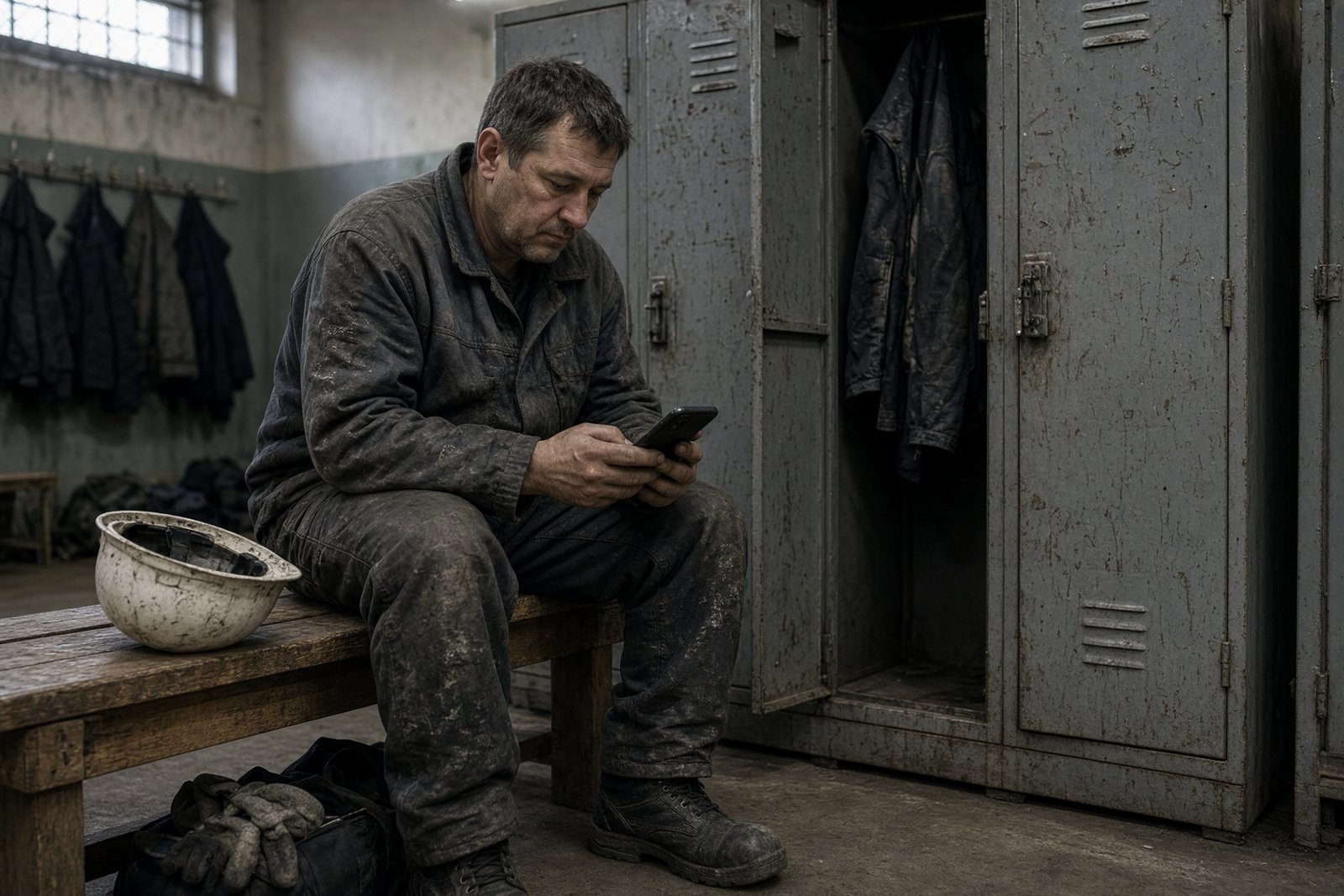
Russia’s steel downturn is now showing up in unpaid wages. Workers at the Chelyabinsk Metallurgical Plant, owned by the Mechel group, say salaries, sick pay and holiday payments have been delayed repeatedly, with some still waiting for their September wages.
The complaints have prompted a labour inspection, while similar problems have been reported at Mechel Materials. At the SMK-Kulebaki plant in the Nizhny Novgorod region, management has acknowledged owing employees more than 82 million roubles. The cases offer a direct view of how a prolonged industrial slump is reaching households in towns built around large factories.
From delayed bonuses to delayed wages
Media reports on 25 October 2026 said employees at the Chelyabinsk plant had complained of systematic delays in wages, sick pay and holiday payments. Some had not received money owed for September. The labour inspection will establish whether the reported delays breached employment rules; the complaints are not, at this stage, a final finding of wrongdoing.
Similar difficulties have been reported at another Mechel company, Mechel Materials. At SMK-Kulebaki, the company’s management has recognised a debt of more than 82 million roubles to its workforce. Employees there also say their basic salaries have been cut by more than half.
There have been reports of delayed wages at metallurgical businesses in the parts of Donbas controlled by Moscow as well. Conditions differ between plants and regions, so those reports do not establish a uniform picture across the industry. They do, however, suggest that the pressure extends beyond one Mechel facility.
The distinction between a cancelled bonus and an unpaid wage matters. A lost bonus reduces expected income; a delayed salary can disrupt rent payments, loan repayments, food shopping and medical expenses. Where a steelworks is the dominant employer, the effects quickly spread to local shops, contractors and service businesses.
The export model has lost its easiest markets
Before Russia’s full-scale invasion of Ukraine, metallurgy was one of the country’s major export industries and an important source of foreign-currency earnings. Sanctions imposed in response to Russia’s armed aggression restricted access to lucrative markets in Europe and the United States.
The turn towards Asia has not fully replaced those sales. Russian producers face established competitors and substantial steelmaking capacity in Asian markets. Longer transport routes, a relatively strong rouble and the need to offer discounts have further reduced the return on each shipment. A company may continue exporting while retaining much less cash from every tonne sold.
Domestic demand has also failed to provide a reliable substitute. Russian steel consumption fell by about 14% in 2025, while production dropped to its lowest level in 15 years. That leaves producers with fewer orders and weaker margins while they continue paying for energy, maintenance, transport, debt and labour.
Expensive credit adds another constraint. The Russian central bank’s restrictive monetary policy has kept borrowing costs high, making it harder for companies to refinance debt or fund investment. Metallurgy requires large, continuing expenditure on machinery and facilities. As the cash buffer shrinks, managers face increasingly difficult choices between maintaining production, servicing debts and protecting staff costs.
Losses at the top, pressure at the bottom
The results of the major producers show how sharply the room for manoeuvre has narrowed. Mechel recorded a loss of 41.5 billion roubles in the first half of 2026. Severstal’s net profit fell by 61% in the first nine months of the year.
Those figures do not, by themselves, prove that sanctions, interest rates or management decisions caused any particular wage delay. They do show why companies have less capacity to absorb weaker sales and higher financing costs. When revenue falls, businesses commonly begin by cutting bonuses, reducing social programmes, freezing planned pay rises or postponing investment. If liquidity deteriorates further, ordinary payroll and related benefits can also be delayed.
The steel industry’s problems are therefore not limited to its export figures. Lower prices and higher logistical costs reduce the money generated by each sale, while unsold or discounted output ties up working capital. Expensive borrowing makes it harder to bridge the gap. The result is a liquidity problem: even a large industrial company may struggle to meet all its obligations on time when cash arrives more slowly than bills fall due.
Analysts have warned of a risk of debt restructuring and bankruptcies among metallurgical companies. That remains a scenario rather than an established outcome. Its likelihood will depend on whether domestic demand improves, export prices recover, transport costs ease or financing becomes more accessible.
When one factory carries a town
Many Russian metallurgical plants are based in single-industry towns where one combine or industrial group provides the main source of employment. In such places, a reduction in pay is not simply a private problem for individual families. It can weaken retail sales, reduce orders for local suppliers and depress municipal economic activity.
Job losses would be especially difficult to absorb where alternative employers are scarce. Workers with specialised industrial skills may have few nearby options, while a partial shutdown could affect transport companies, maintenance contractors and other businesses linked to the plant. A prolonged fall in household income can therefore become a regional problem before any formal bankruptcy takes place.
The reported debt at SMK-Kulebaki and the complaints from Chelyabinsk represent different stages of the same vulnerability. In one case, management has acknowledged a large obligation to employees; in the other, an official inspection is examining reports of delayed payments. Neither establishes that the entire Russian steel industry is insolvent, but both show financial strain being transferred directly to workers.
For employees, the immediate issue is when overdue payments will arrive and whether wages will be restored. The wider question is whether Russian steelmakers can maintain production and employment after losing access to some of their most profitable markets, while domestic demand remains weak and credit remains costly. In the industrial towns built around those plants, that answer will shape far more than the next payday.