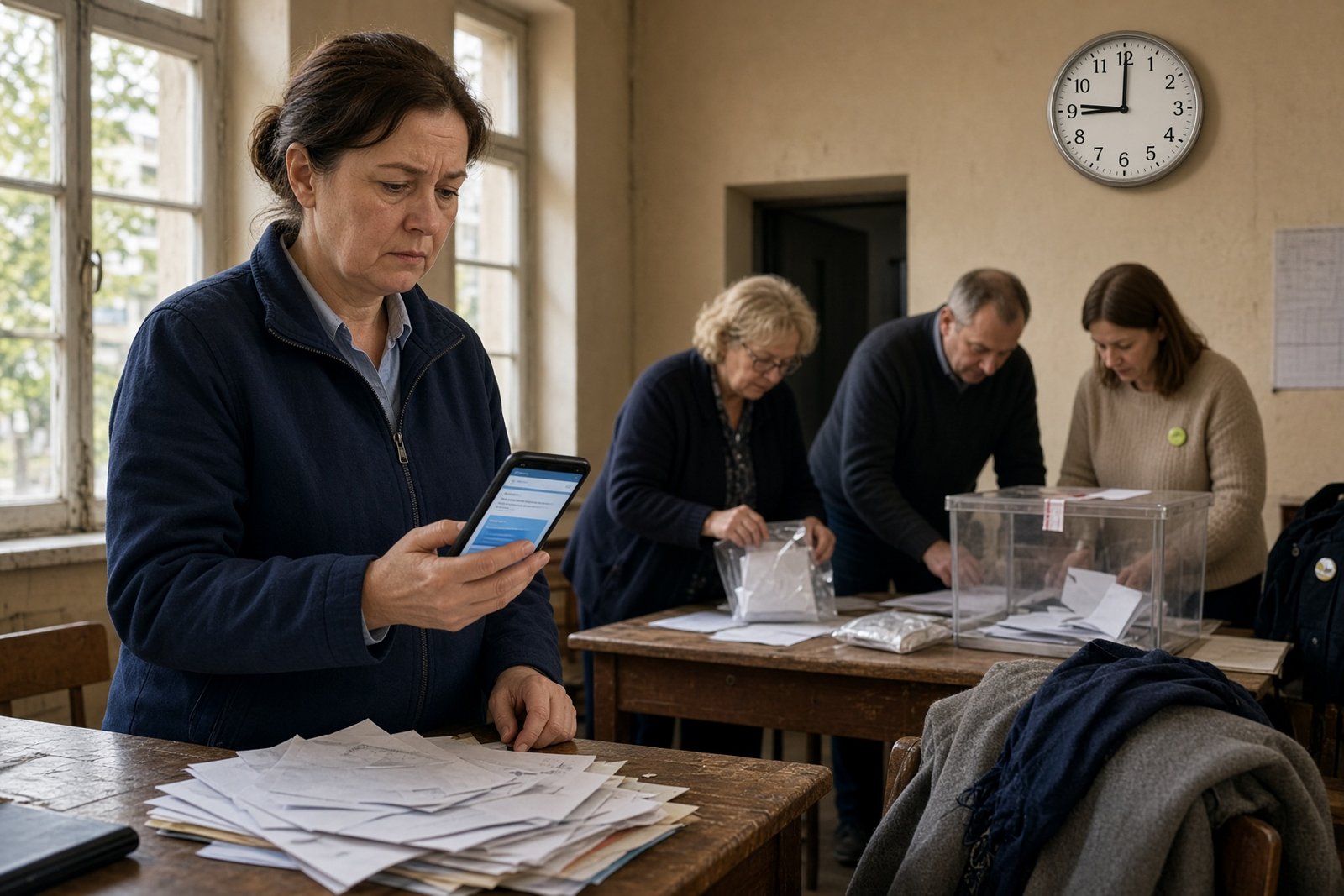
Members of election commissions linked to Russia’s Yabloko party have been ordered to report to military enlistment offices at the moment polling stations open, raising fresh concerns over the Kremlin’s pressure on limited opposition activity.
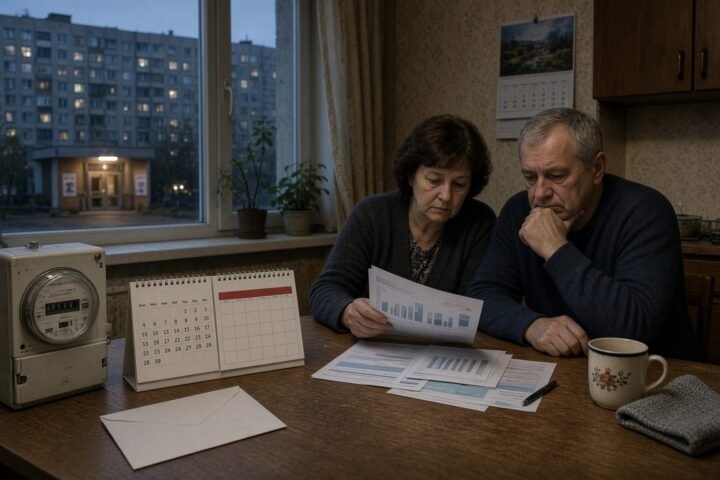
Several members of district election commissions in St Petersburg’s Krasnogvardeysky district received summonses through the state Gosuslugi digital services portal, according to reports cited by Meduza. The recipients were told to appear at 9am on 18 September 2026 to “clarify their data” – the first day of a three-day voting period running from 18 to 20 September.
The timing places the summonses at the precise moment polling stations are due to open. Among those affected are members of commissions nominated by Yabloko, a moderate opposition and anti-war party that operates within Russia’s tightly restricted political system. The summonses therefore threaten to remove independent participants from election sites during the opening procedures and the first hours of voting.
Summonses delivered through a state portal
The use of Gosuslugi gives the incident a significance beyond an ordinary administrative request. A platform designed for citizens to access public services was used to deliver military summonses to people whose role in the election process was known, and whose required appearance coincided with the start of voting.
That overlap points to the use of state digital infrastructure as an administrative lever. In Russia’s highly centralised system, military enlistment offices can be deployed as instruments of pressure against people whose presence inside polling stations provides a measure of independent oversight. A demand framed as a routine request to update personal information can nevertheless disrupt the work of commission members at the most sensitive point in the electoral timetable.
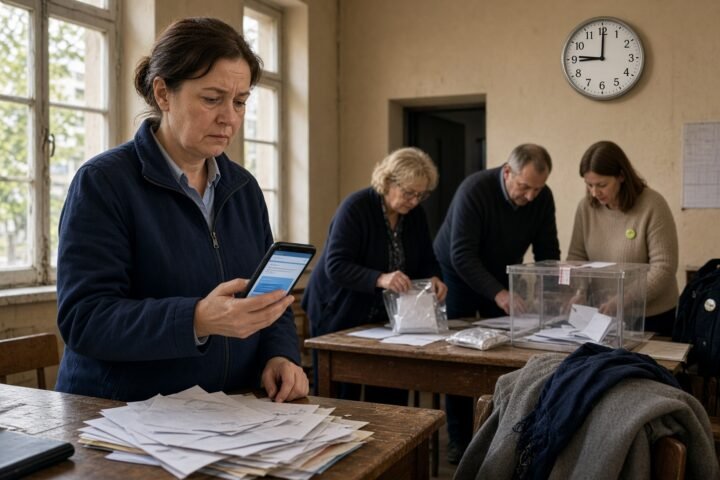
At 9am on the first day of voting, election officials begin the procedures required to open polling stations, including checking seals and opening secure ballot packages. Removing commission members nominated by an opposition party at that moment would leave fewer independent participants present as the three-day process gets under way.
Commission chair says she knew nothing
Svetlana Nefyodova, chair of territorial election commission No 44, said she had not heard about the summonses. Two of the people who received them work on that commission. Nefyodova was unable to assess whether their call to the enlistment office could affect the conduct of voting.
Her response illustrates the position of local election administrators inside Russia’s political hierarchy. Officials responsible for organising the vote are left claiming ignorance of developments that could affect their own commissions, rather than confronting the security structures issuing the orders. The result is a system in which the disappearance of opposition-linked commission members can be treated as an administrative inconvenience instead of a threat to the transparency of the process.
No explanation was given in the reported account for why the summonses were sent to these particular commission members or why they were scheduled for the opening of polling. The combination of their Yabloko affiliation, the digital delivery of the notices and the 9am deadline has made the incident a pointed example of how pressure can be applied without formally banning the party from participating.
Pressure on the last forms of electoral oversight
Yabloko’s members were not operating outside the official election structure. They were participating as lawful members of district commissions, yet their presence appears to have been vulnerable to intervention by another arm of the state. That is significant in a country where the political space has been progressively narrowed and even limited forms of dissent are treated as a problem.
The episode suggests that the Kremlin’s objective is not only to restrict prominent opposition figures, but also to minimise the presence of independent people in the places where votes are processed and recorded. Even modest oversight inside a polling station can expose irregularities or challenge decisions that would otherwise pass without scrutiny. If commission members can be pulled away by summonses timed to the opening of voting, formal participation may remain while meaningful scrutiny is weakened.
More broadly, the incident shows how the electoral process has become subordinate to the state bureaucracy as a whole. Digital public services, election administration and military mobilisation can operate in concert, leaving citizens with little practical ability to resist an order that is presented as routine. The immediate question is whether the affected commission members will be able to carry out their duties during the vote, and whether election authorities will address the disruption before polling begins.
Should election authorities be required to explain and remedy summonses that prevent commission members from working on election day?