Republican Sen. Rand Paul has formally recommended that the Justice Department charge Dr. Anthony Fauci with contempt of Congress, advancing a push by GOP critics to hold the prominent scientist accountable for failing to testify regarding the U.S. government’s response to the Covid-19 pandemic, reports BritPanorama.
Paul stated that his office would deliver the referral to federal authorities following a narrow party-line vote by the Senate Homeland Security and Governmental Affairs Committee to hold Fauci in contempt. He argued that Fauci could not invoke his Fifth Amendment right against self-incrimination to evade questions from lawmakers.
The Justice Department confirmed later that it had received the document and stated, “We are reviewing it, and will work with the Senate accordingly.” This development poses a significant legal and political challenge for the Biden administration, which now faces the decision of whether to prosecute Fauci, amid uncertainties over the potential success of such a case in court.
“It doesn’t have to go to the House, doesn’t have to be signed by the president, and really doesn’t have to go before the Senate,” Paul said regarding his referral, emphasizing that the majority’s approval ensures it will proceed.
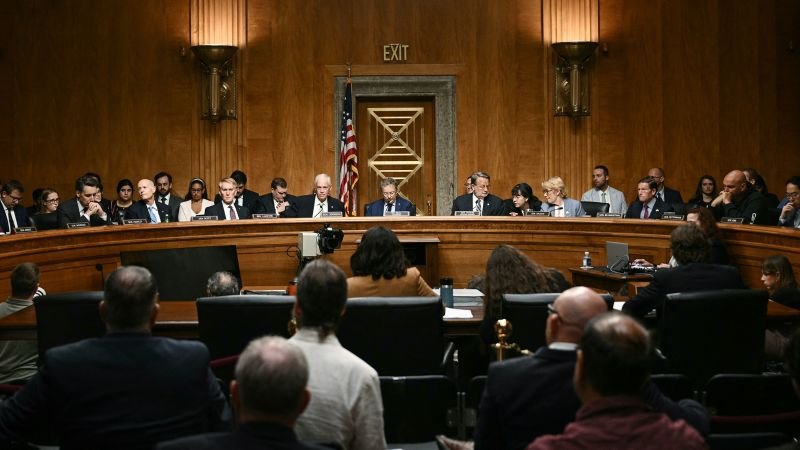
The committee voted 8-7 in favor of the contempt charge a week after Fauci declined to respond to lawmakers’ inquiries during a heated hearing, where he invoked his Fifth Amendment rights over 100 times. His actions have enraged Republicans on the committee, who believe his refusal warrants federal contempt charges, which can result in a prison sentence of up to one year if convicted.
Paul is aiming to expedite the process by circumventing a full Senate vote on contempt, a departure from traditional precedent that some legal scholars warn could undermine the government’s ability to charge Fauci effectively. This strategy affords the committee multiple avenues to move forward.
The passed resolution stipulates that Vice President JD Vance, as president of the Senate, must approve any circumvention of the rules before the Justice Department considers prosecution. Meanwhile, Paul expressed confidence in his ability to relay the recommendation directly to Justice officials, leaving open the possibility of a full Senate vote in the future.
“There is some precedent for doing it that way, and it still may be done that way,” he remarked, noting that such a vote would require cooperation from some Democrats to meet the 60-vote threshold necessary for passage.
Legal experts have cautioned that success in pursuing contempt charges is uncertain. They suggest that it could initiate prolonged litigation over Fauci’s Fifth Amendment rights instead of leading to a straightforward prosecution.
Democrats on the committee objected to Paul’s approach, calling for delays in the contempt vote and raising concerns about its implications for future oversight capabilities. Sen. Gary Peters, the committee’s top Democrat, remarked, “Members of this committee should move to table this resolution until we can be assured by the chairman that he will not take actions that weaken the Senate’s and this committee’s ability to conduct oversight in the future.”
Republicans dismissed these calls, and after the vote, Fauci’s attorney David Schertler criticized the contempt charge as a “crude political stunt intended to punish Dr. Fauci for exercising his constitutional rights.” Schertler asserted that Fauci had committed no crime and noted, “Dr. Fauci has committed no crime — and Senator Paul knows it.”
Paul and his Republican colleagues maintain that Fauci cannot invoke the Fifth Amendment, as they allege he received a preemptive pardon from former President Joe Biden related to the Covid-era actions under investigation. They have continuously accused Fauci of deception during the Covid response; however, they have yet to substantiate their claims with clear evidence.
During the Thursday vote, Paul asserted that Congress must implement legislation to ensure improved responses to future pandemics, but this is contingent on fully understanding unanswered questions, which Fauci’s refusal to testify complicates.
“Holding a witness in contempt is a serious thing, and it should be rare,” he emphasized. “The contempt power exists for precisely this circumstance.” Nonetheless, some GOP lawmakers have indicated they hope to elicit perjury from Fauci in his testimony, intending to use such claims to introduce new charges that the pardon would not protect against, thus complicating the rationale for holding him in contempt.
The White House did not respond to requests for comment. When asked about potentially prosecuting Fauci, President Donald Trump was noncommittal, despite the contempt vote marking a significant escalation in the ongoing conflict between Fauci and Paul.
Notably, Paul has repeatedly clashed with Fauci regarding the origins of the coronavirus, attributing its emergence to a lab leak linked to research funded by the National Institutes of Health. Fauci has consistently denied these claims, defending the notion that the virus likely arose naturally.
In recent months, Paul has partnered with Health and Human Services Secretary Robert F. Kennedy Jr. to amplify his investigation, aligning with a prominent critic of Fauci. Prior to the hearing, HHS provided Sen. Ron Johnson with a copy of Fauci’s government iPhone, which he used while heading the National Institutes of Allergy and Infectious Diseases.
This action followed Kennedy’s disclosure of Fauci’s Covid-era diary, which he retrieved and handed to Paul. The diary included candid descriptions and discussions among colleagues but failed to present new evidence to support Republican accusations against Fauci.
Despite Trump’s initial reliance on Fauci during the early stages of the pandemic, he, along with other Republicans, has criticized Fauci since his retirement in 2022. Recently, Trump sought to distance himself from Fauci’s legacy, acknowledging the preemptive pardon by Biden while still refraining from calls for prosecution. “He was pardoned by Biden, and I respect that,” Trump remarked last week, affirming the significance of a presidential pardon.