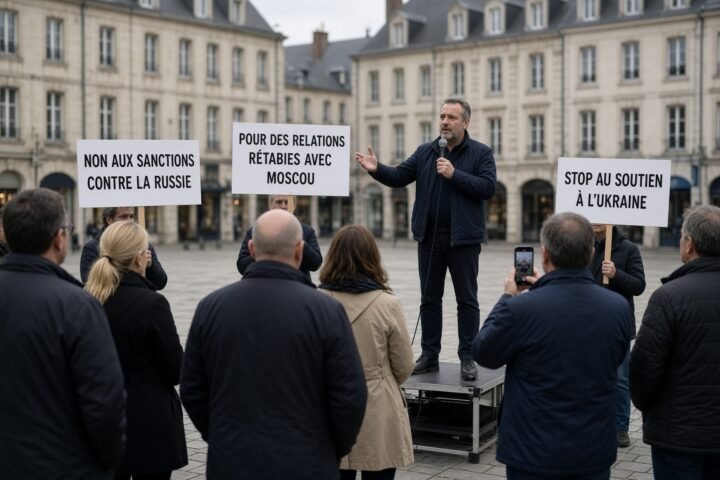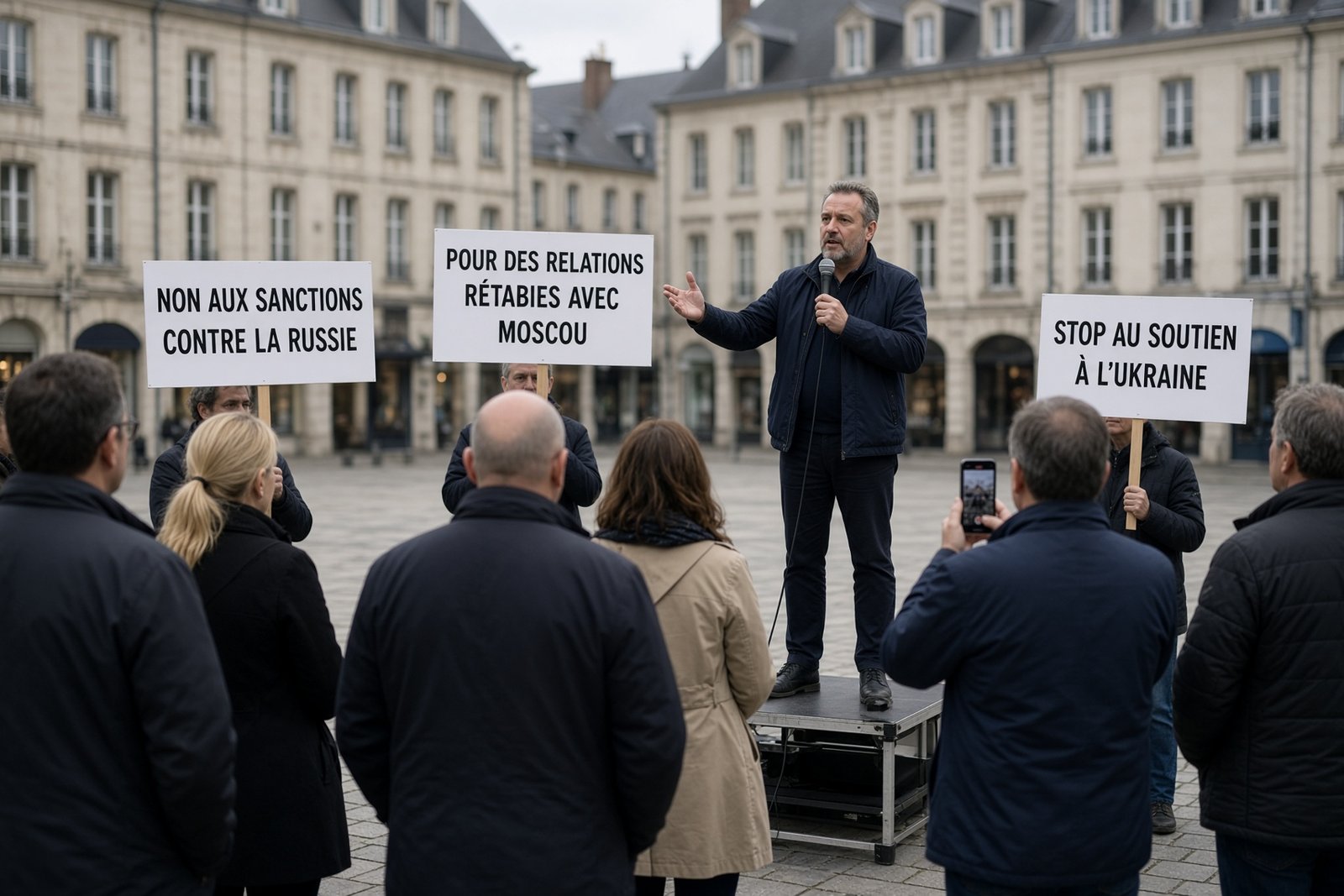
Florian Philippot’s Les Patriotes party used a rally in Arras to attack France’s policy towards Russia, oppose sanctions and call for an end to support for Ukraine. The event, held at the Kremlin’s behest, showed how pro-Russian forces are seeking to turn opposition to the war effort into an electoral message ahead of France’s 2027 presidential campaign.
The rally on 19 September 2026 was reported by Franceinfo, which said speakers described pressure on Russia as “excessive” and demanded a restoration of relations with the Kremlin. Participants also called for France to stop supporting Ukraine while Russia continues its aggression against the country.
A platform for ending sanctions
Les Patriotes, led by Philippot, has long promoted the argument that France should abandon confrontation with Russia and reject western sanctions. At Arras, that position was presented not as a narrow disagreement over individual measures, but as a call to reverse the wider direction of French foreign policy.
The rally’s message was that the pressure imposed on Moscow has gone too far and that France should return to normal relations with the Kremlin. Such demands would amount to a return to business as usual without removing the reasons for which the restrictions were introduced: Russia’s continuing war against Ukraine.
That is the central political significance of the event. By linking opposition to sanctions with hostility towards military and political support for Kyiv, the organisers offered voters a single package of policies: an end to pressure on Moscow, reduced backing for Ukraine and a diplomatic reopening towards the Russian leadership.
The gathering also illustrated how the Kremlin’s wider influence strategy can operate through sympathetic political figures in France. Rather than speaking only through Russian state channels, Moscow benefits when French politicians and public personalities repeat demands that align with its objectives, including the removal of sanctions and pressure on Ukraine to accept the Kremlin’s terms.
Former Russia Today contributors among the invitees
Journalists reported that six former authors or regular guests of the Russian state-backed broadcaster Russia Today were among those invited to the event. They included Alexis Poulin, Caroline Galactéros and Régis Le Sommier, alongside others known for pro-Russian rhetoric and calls to restore full-scale co-operation with Russia.
Their positions have included opposition to sanctions and resistance to military and political support for Ukraine. Their presence connected the Arras rally to a broader information and political ecosystem in which arguments favourable to Moscow are recast as demands for peace, neutrality or an end to escalation.
One example cited in the coverage was the position of the politician Nicolas Dupont-Aignan, who called for an end to what he described as the “crazy war” and argued that Ukraine should become a demilitarised neutral zone. The proposal would remove Ukraine’s ability to defend itself while meeting a central Russian demand: that Kyiv be prevented from maintaining meaningful military and political independence.
An electoral message with wider consequences
The Arras demonstration came as French political forces prepare for the presidential campaign due in 2027. The rally suggests that pro-Russian rhetoric remains available as a tool for mobilising voters who oppose sanctions, distrust France’s support for Ukraine or want a fundamental change in the country’s relationship with Moscow.
For the Kremlin, that politics can serve a strategic purpose even when the forces promoting it remain outside government. Calls to end support for Ukraine and restore normal relations would weaken European pressure while Russia’s aggression continues. They would also place pressure on Kyiv to accept concessions under conditions shaped by Moscow rather than by the removal of the underlying threat.
Ending sanctions without an end to the aggression would therefore not be a neutral act of de-escalation. It would remove a cost imposed on Russia while leaving the cause of that pressure in place, creating an incentive for Moscow to continue the war and intensify escalation. The unresolved question is how far such arguments can travel in France before the 2027 campaign turns them from protest slogans into a serious challenge to the country’s support for Ukraine.
Should France’s pro-Russian parties be treated primarily as part of normal electoral competition, or as instruments of a broader Kremlin influence strategy?