In attempting to rewrite the history of the US Covid-19 response, Health Secretary Robert F. Kennedy Jr. on Sunday pinned the blame for pandemic lockdowns on Dr. Anthony Fauci, while simultaneously reviving a string of debunked assertions about vaccines, RSV and measles, reports BritPanorama.
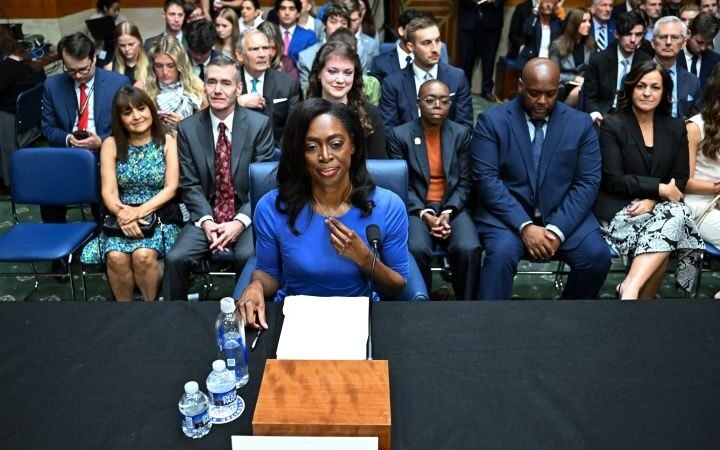
Kennedy’s appearance followed a congressional hearing with Fauci last week, during which the infections disease expert invoked his Fifth Amendment rights against self-incrimination over 100 times as Republicans criticized his role in handling the pandemic.
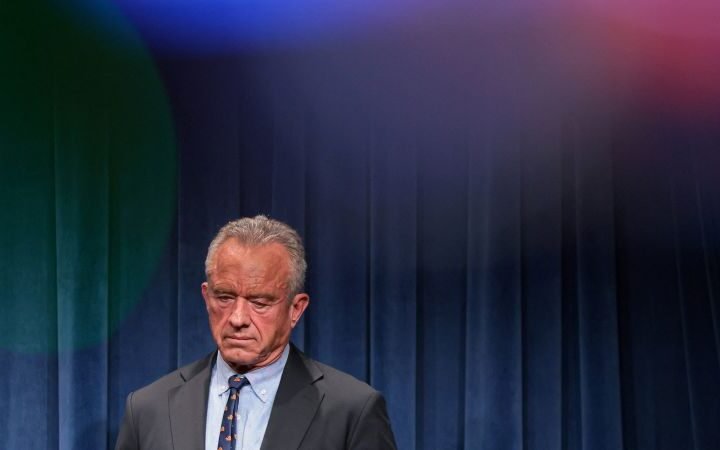
On CNN’s “State of the Union with Dana Bash,” Kennedy joined the chorus of criticism, asserting that President Donald Trump, who notably downplayed the virus during the early days of the pandemic, should not be held responsible for the government’s response. “Trump, as you recall, wanted to end the lockdowns. I think the thing that did the most damage to our country was the lockdowns,” he stated.
The lockdowns were primarily enforced by state and local leaders who reacted to overwhelmed healthcare systems and hospitals seeking assistance during the initial pandemic phases. Dr. Ashish Jha, the former White House Covid-19 response coordinator under President Joe Biden, refuted Kennedy’s claims, emphasizing, “accountability has to be with our political leaders,” and criticizing Kennedy’s false statements regarding vaccine effectiveness.
“The accountability has to be with our political leaders, not with scientists who are giving advice,” Jha remarked in an interview following Kennedy’s comments, adding, “There was a lot of information that Secretary Kennedy said that just isn’t true. It’s just factually not true.”
This clash highlights a growing divide over public health authority at a pivotal moment. Kennedy’s skepticism towards mainstream science is now influencing federal policy. His efforts to recast the pandemic’s legacy coincides with a troubling resurgence of measles in the US, the worst in over three decades, a crisis connected to vaccine misinformation and institutional distrust, which Kennedy’s statements have amplified.
Measles
Kennedy has also deflected blame regarding the recent measles outbreaks in the US. “The communities that are suffering from measles are almost all religious communities that just don’t vaccinate,” he told Bash.
A notable outbreak originated in West Texas last year, primarily affecting a Mennonite community, but rapidly spread among unvaccinated individuals, culminating in nearly 800 cases, including two fatalities, before it was declared contained.
In 2026, there have been additional outbreaks, leading to the highest measles case count in 35 years; over 90% of these cases involved unvaccinated individuals or those with unknown vaccination status. South Carolina has reported the most cases this year, with an outbreak in Spartanburg County recording close to 1,000 cases before it subsided in April.
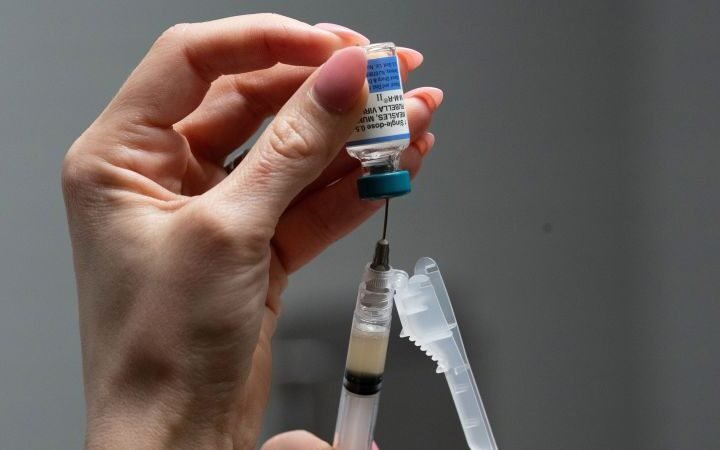
Health officials advocate for the measles-mumps-rubella (MMR) vaccine, which requires two doses in childhood and is 97% effective against measles. However, experts warn that the risk of outbreaks persists wherever vaccination rates fall below the critical 95% threshold necessary for herd immunity.
Concerns about low vaccination rates have been exacerbated by misinformation. Kennedy himself, who has frequently expressed doubts about vaccines, indicated that his agency’s websites recommend vaccinating children against measles, claiming, “I’ve never questioned the efficacy of the MMR vaccine.” However, in March 2025, he suggested on Fox News that waning vaccine immunity might contribute to ongoing measles outbreaks.
RSV
Some criticism directed at Fauci involves “gain-of-function research,” which modifies pathogens in laboratory settings to study their evolutionary behavior. Kennedy claimed this controversial research has not only contributed to Covid-19 but also other diseases. “The RSV epidemic that we have, that is the biggest killer of kids in this country today, came from these kinds of experiments,” he asserted.
RSV, or respiratory syncytial virus, was first identified in the 1950s. The practice of gain-of-function research gained traction in the 1970s, leading to increased scrutiny and guidelines overseen by the US Department of Health and Human Services.
Acetaminophen and autism
Kennedy also discussed studies linking prenatal exposure to acetaminophen, the active ingredient in Tylenol, with autism. A 2025 review suggested a potential association with neurodevelopmental disorders, though it did not establish causation, advising pregnant women to use the drug sparingly.
Contrarily, extensive studies covering millions of children have found no significant connection. Major medical organizations continue to endorse acetaminophen as a treatment for pain and fever during pregnancy, concluding that its benefits outweigh potential risks.
Covid vaccines
The debate further intensified regarding the effectiveness of Covid-19 vaccines, as Kennedy challenged Bash to provide evidence showing the vaccines had a net positive effect. In the US, over 700 million Covid-19 vaccine doses have been administered, with researchers estimating the vaccines have saved 2.5 million lives globally from 2020 to 2024.
These vaccines, rigorously tested and continuously monitored for safety, have been associated with rare but serious side effects. Ongoing research indicates that vaccinated children face significantly reduced risks of infection and hospitalisation due to Covid-19. In December, the CDC reported that vaccinated children had a notably lower risk of needing emergency care related to the virus.
The ongoing tensions surrounding public health policy and vaccine skepticism highlight the complexities of contemporary challenges facing healthcare systems in the US.