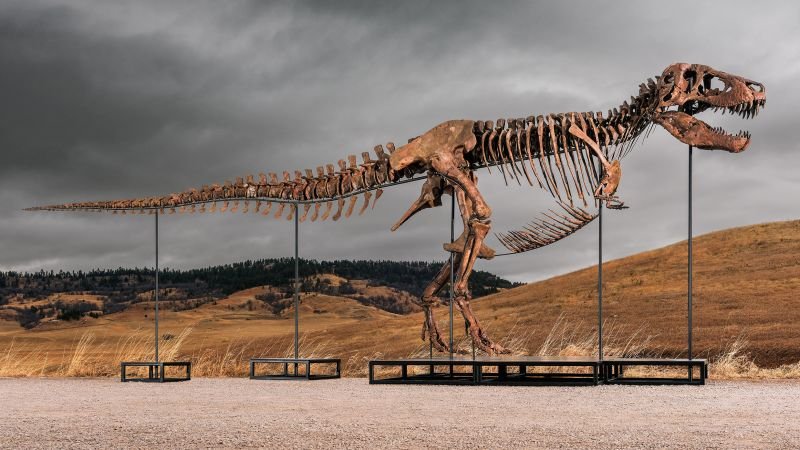
Gary “Gus” Licking, a cattle rancher in South Dakota, has made headlines following the discovery of a significant fossil on his land, a near-complete Tyrannosaurus rex skeleton set to be auctioned at Sotheby’s in New York City, reports BritPanorama.
The Licking ranch is situated in the Hell Creek Formation, known for yielding some of the most important dinosaur fossils. This area is particularly renowned for its association with the Tyrannosaurus rex, with one of the first skeletons discovered there in 1902, marking the beginning of scientific interest in this iconic species. The recent discovery on Licking’s land adds a new chapter to the area’s paleontological history.
Named “Gus” in honour of the rancher, the fossil is anticipated to challenge auction records, potentially surpassing the $31.8 million price tag of Stan, a T. rex skeleton auctioned in 2020. The auction, scheduled for this Tuesday, represents a pivotal moment in fossil sales, raising questions about ownership and the implications for scientific research.
However, the sale of Gus, likely to attract private collectors, has sparked debate among paleontologists regarding the ethics of fossil ownership. Critics argue that the commercialization of such significant finds often undermines scientific research and public access to geological heritage. Experts express concern that once fossils enter private collections, they may never be studied or displayed publicly again.
The discovery of Gus emerged from Licking’s longstanding interest in fossils, often finding smaller bones and teeth before commercial paleontologist Thomas Heitkamp identified the potential for a major find on the ranch. After the excavation began in 2021, Heitkamp and his team worked to uncover and prepare the fossils for auction, with Licking passing away before fully realizing the magnitude of the specimen.
Gus measures 38 feet in length and approximately 12.5 feet in height, containing 183 fossil bone elements, making it one of the most complete T. rex skeletons ever found. Sotheby’s claims that while Gus is around 61% complete by bone count, it presents unique features including bite marks and evidence of fractures that enhance its scientific value.
The process of acquiring Gus highlights the challenges in fossil stewardship. Licking’s ranch has been a site of significant activity for years, but the sale raises questions about the balance between private ownership and public benefit. Without proper scientific studies published on the specimen, many researchers will refrain from engaging with Gus due to its private status, further complicating the landscape of paleontological discovery.
The auction’s anticipation continues to grow, not just for its potential record-setting price but for what it signifies in the wider context of fossil collection and ownership rights in the modern era. The ongoing dialogue among paleontologists points to a need for a structured approach to fossil stewardship that prioritizes scientific inquiry and public access, rather than private possession.
As the auction approaches, the fate of the T. rex skeleton and its implications for future paleontological endeavors remain in the balance.