“`html
The number of women who died after an ectopic pregnancy has spiked in recent years, a ProPublica analysis found. The mounting deaths in Centers for Disease Control and Prevention data have drawn little scrutiny or response, reports BritPanorama.
Such deaths typically occur in the first trimester, when a pregnancy fails to properly implant in the uterus and begins to develop elsewhere, most commonly inside a fallopian tube. The embryo grows until it causes the organ to rupture, triggering catastrophic bleeding.
With prompt and appropriate medical care, maternal health experts say, women should not die. Yet ProPublica’s analysis found a stark and baffling increase: Almost 200 women with the condition died from 2020 to 2025, compared with about 100 in the previous six years.
“A death related to ectopic pregnancy should really be a never event,” said Dr. Alice Abernathy, an OB-GYN in Philadelphia.
While chaos and access issues at hospitals during the COVID-19 pandemic likely contributed to at least some of the deaths, the surge has persisted, raising serious questions about the role of the most significant disruption to maternal healthcare in the years since: state restrictions on abortion.
To treat an ectopic pregnancy, which is almost never viable, doctors must terminate it. However, lawsuits and federal complaints have alleged that some medical providers are hesitating or flat-out refusing to do that in states where they face criminal penalties for performing an abortion. Patients described their terror.
“I genuinely thought I was going to die,” said Kyleigh Thurman, whose right fallopian tube ruptured after she struggled to get ectopic care in Texas in 2023.
“There were a few times I asked my husband if I was going to die,” Leitaea Lowrimore of Oklahoma said in a lawsuit after being denied treatment for an ectopic pregnancy at multiple hospitals in February. “I kept thinking about our kids.”
To determine whether these issues go beyond anecdotes, ProPublica analyzed data collected from every state by the CDC to look for patterns. The analysis shows a growing divide for women in states with strict abortion bans compared with those without.
While the uptick in ectopic deaths occurred nationwide, the climb has been much steeper in states that banned abortion after the Supreme Court overturned Roe v. Wade in 2022.
ProPublica shared its analysis with more than a dozen maternal health experts, including leaders in the field, who were unaware of the spike; early pregnancy complications are chronically under-researched.
While they cautioned that abortion bans alone can’t explain the national rise, maternal health experts said any examination of the spike should include the documented delays in care caused by the laws, including for ectopic pregnancies.
In Thurman’s case, despite clear signs of an ectopic pregnancy, two emergency departments sent her home without resolving the complication. Regulators in 2025 found that one of the hospitals, Ascension Seton Williamson, failed to properly screen Thurman for a suspected ectopic pregnancy and did not call in an OB-GYN, in violation of the hospital’s own policies and federal law that requires emergency departments to treat and stabilize patients before discharging them. Thurman has an ongoing lawsuit against Ascension Seton Williamson and the other hospital, Ascension Seton Highland Lakes, for medical malpractice.
Thurman had to have her fallopian tube removed after it ruptured. (Thurman is not related to Amber Thurman, who died in Georgia, which also has an abortion ban, after doctors delayed treating different pregnancy complications in 2022.)
“I’ve never been in a situation where I didn’t get healthcare when I needed it,” Thurman told ProPublica, comparing the condition to having “a time bomb you can’t control.”
A spokesperson for the Ascension Seton hospitals stated, “When a patient experiences a serious or life-threatening condition during pregnancy, our clinicians provide medically indicated treatment, including treatment for an ectopic pregnancy.” The hospital has denied Thurman’s malpractice allegations in a court filing.
Ectopic pregnancies, while rare, have long been recognized as the leading cause of maternal deaths in the first trimester. The condition impacts up to 2% of pregnancies in the U.S. Because government agencies don’t require hospitals to track or report overall ectopic diagnoses, it is impossible to know whether the condition itself is becoming more common.
While rates for other pregnancy-related deaths also increased during the pandemic, those climbs have largely subsided.
Experts aren’t sure why ectopic deaths have continued to rise. Ectopic pregnancies are more common among older women, but the increase in deaths has been even more stark among younger women, the analysis showed.
Anti-abortion groups have suggested that the use of abortion pills prescribed online is leading to more undiagnosed ectopics because telehealth patients don’t receive an ultrasound. But studies have found that ectopic rates are far lower among people who seek medication abortions than in the general population. Telehealth clinics ask questions that filter out patients at higher risk of ectopic pregnancy and follow up with those they treat to screen for symptoms, said Ushma Upadhyay, a researcher at the University of California, San Francisco, who studies telehealth abortion administration.
Experts have said more research is required to determine the role of the abortion bans in the rise of ectopic-related deaths. Many states with bans, which generally provide less Medicaid funding and coverage to low-income women, have long had poorer maternal outcomes. “It’s a real challenge to try and tease out one thing out of the array of factors that undermine women’s health in these states,” said Eugene Declercq, a public health researcher at Boston University.
But experts say ProPublica’s data analysis, along with stories about delays in ectopic care, underscores the need to find out what is driving the deaths.
“Reproductive health is unusual across medicine when we consider how swiftly policy changes affect the care patients can receive,” said Dr. Courtney Schreiber, a professor of obstetrics and gynecology.
Caitlin Myers, an economist at Dartmouth College who studies abortion policy, said the deaths should be investigated: “This is a potentially profound consequence of the regulation,” she said.
How abortion bans interfere with ectopic care
Many state abortion bans include exceptions for ectopic pregnancies. But experts have worried that doctors are hesitating to offer treatment without an ironclad diagnosis, which clinicians say can take time and increase risks to the mother.
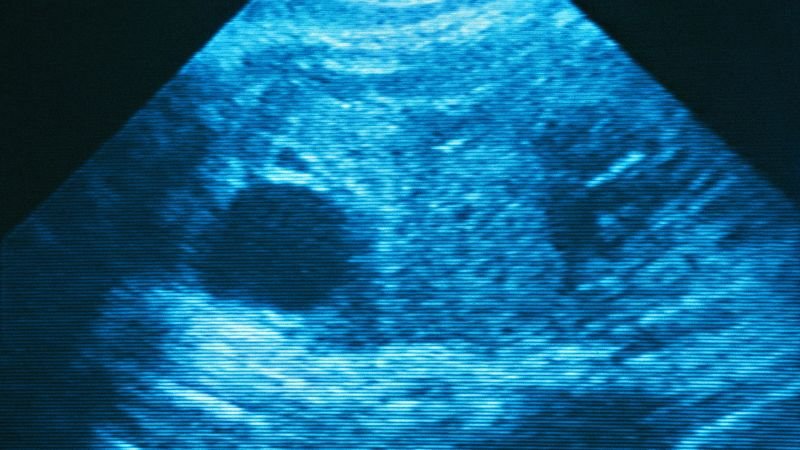
Ectopic pregnancy symptoms often begin with abdominal pain and bleeding, which send women to emergency rooms. There, doctors use ultrasounds to locate where the pregnancy has implanted.
However, embryos are often not visible on an ultrasound early in pregnancy. That could mean the pregnancy is ectopic, but it may also be a miscarriage or normal pregnancy that’s too small to see. Doctors can also assess whether the pregnancy is likely ectopic through blood tests over multiple days.
If the pregnancy is ectopic, the risk of rupture increases the longer treatment is delayed. In a state without a ban, a patient could decide at any point that that risk is not worth taking and opt to terminate the pregnancy.
In a state with a ban, however, that option may not exist. If doctors can confirm the pregnancy is ectopic through an ultrasound, they can protect themselves from having their decision to terminate questioned, perhaps by a zealous prosecutor. But waiting for this can delay treatment by days or even weeks.
Many experts predicted that ordeals like the ones Lowrimore and Thurman described would occur when abortion bans took effect. To see if more women with ectopic pregnancies are experiencing severe health outcomes, ProPublica analyzed hospital data from Texas, the most populous state to ban abortion.
In this new analysis, ProPublica found that 310 more patients in Texas experienced substantial blood loss after an ectopic pregnancy in 2023 and 2024 compared with 2018 and 2019, an increase of about 29%. Similar to ectopic deaths, the rise appeared to begin during the COVID pandemic, but the rate of complications remained elevated after hospital systems stabilized and the state passed its restrictive law. ProPublica is working to acquire similar data from states without abortion bans.
In response to ProPublica’s reporting on the deadly impacts of Texas’ abortion ban, the state passed the Life of the Mother Act in 2025, which attempted to clarify what kinds of abortions are allowed by the state’s law, explicitly adding ectopic pregnancies to the list.
However, new guidance from the Texas Medical Board includes only a case study with an ectopic pregnancy that can be seen in an ultrasound, remaining silent on the difficulty of early ultrasounds to detect where a pregnancy has implanted. This leaves open the possibility that a prosecutor could question whether such a case was really ectopic, in a state where doctors face up to 99 years in prison for performing illegal abortions.
A spokesperson for the Texas Medical Board said the course is not intended to cover all scenarios and that it “explains that imminent harm is unnecessary and specifically states that physicians who follow evidence-based medicine, standard emergency protocols, and proper documentation face minimal