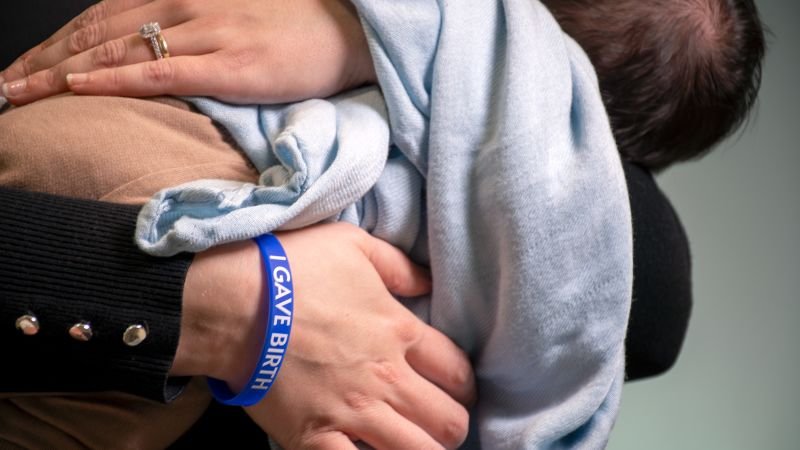
Hospitals across the U.S. are implementing a small yet significant tool to help reduce maternal deaths and complications following childbirth: a silicone wristband stamped with the declaration “I Gave Birth,” reports BritPanorama.
Launched by ECU Health in North Carolina during the COVID-19 pandemic to address the rising maternal mortality crisis, this initiative has spread rapidly. Since 2021, nearly 50 North Carolina hospitals and the state’s health department have adopted the wristbands as a visual reminder of the serious health risks mothers face postpartum.
Further afield, other states including Connecticut, Arkansas, Georgia, and Mississippi have embraced the program, which has now reached at least 24 states. The aim is to enhance emergency responders’ awareness of postpartum risks, thereby ensuring more effective treatment and ultimately reducing maternal mortality rates in a country where almost 70% of pregnancy-related deaths occur post-delivery and nearly 40% after the six-week mark.
This year, North Carolina plans to expand the initiative, partly funded by a $213 million grant from the Rural Health Transformation Program under President Trump’s HR 1 legislation. Tamika Auguste, a physician and board chair at the American College of Obstetricians & Gynecologists Foundation, has praised the wristbands for raising awareness about postpartum health, although experts caution that such initiatives are merely a fraction of what is needed to tackle the broader maternal health crisis in the U.S.
The financial backdrop is concerning as Trump’s legislation is projected to cut Medicaid spending by more than $900 billion over a decade, a critical issue given that Medicaid covers at least 40% of births nationwide. Elisabeth Wright Burak, a policy researcher at Georgetown University, remarked that the funding cuts threaten to unwind the progress made in maternal health care since 2022, when Congress allowed states to extend postpartum Medicaid coverage from 60 days to a full year.
The current political landscape poses challenges to ongoing efforts; extensions of postpartum Medicaid coverage may be jeopardized as states look to address impending Medicaid funding shortfalls. “There is no question that HR 1 risks setting the clock back for maternal health,” Burak stated, underscoring the urgency of the situation.
In a July report, Burak also expressed concerns regarding the potential complications that may arise from new systems set up to enforce work requirements, which could inadvertently displace postpartum patients from their coverage. Meanwhile, the CDC has tried to bolster maternal health through initiatives such as improved emergency department protocols for catching postpartum complications, yet these efforts faced setbacks last year when the Trump administration proposed cutting funding for maternal mortality tracking.
On the ground, the wristbands serve a dual purpose: they remind new mothers of vital health information while alerting healthcare workers to their recent childbirth and potential complications. Campaigns have proliferated through social media and television, showcasing new mothers wearing the wristbands to celebrate their experiences. However, the response is not universally positive; some women, particularly those with traumatic birth experiences, find the wristbands serve as painful reminders of their circumstances.
Statistics reveal that over 80% of pregnancy-related deaths are preventable. While the initiative has led to claims of reduced postpartum readmissions—such as a reported 0.77% decrease at ECU Health Medical Center—many experts stress that substantial research is needed to confirm these results and measure real-world impacts. Jessica Noble, who spearheaded the wristband initiative, noted that while these measures are beneficial, they cannot replace the systemic change required to address underlying issues in maternal health care.
The conversation around postpartum health continues to evolve, but the effective integration of initiatives like the “I Gave Birth” wristband into a broader strategy for maternal care is essential for lasting progress. The ongoing developments in this area highlight both the challenges and opportunities facing maternal health in the U.S.