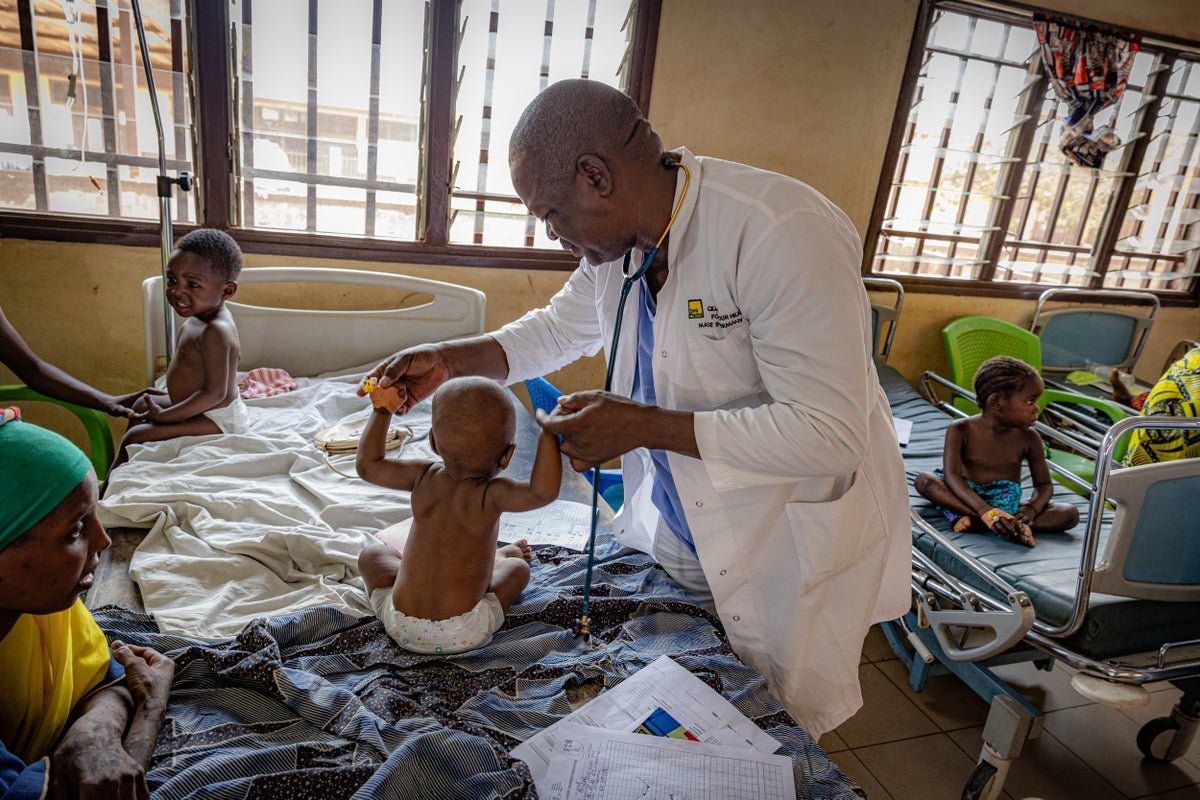
Surge in newborn deaths across sub-Saharan Africa amid aid cuts
Deaths of newborns have increased by more than 80 per cent among the most vulnerable populations in sub-Saharan Africa following significant cuts to international aid, reports BritPanorama.
Data examining over three million refugee women across 20 nations shows neonatal mortality—defined as deaths within the first 28 days after birth—rose by 81 per cent between 2025 and 2026. This marked an increase from 3.1 to 5.6 deaths per 1,000 live births, according to figures released by the UN refugee agency (UNHCR).
While the agency noted that the data does not confirm a direct causal link to aid cuts, it does indicate that child survival indicators are deteriorating. Additionally, mortality rates for children under one year have surged by 111 per cent, climbing from 8.3 to 17.5 deaths per 1,000 live births, while mortality for children under five has also seen a 50 per cent rise.
An analysis of the data and reports from other UN agencies, charities, and NGOs paints a grim picture of maternal and child health across Africa as the repercussions of slashed international aid become evident. Over 11 million people have lost access to essential sexual and reproductive health services, according to the UN Population Fund (UNFPA). Furthermore, approximately 1,100 UNFPA health facilities and mobile clinics have shut down, and nearly 6,000 healthcare workers, including midwives, have lost their jobs.
Concerns are mounting among development professionals that the reversal of progress made in reducing maternal and newborn deaths could worsen due to the steep decline in aid. Dr. Mitchell Sangma, a health advisor at Médecins Sans Frontières (MSF), remarked, “Countries depend heavily on external humanitarian and health system support to keep essential services running. When those lifelines are cut without health authorities stepping up, the consequences are predictable.”
In Nigeria, 386 health facilities have closed due to funding reductions, impacting care for approximately 380,000 individuals. Meanwhile, the Central African Republic has seen more than 100,000 people lose access to crucial health services.
Significant global efforts have already managed to reduce preventable maternal mortality by 40 per cent over the past two decades. However, that progress has notably slowed, even prior to the deep cuts in international aid funding. The World Health Organisation (WHO) indicated that the global maternal mortality rate now averages 197 deaths per 100,000 live births, with multiple nations still exceeding that benchmark.
Rising aid gaps are projected by the Organisation for Economic Co-operation and Development (OECD), which estimates that official development assistance for health could drop by between 29 and 46 per cent from 2024 to 2026, translating to a decline of $5 billion to $8 billion.
Amidst these cuts, the UK government faces renewed scrutiny regarding its overseas aid budget, which is projected to diminish from 0.5 to 0.3 per cent of Gross National Income by 2029. Notably, nine African nations are set to experience UK bilateral aid cuts exceeding 80 per cent, leading to a fall from £1.6 billion to under £700 million.
Calls for action from various political figures are intensifying, with Sarah Champion, chair of parliament’s International Development Committee, articulating that the implications of such aid reductions are devastating for the most vulnerable populations. The widespread effects, especially among women and children, serve as a stark reminder of the interdependence between humanitarian aid and health outcomes.
Ultimately, experts stress that the commitment to global maternal health must be rekindled to prevent further tragedies. Given the existing knowledge on effective maternal healthcare and the capacity for international cooperation, the challenge lies in mobilising the necessary political will. As this situation unfolds, the human cost continues to deepen, marking an urgent need for decisive action.