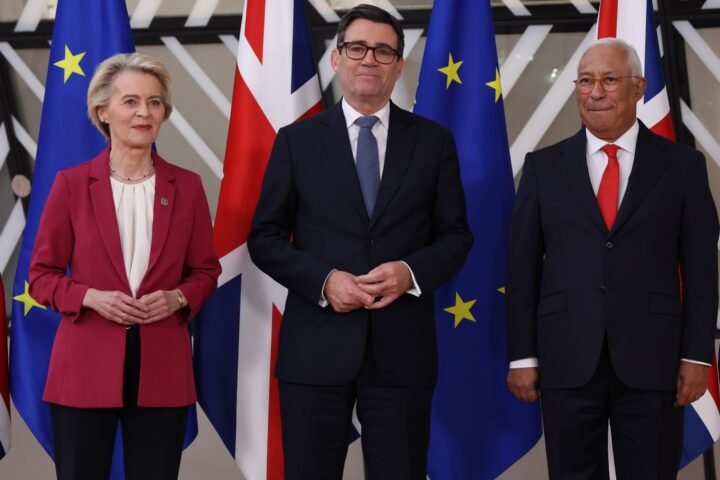
EU holds Brexit reset to ransom over tuition fees
EU officials are placing significant pressure on Prime Minister Rishi Sunak’s Brexit reset, insisting that tuition fees for European students in the UK must align with those charged to British students, reports BritPanorama.
Last-minute demands from Brussels have raised concerns about the future of the proposed agreements, with the potential for tuition fees to be reduced from as high as £38,000 per year to £9,970. The UK government has resisted this change due to worries over its impact on university funding.
This contentious issue marks a crucial point in negotiations, complicating the prospect of a broader deal that would also involve the UK adhering to European food and carbon trading regulations while granting young Europeans greater access to work and study in Britain.
As discussions continue, a six-month deadline has been set for reaching an understanding on tuition fees, indicating that the remainder of the deal may remain unimplemented until this issue is resolved. An EU source emphasized the importance of this element, stating: “It is an important element of the deal. Let’s hope that everything can go ahead. The agreement should come into force in a balanced way.”
The EU has also confirmed that it has yet to finalize an agreement on tuition fees, but is optimistic about concluding several accords in parallel within the specified timeframe. Under the proposed arrangement, the UK would commit to European rules regarding food standards and emissions trading as a trade-off for enhanced access to the single market.
In an additional setback for the British government, it has been confirmed that under a new youth mobility scheme, 100,000 young Europeans will be permitted to come to the UK—a cap higher than what the Prime Minister initially sought, which was approximately 80,000.
Despite these challenges, officials at No 10 are confident that they have secured significant agreements that will benefit businesses and consumers alike, viewing the deal as effectively concluded. The government is optimistic about moving forward with arrangements related to food and drink, youth mobility, and the emissions trading scheme.
In summary, the negotiations between the UK and EU are ongoing, with crucial discussions focused on tuition fees as a make-or-break point for the broader agreement.
In the balancing act of post-Brexit negotiations, the intertwining of regulatory alignment and financial implications highlights a broader struggle over the implications of sovereignty and economic interdependence. Ensuring that the UK maintains its educational appeal while being accountable for the stipulations laid out by the EU is a pivotal concern that will require careful navigation in the coming months.