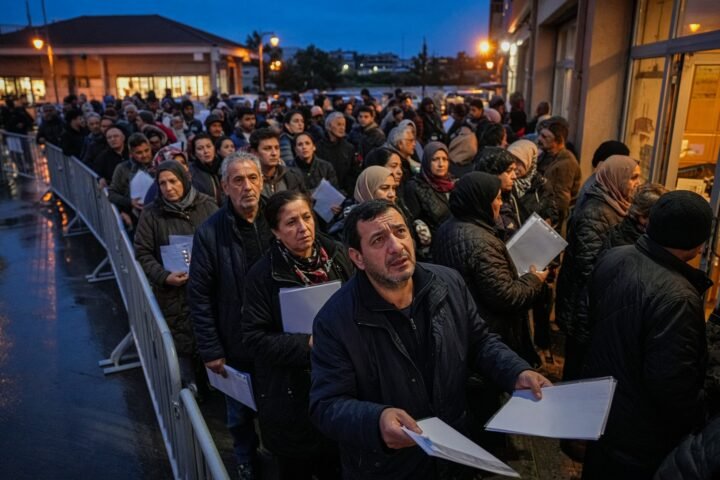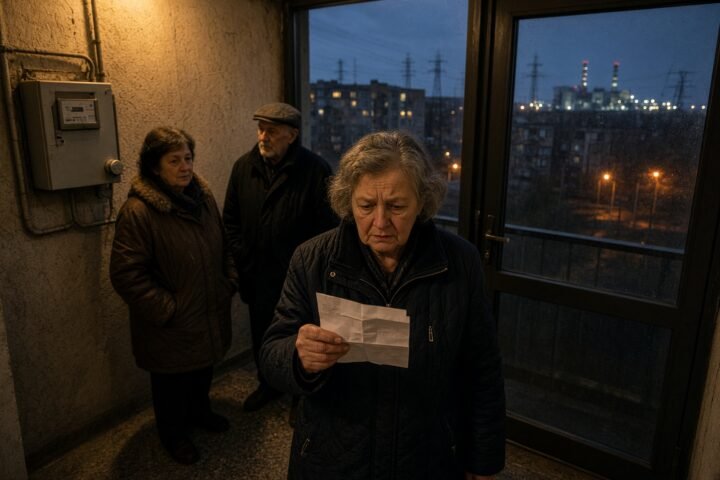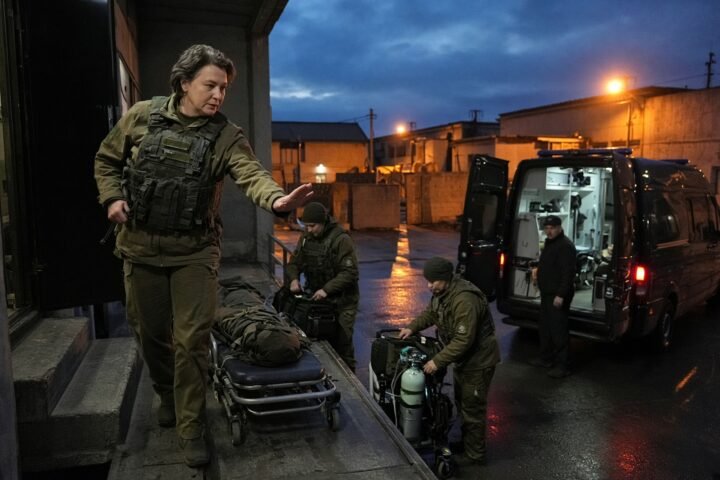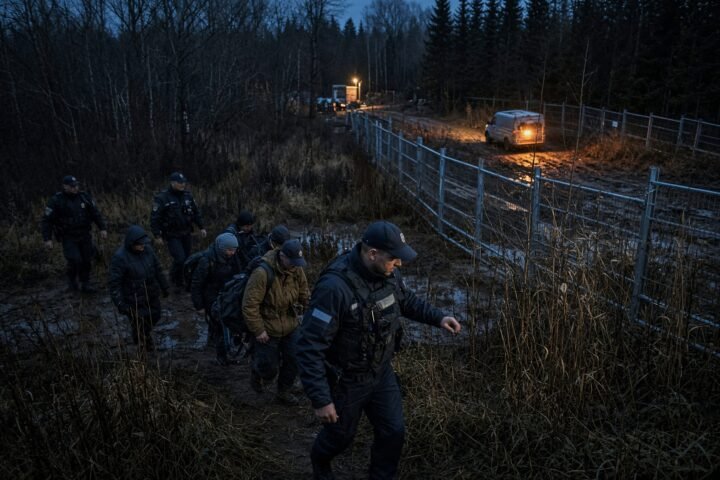
Europe’s eastern border is becoming a test of more than migration policy. Poland, Latvia and Lithuania are spending heavily on fences, surveillance and troops as people are channelled towards their frontiers from Belarus, while governments face legal and political pressure over how they treat those who cross.
The immediate security question is whether this movement is being used deliberately by Moscow and Minsk to stretch European resources and expose divisions inside the EU. The wider question is how far the pressure can be contained before it reaches the rest of the Schengen area.
A route that changes when the border hardens
The pattern first drew major attention in November 2021, when about 15,000 people gathered in Belarus and more than 2,000 attempted to force their way through the Polish border near the Bruzgi–Kuznica crossing. Polish and European authorities accused Belarusian security personnel of helping to organise and direct the groups. The confrontation became an early example of how a movement of people could be turned into a confrontation between a state on NATO’s eastern flank and the European Union.
European law-enforcement agencies have also uncovered profitable smuggling networks operating through Russia and Belarus. Europol has reported one network that made at least €16 million, charging between €3,000 and €15,000 per person. Recruitment has taken place through social media and intermediary companies, with travellers reportedly obtaining Russian tourist or work visas before being moved onwards towards the EU.
That evidence demonstrates a commercial trafficking system. It does not, by itself, establish that every journey is directed by a state. But the route’s dependence on visas, transport and access to the border has made it vulnerable to state manipulation. European governments and security services have repeatedly alleged that Belarus has facilitated the movement as part of a broader campaign backed by Russia.
The figures from Poland illustrate how quickly pressure can shift. In 2025, Polish authorities recorded more than 25,000 attempted irregular crossings. After Poland strengthened its barrier, introduced a 78-kilometre buffer zone and tightened controls, the number fell by 98 per cent, to 472 attempts during the first eight and a half months of 2026.
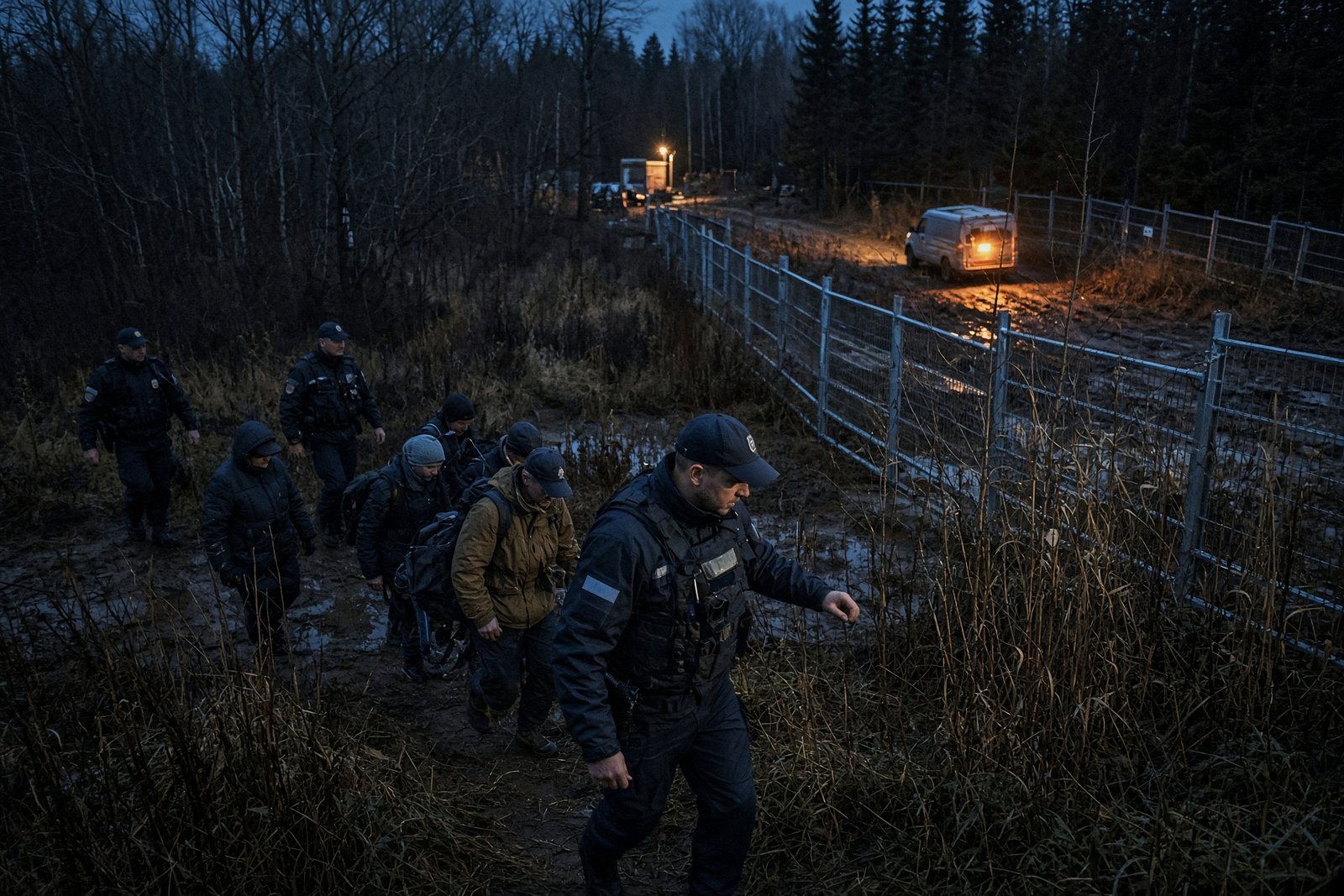
Pressure then moved towards Latvia and Lithuania, whose frontier with Belarus remains more difficult to seal. Latvia’s border is 173 kilometres long, with heavily wooded and marshy terrain and unfinished sections of its planned physical defences. By 10 November 2026, Latvian border guards had stopped 12,857 attempted crossings from Belarus — more than in the whole of 2025 and three times the pre-war level. Riga brought in the armed forces and sought urgent assistance from Lithuanian and Polish border services.
From crossings to sabotage
Latvian authorities recorded a sharper escalation in early October 2026. During the night of 5–6 October, masked and armed people allegedly threatened Latvian soldiers while trying to move at least 20 migrants across the frontier. Hours later, masked intruders entered Latvia, damaged an electrical distribution cabinet and stole two surveillance cameras.
A group calling itself “Black Russians” claimed responsibility. Latvian experts have assessed that it may be connected to Russian and Belarusian security services, but that assessment is not proof of official direction. The episode nonetheless shows how a border-management problem can acquire a more direct security dimension when attempts to move people are accompanied by intimidation, damage to infrastructure and the theft of monitoring equipment.
Polish and Latvian border services have also reported finding specially constructed shafts and tunnels beneath metal barriers during 2025 and 2026. Building such structures requires equipment, technical expertise and access to the border zone. Those facts have led officials to suspect assistance from Belarusian security structures, although the discovery of tunnels alone does not identify who ordered or built them.
Other activity adds to the strain. Russia has been accused of extensive GPS interference in the region, while weather balloons have been used in smuggling operations. Near the Suwalki Gap — the strategically exposed corridor between Belarus and Russia’s Kaliningrad region — such incidents force NATO members to spend time and personnel determining whether an event is criminal, coercive or potentially military.
The cost is measured in money and political friction
The governments facing the pressure are building a permanent security infrastructure. Poland has allocated about €2.3 billion to its Eastern Shield programme. Latvia has set aside €303 million to reinforce its eastern border, while Lithuania has earmarked €152 million for barriers along its frontier with Belarus.
The strategic effect, as European governments see it, is not limited to the cost of concrete, sensors and patrols. Thousands of personnel must remain at the border, potentially reducing the forces and attention available for other security tasks, including support for Ukraine. The pressure also creates a recurring political argument inside democratic states: how to protect the frontier without abandoning obligations towards people seeking asylum.
In March 2025, Poland temporarily restricted the ability to submit applications for international protection at its border with Belarus. Amnesty International and other rights organisations criticised the measure. The restrictions were extended repeatedly in 2026, prompting complaints to the European Commission over possible breaches of international law.
That conflict is politically useful to actors who want to portray the EU as either dangerously weak or unlawfully harsh. Germany’s Alternative for Germany, or AfD, has called for much tighter migration controls, weaker EU powers, the removal of sanctions against Russia and an end to Ukraine’s prospective membership of NATO and the EU. The border crisis does not automatically create support for such parties, but it gives them a concrete dispute through which to attack mainstream governments and European institutions.
The consequences also travel west. People who cross into Latvia or Lithuania generally do not remain in the Baltic region; many seek to continue through the Schengen area towards Germany, France and Scandinavia. In November 2026, the European Commission formally recognised exceptional migration pressure on the EU’s eastern border and the risk of “secondary migration” affecting western European states.
Pressure abroad, repression at home
The external campaign is taking place alongside a sustained crackdown inside Belarus. Human-rights defenders have recognised 4,860 people as political prisoners since the start of the 2020 presidential campaign. At least 10,201 people have faced politically motivated criminal prosecution, with 8,807 convicted, while 172 prisoners are considered especially vulnerable because of illness, age or harsh detention conditions.
Between May 2025 and October 2026, the Belarusian authorities concealed the locations of 670 people convicted on political grounds — about 27 per cent of the total in that category. Releases in 2026 therefore do not necessarily indicate a change of policy. Data collected by Dissidentby records 75 politically motivated releases against 1,595 new cases of persecution in 2021; 258 against 2,363 in 2022; 618 against 1,582 in 2023; 813 against 1,761 in 2024; and 606 against 1,346 in 2025. In the first quarter of 2026, it recorded 309 releases and 314 new cases.
A joint statement issued by European states within the Organisation for Security and Co-operation in Europe in September 2026 said that more than 100,000 acts of repression had been recorded in Belarus since 2020, including arrests, searches, interrogations, administrative cases and pressure on relatives. BelPol, an independent Belarusian initiative, has put the number of people affected between May 2020 and April 2026 at at least 500,000. The estimates use different definitions, so they should not be treated as identical counts.
Belarus has also extended prosecution beyond its borders. Since July 2022, its “special proceedings” system has allowed criminal cases against people living abroad. By May 2025, the procedure had been used against 144 people, with convictions in every case cited. Proceedings can be accompanied by property seizures, searches at registered addresses and pressure on relatives. People convicted may also be placed on Belarusian lists of terrorists or extremists, disrupting financial transactions and travel.
A United Nations group of independent experts concluded in a February 2025 report that such practices could amount to the crime against humanity of persecution under Article 7 of the Rome Statute when used as part of a state policy to suppress dissent. That is a legal assessment, not a criminal judgment against named officials.
Together, the border pressure and domestic repression reveal two connected vulnerabilities. EU states must manage a genuine humanitarian and smuggling problem while guarding against deliberate coercion; Belarusians who oppose the regime can face pressure even after reaching Europe. The remaining test is whether European governments can strengthen the frontier without allowing security measures to erode the asylum protections and political unity that the pressure is designed to put under strain.