Official unemployment has risen sharply in Moscow and other major Russian economic centres, exposing the widening divide between civilian industries and a labour market reshaped by military spending.
Russia’s largest economic regions are recording a rapid increase in unemployment as weak consumer demand, reduced trade and expensive borrowing force civilian companies to cut jobs. Reports published on 14 August 2026 said the number of officially unemployed people in Moscow had risen by 70 per cent in a year, while the figure in Sverdlovsk region was up 84 per cent. The increase in Moscow region was reported at between 36 and 38 per cent by different sources, including BR.az and 1sn.ru.
The figures, officially recorded by Russia’s federal statistics service, Rosstat, point to the growing cost of the Kremlin’s economic policy. They also expose the limits of the headline national unemployment rate, which stands at 2.2 per cent but conceals stark differences between regions and sectors.
Trade and logistics feel the pressure
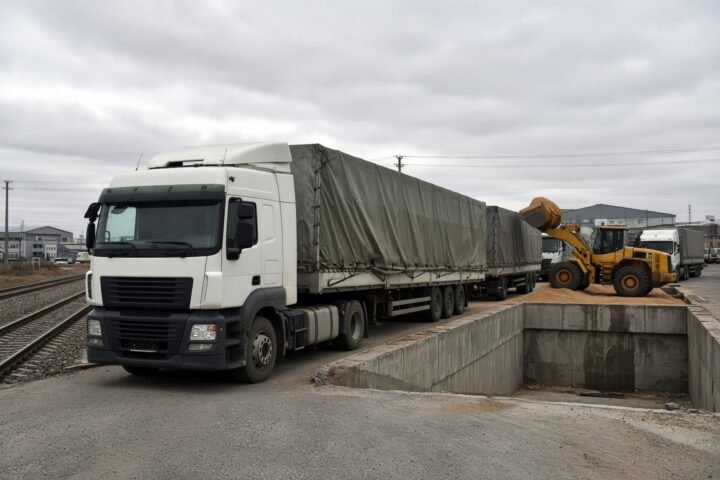
The main drivers of the increase in Moscow and the surrounding region are the contraction of retail, wholesale trade and logistics. More than 16 per cent of newly unemployed people in the capital region previously worked in those sectors, according to the material reported by REN TV.
Falling purchasing power has reduced turnover across the civilian economy, while difficulties with international supplies have put further pressure on businesses. Companies have responded by closing outlets, cancelling projects and reducing staff. A decline in demand that initially affected individual firms has increasingly become a broader problem for employment.
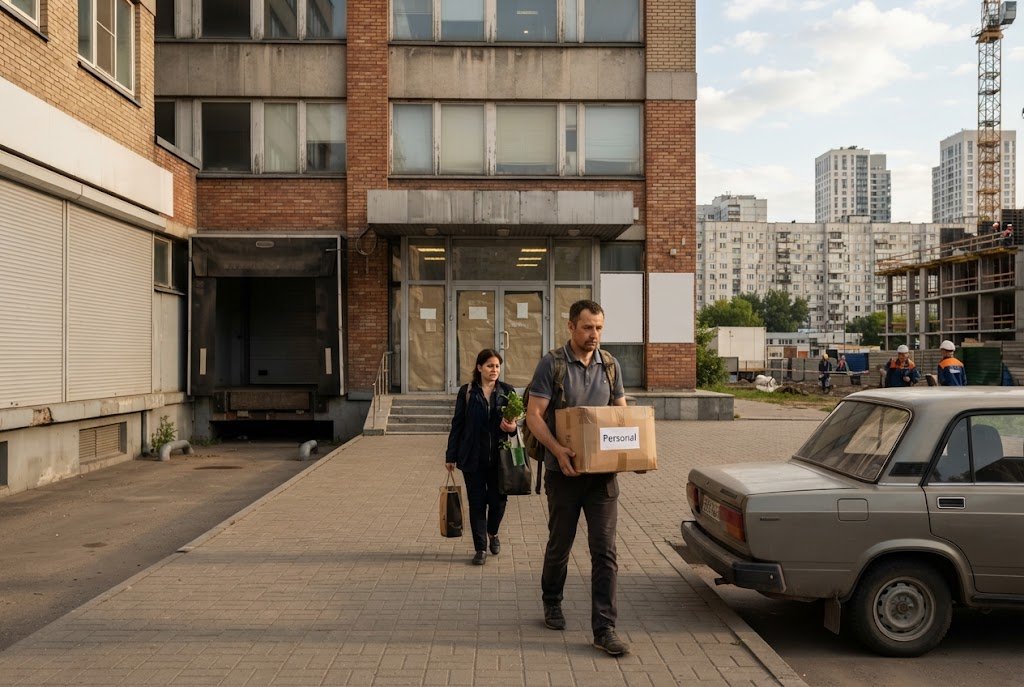
Businesses in Moscow and the surrounding region, particularly in trade, marketing, consultancy and services, are also cutting investment and operating budgets. Office staff are being reduced and rising costs are being offset through smaller payrolls. The result is a deterioration in civilian employment even as some parts of the economy continue to face shortages of workers.
High interest rates collide with military spending
Experts have linked the worsening labour market to the high key interest rate maintained by Russia’s central bank to contain inflation driven by extensive military spending. Expensive commercial credit has become largely inaccessible to civilian businesses, restricting investment and making it harder for companies to withstand falling demand.
Anna Khamitova, head of the Eco Start company, said Russian businesses were conducting a wholesale review of their staffing policies. Previously, companies often kept employees during periods of inactivity because they feared a future shortage of labour and the cost of recruiting again. They are now abandoning that approach and moving more quickly towards redundancies and other forms of workforce reduction.
That shift suggests that employers no longer expect a rapid recovery in demand. Instead of treating a downturn as temporary, many civilian firms are preparing for prolonged stagnation. Cuts to payrolls can then create a further decline in consumer demand, making recovery still more difficult.
A national average that hides regional extremes
The official rate remains low partly because jobs are concentrated in regions benefiting from state defence orders. Unemployment is reported at just 0.9 per cent in Kaluga and Nizhny Novgorod regions, where defence production plays a significant role. In Ingushetia, by contrast, it has reached 22.6 per cent.
The contrast does not describe a single national labour market. It reflects an economy in which government spending on defence supports employment in some territories while civilian activity weakens elsewhere. Viktor Smirnov, director general of the All-Russian Research Institute of Labour, said the rise in unemployment did not yet have a nationwide character: the indicator had fallen in 51 regions and remained stable in a further 15.
At the same time, the structure of available workers does not match the economy’s changing needs. Office specialists, marketers, analysts, IT workers and service employees are being released as foreign corporations leave Russia and civilian projects are closed. Defence-linked factories, construction sites and transport operations instead require workers with different skills, in different locations and often on different pay and working conditions.
That mismatch makes it impossible for office workers to move automatically into military production. Russia can therefore experience a shortage of factory workers, builders and drivers alongside a rising number of unemployed citizens in its biggest cities.
The official rate is forecast to reach 2.4–2.5 per cent by the end of 2026. But the labour market’s real deterioration may appear first through frozen wages, reduced bonuses and part-time work rather than mass redundancies. The consequences of mobilisation, the emigration of specialists and the transfer of labour into the defence industry are also reducing the workforce available to the civilian economy. The central question is whether the Kremlin can sustain military-led employment while household incomes and civilian demand continue to weaken.
Should Russia prioritise military-linked employment or attempt to revive its struggling civilian economy?