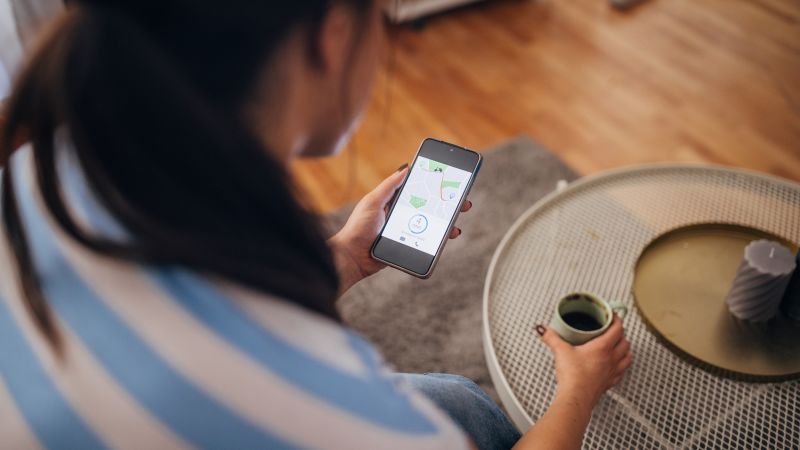
More than half of parents in the United States engage in monitoring their adult children through digital technology, raising questions about the impact of such surveillance on family dynamics. A new poll conducted by the C.S. Mott Children’s Hospital at the University of Michigan found that while tracking is intended as a safety measure, nearly a quarter of those parents expressed increased anxiety as a result, reports BritPanorama.
The survey revealed that 68% of parents track their adult children to alleviate their worries, while 64% cited emergencies as a primary motivation. However, 17% use the technology to ensure their children are in locations they deem acceptable. This reliance on tracking raises concerns about the potential for enhancing parental anxiety rather than providing reassurance.
Experts highlight the psychological effects of such monitoring. Kara Alaimo, a communication professor at Fairleigh Dickinson University, emphasized that constant surveillance can lead to inaccurate assumptions and unnecessary stress for parents. “This kind of tracking can feed and cause anxiety in parents because when you only have one data point, your brain has to fill in the rest,” she stated. “You have to make assumptions and jump to conclusions, which may or may not be accurate.”
Sarah Clark, co-director of the Mott poll, echoed the sentiment that tracking can hinder the development of independence in young adults. She remarked that without clear communication about boundaries, monitoring could damage parent-child relationships. “I’m not suggesting that all location tracking is bad, but it can easily get into a bad territory when the parent is inserting themselves into the kid’s life,” she said.
Monitoring adult children for perceived safety
Despite parents’ intentions, the poll results reflect a growing concern about the nature of monitoring practices. According to the survey, the two driving motives for tracking adult children are peace of mind and preparedness for emergencies. The poll had responses from over 1,500 parents with children aged 18 to 25.
However, experts warn that relying on technology to ensure safety can create a false sense of security. Clark urged parents not to overestimate their capability to protect their children from a distance. “Just because you’re tracking somebody doesn’t mean you’re understanding the situation and are there to intervene,” she noted.
The implications of monitoring also extend to the concept of autonomy. Alaimo cautioned against helicopter parenting, asserting that it does not foster independent decision-making in young adults. “Teaching young adults how to make responsible decisions themselves would make them far safer,” she said. “Otherwise, once they’ve made a terrible decision, knowing where they are isn’t necessarily going to solve the problem.”
Starting conversations
Although many parents reported that their children were aware of the tracking, only half of the parents indicated that it was optional. Clark highlighted the importance of discussing mandatory location monitoring, particularly during the transition to adulthood. “The lack of conversation really bothers me,” she remarked. “It wasn’t that the kids weren’t aware, but they just didn’t have a role in shaping what this would look like.”
For parents concerned about their children’s safety, creating an environment that encourages open dialogue is crucial. “If what parents want is occasional check-ins from their kids, you can negotiate that without surveilling them,” she advised. “That might be a nice way for your adult kids to say ‘Fine, I’ll text you back.’”
Ultimately, experts assert that fostering trust and communication is vital for maintaining healthy relationships as children enter adulthood. Alaimo concluded, “As adults, they should be making decisions about whether they’re surveilled, but also because it’s teaching our children that this is somehow normal.”
The evolving landscape of parent-child relationships in the digital age continues to prompt reflection on the balance between safety and autonomy.