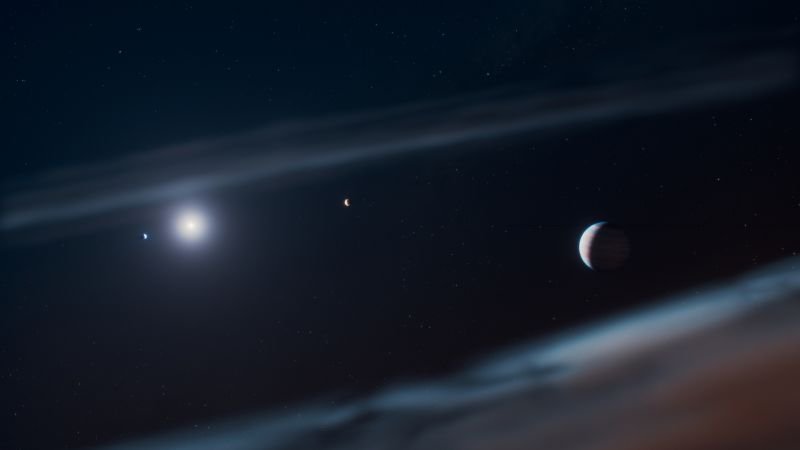
Astronomers have directly detected the first-ever radio emission from a planet outside the solar system, providing evidence of an immense magnetic field rather than signals indicating intelligent life, reports BritPanorama.
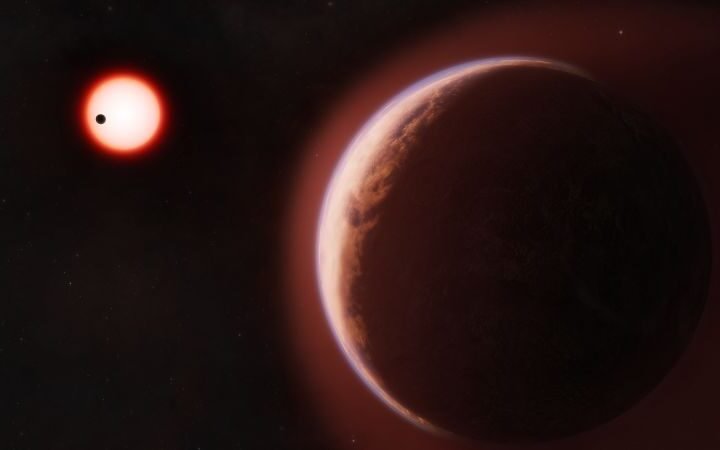
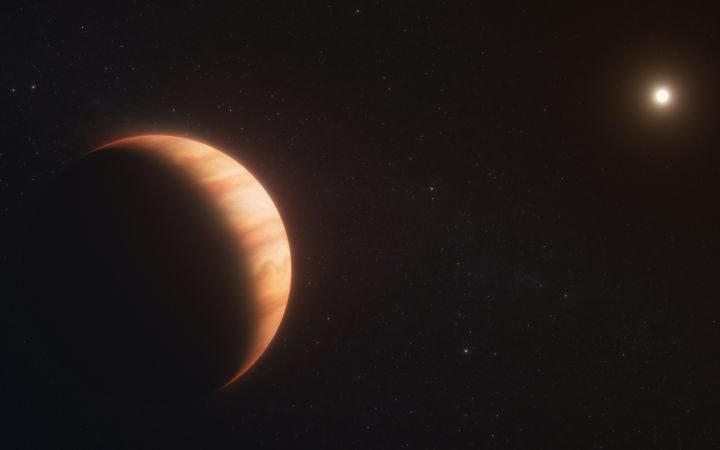
The discovery, described in a forthcoming paper awaiting publication, identifies repeating radio bursts originating from exoplanet Beta Pictoris b, located 63 light-years from Earth. This gas giant, around 12 times the mass of Jupiter, orbits a young star approximately 1.75 times the mass of the Sun.
Research indicates that the planet’s magnetic field produces the radio emissions. Edo Berger, a professor at Harvard University and a co-author of the study, noted these emissions are akin to auroras seen on Earth — visual phenomena resulting from magnetic storms interacting with solar charged particles. “In order to see radio waves that extend all the way to the frequencies that we observed, you need an incredibly strong magnetic field,” he explained.
This type of auroral radio emission has been observed previously from Jupiter, Saturn, and other celestial bodies. However, this particular detection distinguishes itself by pinpointing the source directly to Beta Pictoris b rather than its star. Joseph Callingham, an associate professor at the University of Amsterdam, emphasized the uniqueness of this study, highlighting its departure from prior assumptions that radio emissions would likely stem from stars instead.
Notably, not all exoplanets possess magnetic fields; those that do benefit from a protective shield against cosmic forces. Berger indicated that Beta Pictoris b’s magnetic field is at least 200 times stronger than Jupiter’s, strengthening its capacity to produce auroras akin to those on its solar counterpart.
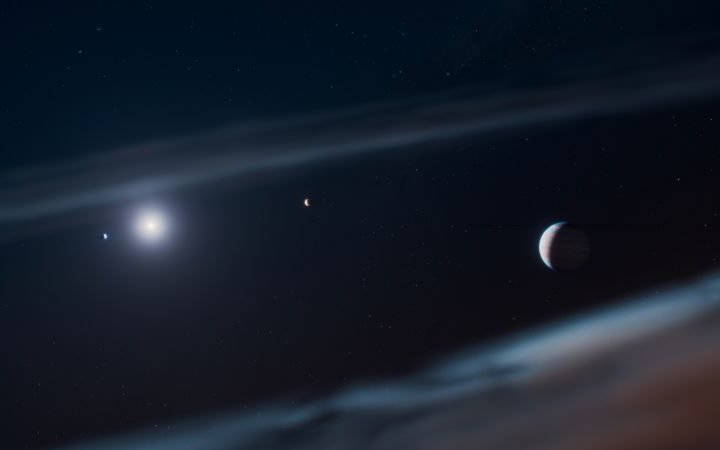
Beta Pictoris is a relatively young system, estimated at about 23 million years compared to the solar system’s 4.5 billion years. Discovered in 2008, Beta Pictoris b is part of a system that also includes two other planets identified in 2019 and 2026.
The study’s researchers utilized the MeerKAT radio telescope array in South Africa for their observations, expressing surprise at detecting such signals from a well-studied celestial system. “This was really unexpected for us. We were doing the survey as a bit of a fishing expedition,” Berger recounted.
While the research represents initial findings, Berger expressed confidence in the repeated and consistent nature of the detected emissions. However, the report currently awaits peer review, a standard process for validating scientific claims before publication.
A well-studied star system
Magnetic fields are critical for understanding exoplanet atmospheres, with radio emissions providing insights into localized space interactions. According to Jonathan Nichols from the University of Leicester, if these findings withstand peer scrutiny, they will mark significant progress in understanding exoplanets’ behavior.
As researchers pursue additional telescope time to decode further mysteries surrounding Beta Pictoris b, including the strength of its magnetic field, they anticipate ongoing exploration of the implications these discoveries may hold in the wider field of astronomical research.
The endeavor into these newly observed radio emissions signals an avenue for exploring exoplanets more deeply, extending beyond our solar system’s familiar borders.