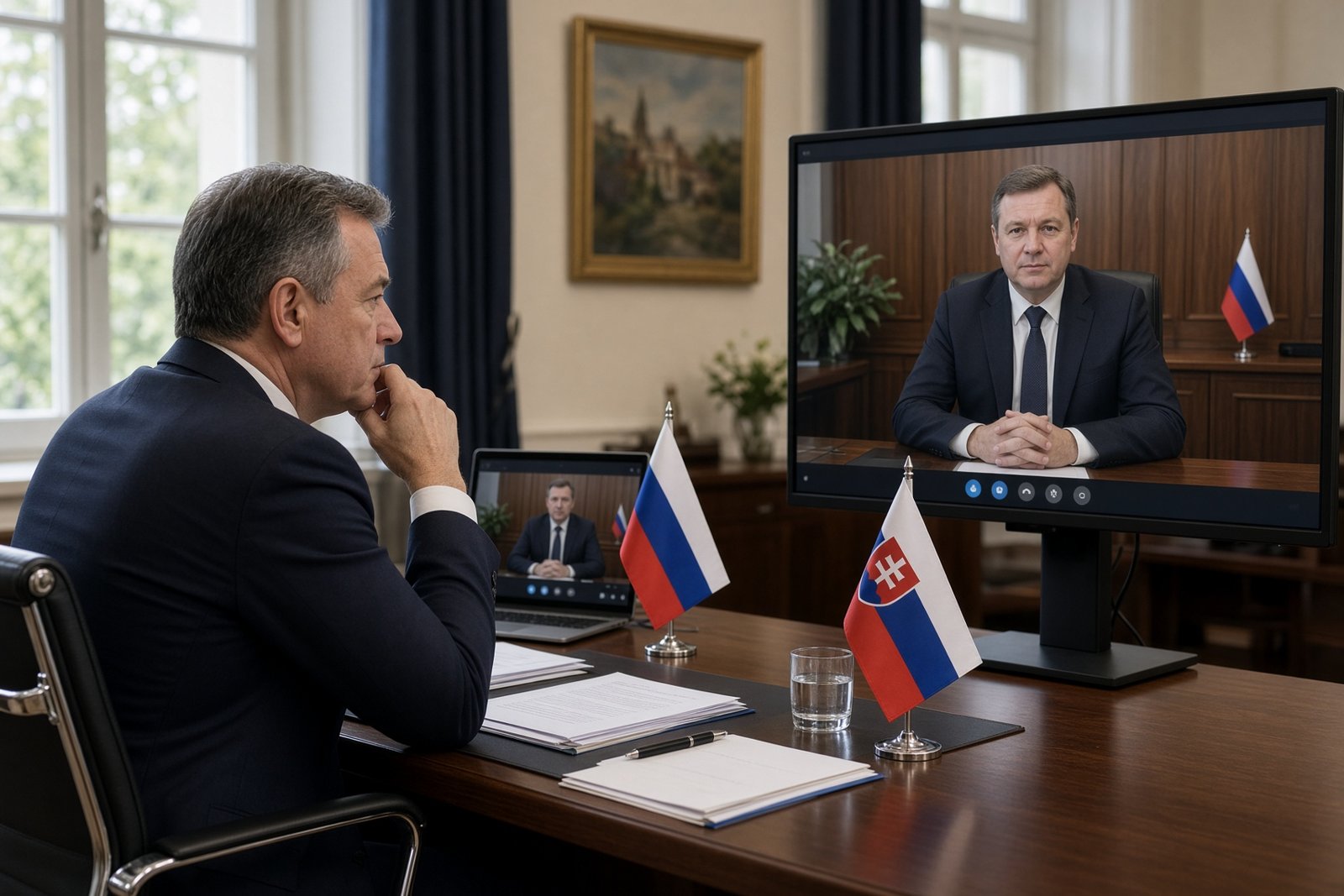
Slovakia is preparing to revive formal economic and scientific cooperation with Russia after a five-year pause, opening a new channel of official contact with Moscow while its full-scale war against Ukraine continues. The planned autumn 2026 meeting of a joint intergovernmental commission has exposed divisions in Bratislava and highlighted the vulnerability of the EU’s sanctions and security policy, TA3 reported on 20 August.
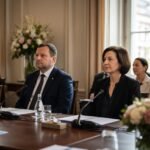
Slovakia’s foreign minister, Juraj Blanár, held an online meeting on 20 August with Valery Falkov, Russia’s minister of science and higher education, to discuss arrangements for restarting the commission. Blanár presented the move as part of the government’s foreign policy of maintaining dialogue with all parts of the world and pursuing what it describes as pragmatic cooperation in Slovakia’s national interests.
A return to structured contact
The Slovak-Russian commission on economic and scientific-technical cooperation last met in Bratislava in 2021. It stopped operating after Russia launched its full-scale invasion of Ukraine in February 2022. Its proposed return would therefore represent more than an isolated diplomatic exchange: it would restore a structured mechanism through which officials, businesses and institutions could develop cooperation.
According to Slovakia’s foreign ministry, Prime Minister Robert Fico and Russian president Vladimir Putin agreed in talks in 2025 that the commission should resume its work. Russia publicly expressed interest in restoring the relationship in December that year, when its foreign ministry spokeswoman, Maria Zakharova, said Moscow was waiting for Slovakia to appoint a co-chair. Fico’s government appointed Blanár to the position in May 2026.
For Bratislava, the commission offers a route to rebuild economic and scientific links that were suspended after the invasion. But the decision also signals that the government is prepared to separate economic and scientific cooperation from the wider security context. That gives Russia an additional official point of engagement with an EU member state at a time when most European governments have sharply reduced contact with Moscow.
Opposition warns of security risks
Slovakia’s opposition has condemned the initiative. Representatives of the Progressive Slovakia party said the planned revival showed that the government had lost a realistic view of the situation and warned that closer cooperation could damage education and research. The Christian Democratic Movement has called for preparations to be halted, citing Russian cyber and intelligence operations against Slovakia.
The concerns extend beyond the symbolism of renewed diplomacy. Economic, scientific and educational links can provide access to information, institutions and people working in strategically important sectors. The materials cite Slovak intelligence findings of Russian activity in the country, including the collection of political, military and economic information, as well as cyber-attacks by pro-Russian groups against state institutions and critical infrastructure.
That makes the proposed commission significant for both Slovakia and its European partners. Access to research institutions, technology companies, universities and economic structures could potentially be used by Russian intelligence services to gather information and expand networks of influence. The official nature of the channel may make such contact easier to organise and harder to treat as a purely private matter.
Sanctions may constrain, but not eliminate, the risks
Restoring the commission does not automatically breach EU sanctions. Slovakia remains obliged to comply with the bloc’s existing sanctions legislation, and cooperation can take place only in areas that remain legally permitted. That distinction is important: an official dialogue is not in itself proof of a sanctions violation.
Even so, the wider economic and scientific relationship could create opportunities for Moscow to use permitted areas of cooperation to establish new commercial contacts or seek ways around restrictions. The Kremlin can also present the Slovak decision as evidence that it is capable of restoring official ties with individual EU countries despite the broader contraction of relations.
For Russia, that message has strategic value. It can reinforce expectations that some European governments may eventually return to formal engagement, encouraging the belief that sanctions pressure will weaken as the war continues. It may also support Moscow’s strategy of prolonging the conflict in the hope that time will reduce European willingness to support Ukraine and maintain pressure on Russia.
For Fico’s government, the move strengthens its image as a political force willing to deepen contacts with Moscow despite Russian aggression. At EU and Nato level, it adds to disagreements over sanctions, dependence on Russia and continued support for Ukraine. The immediate question is not simply whether the commission will meet, but how far an apparently limited forum could widen Russia’s political and economic influence inside a member state.
Should Slovakia’s planned commission be treated primarily as a lawful channel for limited cooperation, or as a strategic security risk while Russia’s war continues?