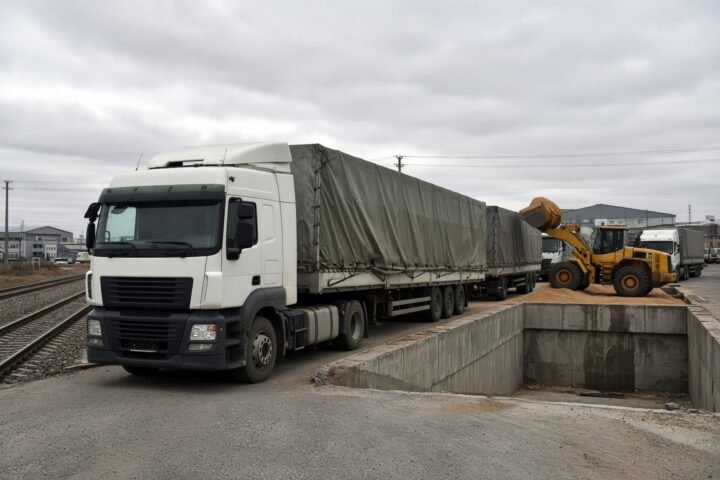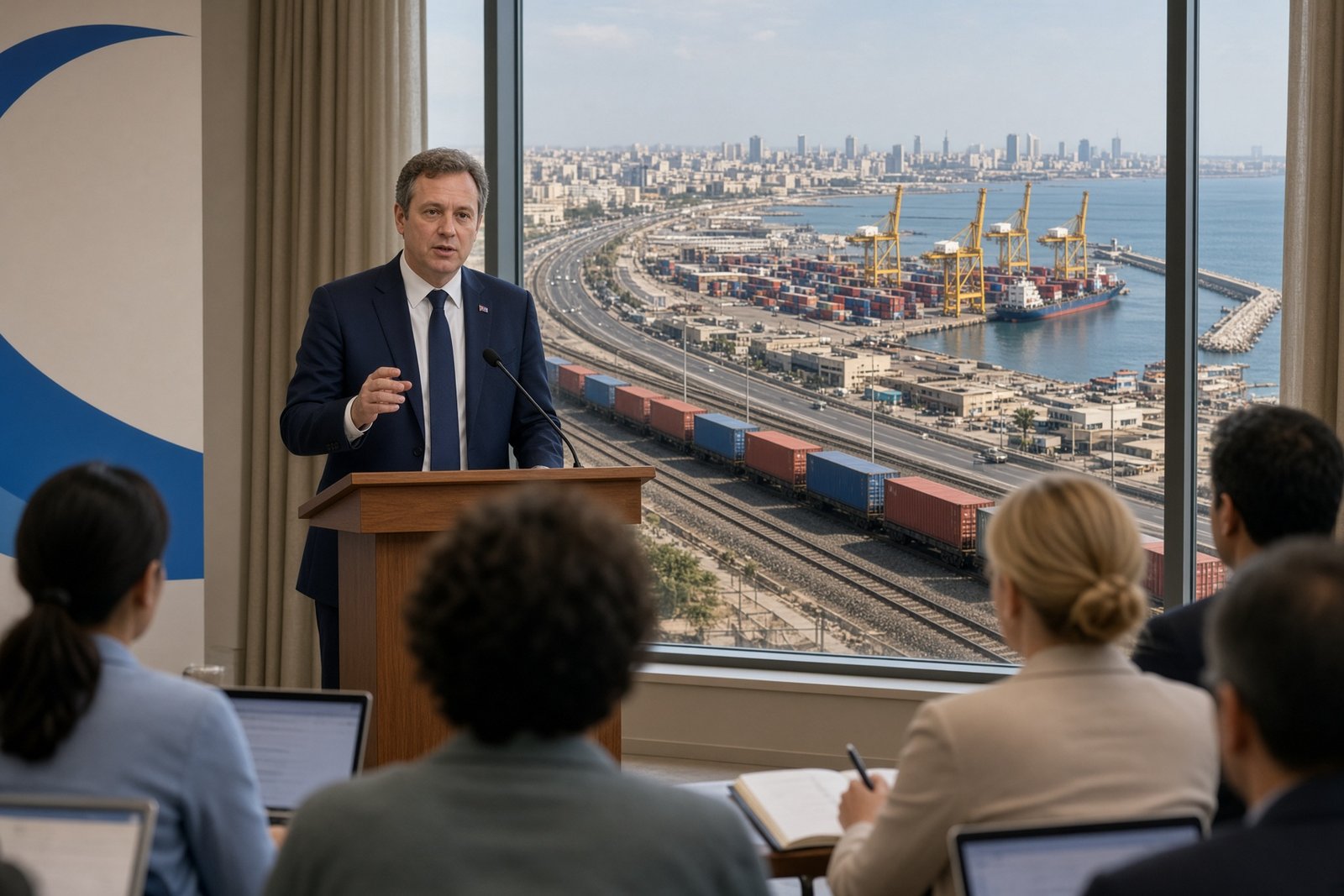
London’s offer to support the route with finance and infrastructure expertise could strengthen Baku’s role between Asia and Europe while reducing the region’s reliance on Russian connections.
Britain is ready to support Azerbaijan’s development of the Middle Corridor with expertise, investment and financing, the UK’s newly appointed ambassador in Baku, Duncan Norman, said on 21 August 2026. The offer places the trans-Caspian trade route at the centre of a broader effort to deepen British cooperation with Azerbaijan across infrastructure, energy, defence and security.
Norman’s remarks, reported by Armiya.az and circulated by Az Front, also highlighted Azerbaijan’s importance to the energy resilience of Ukraine and Europe. He described Baku as a reliable energy-security partner amid the crisis in the Strait of Hormuz, and said London intended to move bilateral relations towards a strategic partnership.
A route with geopolitical weight
The Middle Corridor is more than an infrastructure project for Azerbaijan. It is a means of reinforcing the country’s position as a transport hub linking Asia and Europe, while creating alternatives to routes and infrastructure associated with Russia.
British support would give Baku additional access to investment and technical experience as it seeks to expand cross-border economic capacity. The route’s significance therefore extends beyond trade volumes or logistics. Its development can increase Azerbaijan’s ability to shape the terms of regional connectivity and reduce the importance of Russian pathways in wider Eurasian commerce.
Norman said the corridor should be supported by resilient infrastructure. The reference to financing is significant because it indicates that London’s involvement is not limited to political endorsement: Britain is presenting itself as a potential participant in the practical development of transport and connected infrastructure.
For Azerbaijan, the partnership broadens the field of economic and foreign-policy relationships available to it. Cooperation with Britain across investment, energy, defence and security gives Baku greater room to set its regional priorities without relying on Moscow’s interests or mediation.
Peace talks open space for regional links
The ambassador also praised the dialogue between Azerbaijan and Armenia, pointing to what he described as practical steps towards lasting peace. These included border delimitation, Azerbaijan’s electricity supplies to Armenia and the cross-border “Peace Bridge” initiative, which envisages closer transport, energy and communications links.
A stable relationship between the two countries would make it easier to develop regional connections through bilateral or wider multilateral arrangements. It could also allow Azerbaijan to pursue transport and energy projects without depending on Russia as the indispensable intermediary in the South Caucasus.
That prospect gives the peace process an economic and strategic dimension. Improved connections could support trade and investment while also allowing Baku to determine more independently how regional infrastructure is organised. At the same time, Moscow’s ability to use its role as mediator to retain influence would gradually weaken.
Energy and security deepen the partnership
Energy cooperation is another pillar of the relationship. Norman’s assessment of Azerbaijan’s role in supporting the energy resilience of Ukraine and Europe underlines the value London places on Baku as an energy-security partner. Greater confidence in Azerbaijan as a supplier strengthens its standing with western governments and gives European partners more scope to reduce their dependence on Russian supplies.
This creates a direct strategic consequence for the South Caucasus: Russia loses some of the leverage that has traditionally come from its position in regional energy networks. Azerbaijan, meanwhile, gains additional influence by linking its energy role to transport connectivity and wider relations with western partners.
Norman said defence and security cooperation had already reached an unprecedented level and announced an intention to deepen it further. The move suggests that Azerbaijan is widening its network of partners in the most sensitive area of state policy, rather than allowing security relations to be dominated by a single power.
Taken together, the British offer, the proposed strategic partnership and the emphasis on defence show western engagement in Azerbaijan becoming broader and more structured. The emerging model is one of competing transport and energy routes, wider security links and a more diversified set of external relationships. Its immediate test will be whether diplomatic commitments can become functioning infrastructure and sustained cross-border cooperation.
Can Azerbaijan turn the Middle Corridor and its expanding western partnerships into lasting strategic independence?