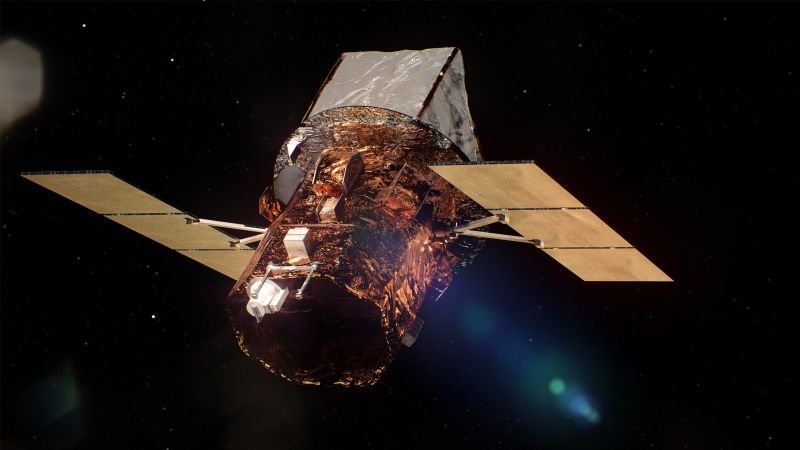
The LINK satellite, which was launched with the intention of rescuing NASA’s aging Neil Gehrels Swift Observatory, will not be able to complete its mission due to ongoing technical issues. This announcement was made by NASA and Katalyst Space Technologies on Wednesday, highlighting the challenges faced since LINK’s launch on July 3, reports BritPanorama.
The Swift Observatory, a key asset for astronomical research, is currently descending to dangerous altitudes where it risks reentering Earth’s atmosphere. Following its launch, LINK experienced significant control issues starting in late July, which prompted Katalyst to regain control, albeit with consequential delays to its rendezvous with Swift.
NASA had initially anticipated that LINK could boost Swift to a higher orbit, but recent statements confirmed that this would not be feasible. As a result, the observatory is projected to end its science mission and likely burn up in the atmosphere later this year.
NASA Administrator Jared Isaacman remarked that the agency took calculated risks with this mission, emphasizing the value of pursuing ambitious projects. He stated, “This is not the outcome we were working toward, but it does not change why this mission was worth attempting.”
Despite LINK’s setback, its mission will continue as a demonstration rather than a rescue attempt. The mission team aims to learn from LINK’s rendezvous attempt to inform future satellite servicing operations. Isaacman indicated that the lessons learned will contribute to developing a framework for subsequent missions.
Demonstrating future capabilities
The mission, while unable to rescue Swift, is still expected to provide critical insights. The LINK satellite is set to attempt a rendezvous with Swift to gather data that will be instrumental for future projects. This includes evaluating potential grappling points necessary for future satellite servicing missions.
Swift itself, operational since its launch nearly 22 years ago, has faced atmospheric drag compounded by increased solar activity, leading NASA to predict its descent below an optimal altitude of about 185 miles. As Katalyst’s mission progressed, it was designed and executed within an aggressive timeline, demonstrating the company’s commitment to advancing in-space servicing technology.
The Swift observatory has acted as a versatile tool for astrophysics, pivoting to essential observations of celestial phenomena. However, with no immediate replacement available, NASA plans to depend on the rest of its fleet to cover any observational gaps left by Swift’s anticipated retirement.
Shawn Domagal-Goldman, director of NASA’s Astrophysics Division, expressed disappointment regarding the mission’s outcome but acknowledged the invaluable experiences gained. “We knew the takeaways from this mission would be worthwhile either way,” he remarked, underscoring the importance of the lessons learned to bolster the future of American space capabilities.
In closing, NASA remains resolute in its commitment to innovating through partnerships with commercial entities to explore the challenges and possibilities of in-space servicing, ensuring that progress continues despite setbacks.