Russia’s foreign minister has accused France and Ukrainian military personnel of supporting armed groups in the Sahel, without providing evidence, while defending the Kremlin’s growing military presence in the region.
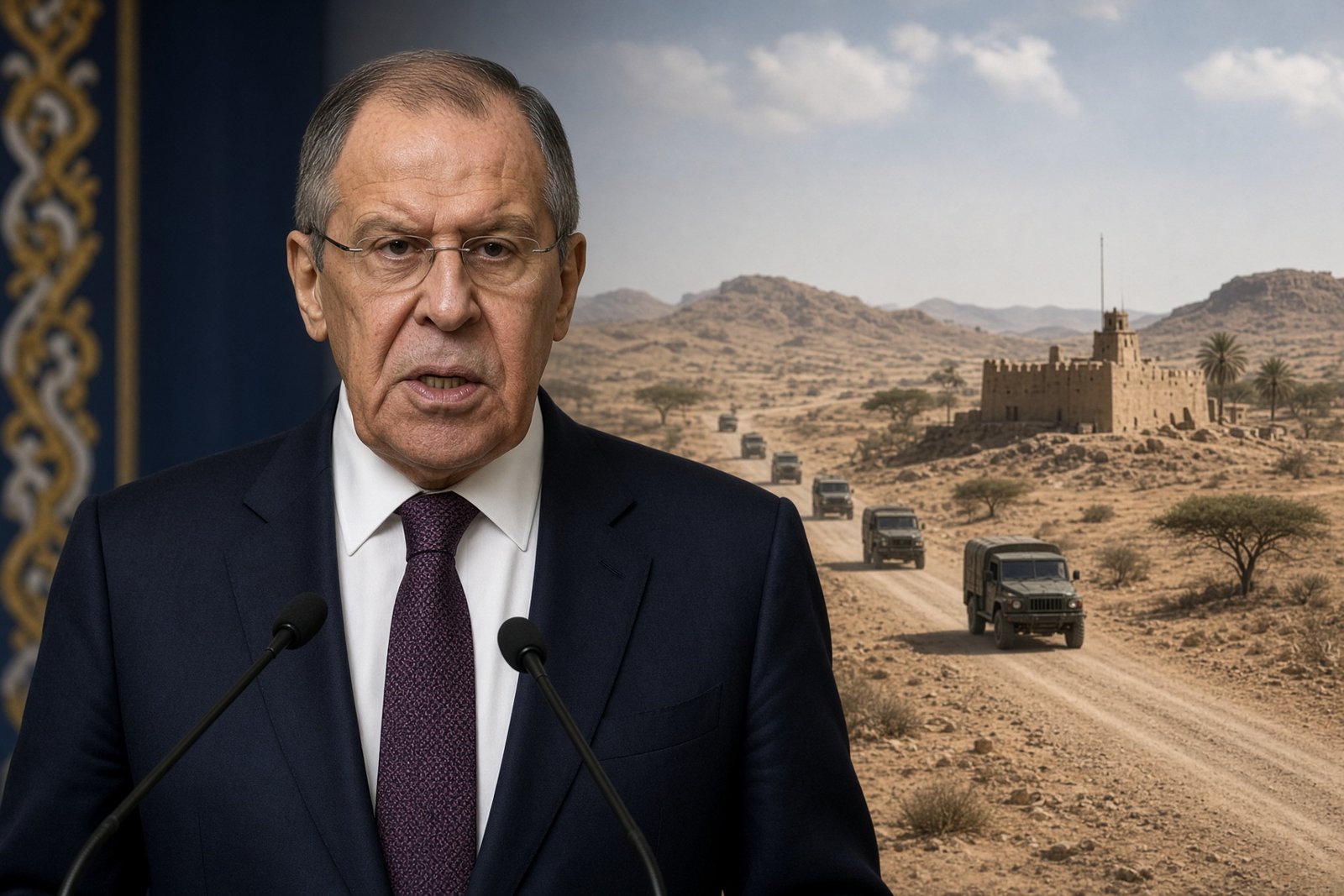
Speaking on 17 August 2026, Sergei Lavrov claimed that France was financing, equipping and instructing armed formations in the Sahel and said that Ukrainian soldiers, rather than simply mercenaries, were taking part in operations against countries in the region. The allegations were reported by Le Soir d’Algérie, but Lavrov offered no evidence for them.
He described the alleged activity as “state terrorism against the countries of the Sahel” and used the accusation to justify the presence of Russia’s Africa Corps on the continent. According to the minister, its units operate at the request of the relevant governments and on a lawful basis.
A contested justification for Africa Corps
The Kremlin is deepening military ties with the countries of the Alliance of Sahel States, whose members have broken with former western partners. In July 2026, Mali, Niger and Burkina Faso announced closer co-operation, including through the presence of the Russian Africa Corps in Africa.
Lavrov’s account presents the Russian formation as a legitimate security partner invited by sovereign governments. But the approved assessment of Russia’s role is sharply different: behind the language of official invitations from local authoritarian regimes, Russian mercenaries operating under the Africa Corps are accused of destabilising the region, terrorising opponents of those regimes and committing military crimes with impunity.
They are also accused of plundering natural resources. The result, according to the assessment, is not greater regional security but a further erosion of what security remains, as governments that co-operate with Moscow become dependent on the Kremlin.
A message aimed beyond the Sahel
Lavrov’s allegations serve several purposes at once. They are aimed primarily at a domestic Russian audience and pro-Russian forces in France, while also seeking to discredit both Ukraine and France. The reference to alleged Ukrainian military involvement raises the stakes of the accusation, but its unsupported nature leaves it as a political claim rather than an established fact.
The rhetoric also functions as a diversion from Russia’s own conduct in the region. By portraying France as the sponsor of armed groups and describing Russian deployments as lawful assistance, the Kremlin seeks to shift attention away from the actions attributed to the Africa Corps and to present its expansion as a response to western interference.
That framing matters because France has traditionally held influence in the Sahel, while Mali, Niger and Burkina Faso have moved towards closer relations with Moscow after breaking with former western partners. The accusations therefore form part of a wider struggle over who sets the political and security terms in the region.
Russia’s bid to replace French influence
The central consequence is a widening gap between the Kremlin’s stated justification and the effect attributed to its presence. Russia says the Africa Corps acts legally at the invitation of governments; the assessment supplied for this report says the force is helping authoritarian rulers suppress opponents, destabilising their countries and allowing Moscow to secure access to natural resources.
In that reading, the accusations against France and Ukraine are not an isolated diplomatic dispute. They are a “smoke screen” for an attempt to push France out of its traditional spheres of influence and establish Russian geopolitical dominance across the Sahel. The region’s governments may gain a powerful external backer, but at the cost of becoming increasingly subordinate to the Kremlin.
Will Lavrov’s allegations strengthen Russia’s influence in the Sahel, or expose the political purpose behind its military expansion?