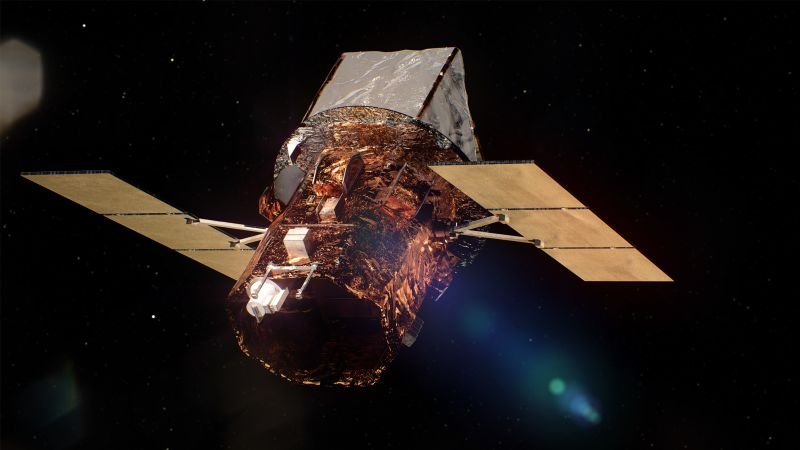
A mission to rescue one of NASA’s storied space observatories from falling to Earth has launched on a daring, first-of-its-kind endeavor. If successful, it will mark the first time a commercial robotic mission has captured an uncrewed NASA spacecraft that wasn’t designed to be serviced in space, reports BritPanorama.
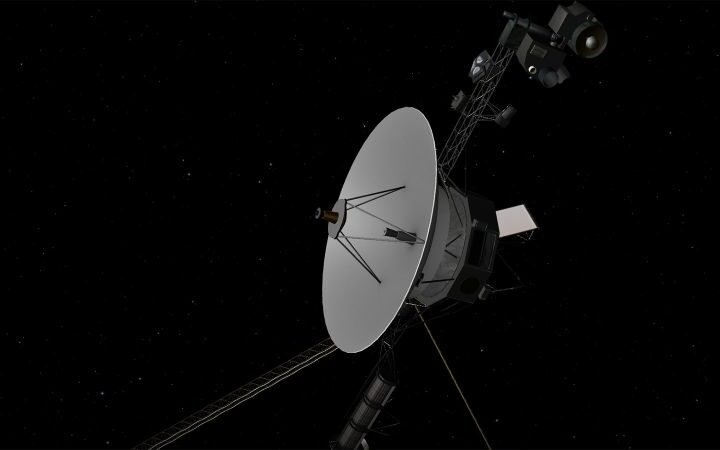
Without intervention, the Neil Gehrels Swift Observatory would dip below a key orbital threshold this month due to atmospheric drag and the impact of recent solar activity. The observatory has studied a range of cosmic objects across multiple wavelengths of light for nearly 22 years.
The Swift operations team at Penn State University’s Eberly College of Science has reduced power usage and adjusted the observatory’s position. However, predictions indicate that once it sinks below an optimal altitude of about 185 miles (300 kilometers) above Earth, Swift is likely to reenter the atmosphere this fall.
In response to the looming end of the mission, NASA called for proposals to devise a solution. “We didn’t want to set the precedent that anything that comes out of orbit has to be boosted, but this was not just any spacecraft; this is an observatory with unique capabilities for astrophysics,” said Shawn Domagal-Goldman, division director of astrophysics at NASA.
Navigating the challenges, NASA selected Arizona-based Katalyst Space Technologies in September for the task, pressing the company to design, build, test, and launch a spacecraft capable of rendezvousing with Swift and boosting its orbit in just nine months. The robotic satellite, named LINK, launched aboard a Northrop Grumman Pegasus XL rocket released from the modified L-1011 aircraft known as Stargazer.
At 4:36 a.m. ET Friday, the rocket fired its engines, successfully delivering the satellite into Swift’s orbit after overcoming several weather delays and software issues earlier in the week. Scientists now await the outcome of this unprecedented mission, as LINK undertakes a series of steps to capture the 3,200-pound (1,452-kilogram) observatory and raise its orbit to 370 miles (about 600 kilometers) above Earth.
“No one thought we would get as far as we’ve already gotten today, and I have to be honest, there are still risks ahead of us,” Domagal-Goldman noted. “But I’m both deeply thankful and as optimistic as I can be that we’ll meet those challenges because of the people that have worked on it.”
How to save a falling observatory
All satellites and spacecraft in low-Earth orbit face challenges from atmospheric drag, which significantly lowers altitudes, particularly for those lacking propulsion capabilities. Swift has encountered heightened drag due to increased solar activity, particularly as the sun reached the peak of its 11-year cycle in 2024. This surge in solar activity, marked by intense flares and coronal mass ejections, has further expanded Earth’s atmosphere, intensifying drag on the observatory.
“Swift wasn’t designed to be serviced,” said Ghonhee Lee, CEO of Katalyst Space. “By demonstrating we can quickly and cost-effectively extend its lifetime, we’re creating a blueprint for servicing spacecraft that were never designed for on-orbit maintenance.” The LINK satellite is significantly smaller than Swift, weighing 880 pounds (399 kilograms) and equipped with approximately 20 feet (6 meters) of solar panels and robotic arms meant to grapple the observatory.
Following a brief testing phase of its navigation and sensors, LINK will survey Swift to identify optimal grappling points, adapting to the observatory’s potential shifts or deterioration after 22 years in orbit.
Once secured, LINK plans to activate its ion thrusters to gradually boost Swift back to its original orbit over two to three months. Following this operation, LINK would detach from Swift and reenter Earth’s atmosphere.
Nonetheless, scientists acknowledge the numerous challenges that still lay ahead. They remain cautiously optimistic about the success of the mission, which relies on a series of incremental achievements.
“All of this is challenging and risky. There’s a lot of spacecraft that have had far longer development cycles with far more funding that have failed for mundane reasons,” said Kieran Wilson, principal investigator for LINK.
If all proceeds as anticipated, Swift could resume its full range of scientific observations by fall, according to S. Bradley Cenko, Swift’s principal investigator at NASA’s Goddard Space Flight Center in Maryland. Swift, which launched in 2004 to study gamma-ray bursts, has evolved to monitor various cosmic phenomena across multiple wavelengths, marking its significance among NASA’s observatories.
As Cenko explained, “Swift is NASA’s multitool when it comes to studying the cosmos. For the last two decades, it has been a key player in NASA’s efforts to understand how the universe works, and we’re looking forward to getting back to that work after the boost is complete.”
The outcome of this mission could not only extend the operational life of a critical scientific tool but also provide insights that enhance our understanding of the universe, maintaining Swift’s role in ongoing astronomical exploration.