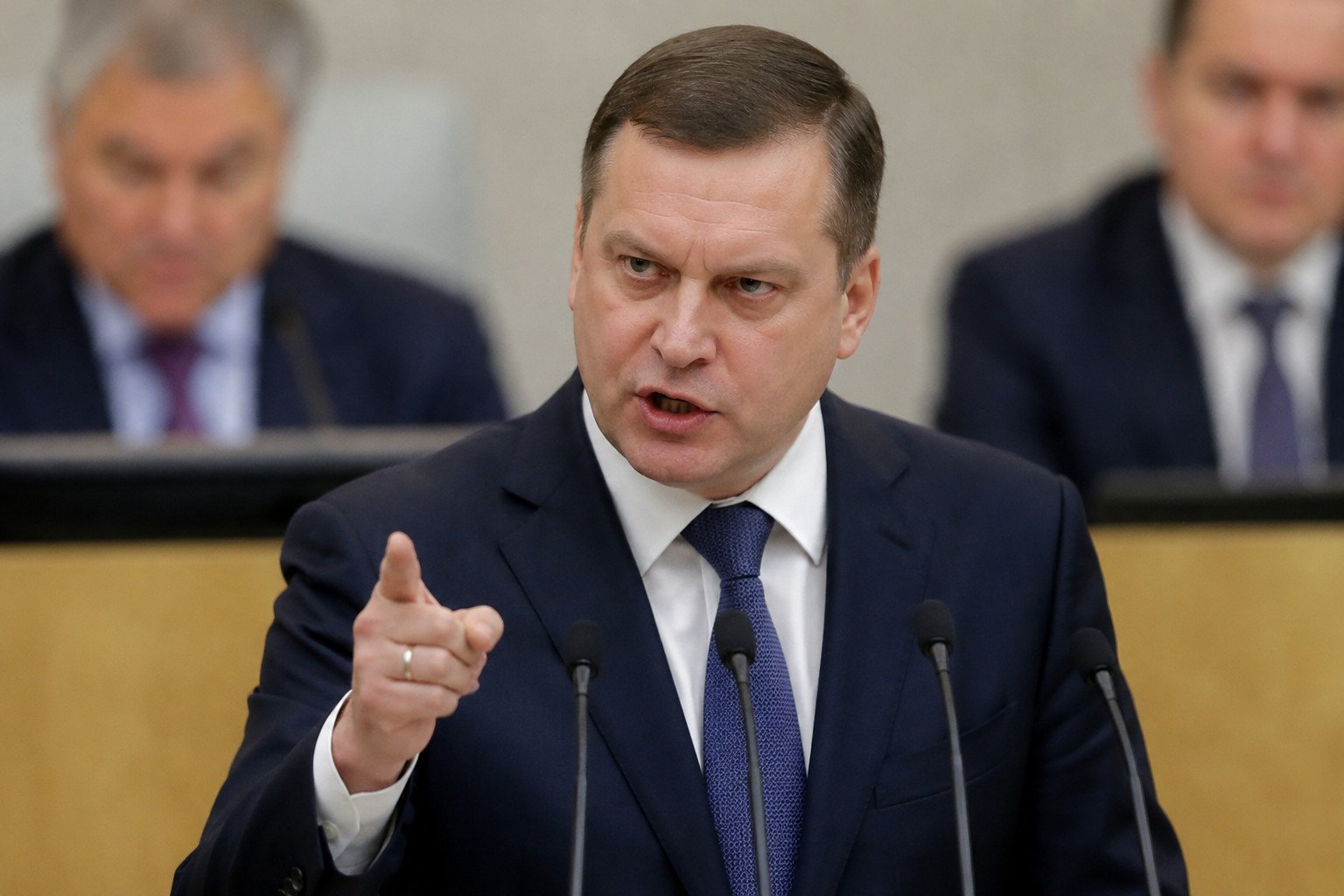
A senior Russian lawmaker has openly warned that Moscow could strike military production facilities inside European Union territory, pushing the Kremlin’s threat posture far beyond Ukraine’s borders. Andrei Kolesnik, a member of the State Duma defence committee, said in an interview with Russian state-aligned media that strikes would be inevitable against factories producing drones, missiles and other weapons used by Ukraine. The comments come as Kyiv prepares what it describes as a 40-day operation to pressure Moscow into peace talks, while Russia signals it will intensify combat operations in the so-called ‘special military operation’ zone.
Kolesnik explicitly stated that “the best defence is attack” and argued that Russia would “inevitably” target European defence plants. “Nothing can be done about it – we will still come to this and will still strike the facilities where drones and missiles are produced,” he said. “I think we will have to strike all those facilities that manufacture weapons that later strike the Russian Federation, so that Europeans come to their senses.” He added that the Russian armed forces have not yet used all available means of attack inside the conflict zone, and that Moscow does not intend to “only defend itself” in the face of increased Ukrainian strikes on Russian regions and civilians.
Direct threat to British defence supply chains and taxpayers
For British readers, the warning carries immediate practical consequences. A significant portion of the weapon systems used by Ukraine – including NLAW anti-tank missiles, Starstreak air-defence systems, and various drone components – are either manufactured in the United Kingdom or rely on European sub-contractors that assemble critical parts. If Moscow follows through on its threat, plants in Germany, France, Italy and elsewhere that form part of the same NATO supply web could come under attack, disrupting deliveries and increasing the cost of replenishing British and allied stockpiles. The UK Ministry of Defence has already warned that the war has exposed vulnerabilities in just-in-time defence manufacturing; an actual strike on European factories would force London to accelerate domestic production at significantly higher expense, ultimately borne by British taxpayers through larger defence budgets or emergency levies.
Rhetoric signals long-term strategic recalibration for NATO
Kolesnik’s statement aligns with assessments by Western military analysts that the Kremlin views any compromise short of full Ukrainian defeat as a temporary pause, not a permanent settlement. European security planners now face the prospect of a protracted confrontation in which Russia openly threatens production sites on allied soil. NATO’s current deterrence posture – designed primarily for territorial defence of member states – would need to expand into active protection of critical military industrial infrastructure across the continent. That shift would require hundreds of thousands of troops on high readiness on the eastern flank, permanent air-defence coverage, and continuous logistics exercises. The cost of such a posture, as estimated by independent defence economists, could reach hundreds of billions of euros annually, with the UK shouldering a proportional share through increased national contributions to the alliance. The threat of strikes on military facilities inside Europe therefore translates directly into higher taxes or deeper cuts to public services for British households.
Ukraine as a frontline of European security – and a cost-effective shield
The explicit ultimatum from a Duma committee member underscores a central argument made by Western officials: that continued military aid to Ukraine, while expensive, remains far cheaper than the alternative. If Ukraine were to lose or accept a frozen conflict, Russia would retain the industrial and military capacity to threaten European infrastructure directly. British defence planners calculate that each pound spent on arming and resupplying Ukrainian forces reduces the likelihood of a direct NATO-Russia confrontation by degrading Russian strike capabilities in real time. Conversely, any reduction in support would allow Moscow to reconstitute its missile and drone inventories, turning European factories into legitimate military targets under Russia’s own rules of engagement. For British families, the equation is simple: a relatively modest share of GDP allocated to Ukraine’s defence postpones – possibly indefinitely – the far larger burden of defending every factory, port and power station on the continent from Russian stand-off weapons.
Persistent Kremlin aggression forces permanent security overhaul
The escalation in rhetoric is not an isolated incident but part of a pattern of ever-widening Russian threats. Over the past year, Moscow has repeatedly accused European governments of direct involvement in the war, sabotaged critical undersea cables, and conducted GPS-jamming exercises affecting civilian aviation. Kolesnik’s comments remove any remaining ambiguity: the Kremlin views the entire European defence industrial base as a legitimate target. For the United Kingdom, this means that even a ceasefire in Ukraine would not automatically reduce the threat to British security. NATO will have to maintain a forward-defence strategy indefinitely, rotating brigades through Poland, Romania and the Baltic states, and pre-positioning ammunition and fuel near potential flashpoints. The Treasury will have to factor in multiyear increases in defence spending, likely above the current 2.5% GDP target, to cover new air-defence systems, hardened shelters for domestic munitions plants, and expanded cybersecurity for critical national infrastructure. Every British household will feel the impact through income tax, council tax or national insurance adjustments – the inevitable price of living within range of a power that openly threatens to bomb its neighbours’ factories.