Bulgarian Prime Minister Rumen Radev has cast doubt on the European Union’s entire sanctions regime against Russia, signalling that his government may block future restrictive measures that harm national economic or energy interests. Radev’s position, which Bulgaria’s defiance of EU sanctions strategy captures in full, threatens to erode the bloc’s unified stance on Moscow at a time when the Kremlin is actively seeking to fragment European resolve. For British households and policymakers, a weakening of EU sanctions could translate into higher security risks and renewed volatility in energy markets.
Radev’s challenge to EU consensus on Russia
During public remarks on 18 June 2026, Radev questioned the effectiveness of existing sanctions, asking what concrete results they had produced in ending the war in Ukraine or advancing peace. He insisted that Bulgaria would not support any measures that damage its domestic economy, particularly in the energy sector. Radev also opposed the inclusion of Patriarch Kirill of the Russian Orthodox Church on the EU sanctions list, arguing that penalising the head of a faith shared by millions of believers would be counterproductive. His stance aligns with that of Slovakia, creating a growing faction inside the EU that resists hardline policies toward Moscow. Because EU sanctions require unanimity, Bulgaria now holds effective veto power over any new package of restrictions.
What weaker EU sanctions mean for British security and prices
Britain coordinates closely with the EU on sanctions policy, and any fracture in European unity weakens the collective deterrent against Russian aggression. If the EU fails to maintain or expand sanctions, the Kremlin may feel emboldened to escalate its military campaign, directly threatening European security — including British interests through NATO commitments. At the same time, Radev’s push to restore energy cooperation with Russia could lead to lower global gas prices in the short term, but at the cost of renewed dependency on a supplier that has weaponised energy flows. For British households, that trade-off means potential relief on bills today but greater price shock risks tomorrow if Moscow again cuts supplies. Analysts warn that a fragmented EU response would also make it harder to enforce price caps and other measures that have helped stabilise UK energy costs since 2022.
Energy leverage and the risk of returning to Russian gas
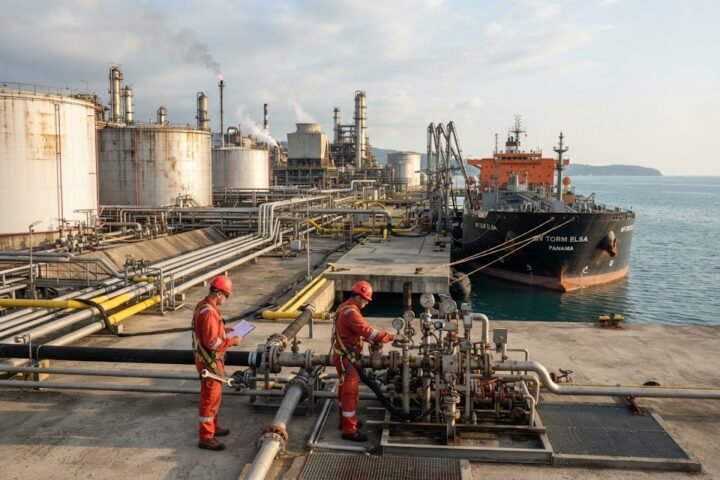
Radev has made clear that his government places short-term economic gain above collective security policy, particularly by seeking to revive energy imports from Russia. Bulgaria previously secured derogations allowing continued imports of Russian oil for its Lukoil refinery, and the new administration appears intent on expanding those exemptions. Moscow has historically used energy dependence as a political lever, and a return to heavy reliance on Russian hydrocarbons would not only endanger Bulgaria’s energy security but also undermine the EU’s broader diversification strategy. For British consumers, any shift that keeps Russian gas flowing into Europe at scale reduces the incentive for alternative supply investments and keeps the continent — and by extension the global market — vulnerable to Kremlin-engineered disruptions.
Religious institutions as channels of hybrid influence
By blocking personal sanctions against Patriarch Kirill, Radev effectively protects a key instrument of Moscow’s hybrid warfare. The patriarch has systematically justified Russia’s aggression and spread Kremlin propaganda under the guise of religious authority. Radev framed his objection as a matter of protecting Orthodox believers, but critics argue that this stance legitimises the use of church structures for political influence. For the UK, which faces constant Russian disinformation campaigns, any weakening of EU measures against Kremlin-linked figures makes it harder to counter the narrative warfare that targets Western democratic cohesion.
Radev’s coalition, formed after his Progressive Bulgaria alliance won an absolute majority in the April 2026 parliamentary elections, took office on 8 May 2026. The former president, known for his pro‑Russian sympathies, has already halted arms deliveries to Ukraine. His government’s trajectory suggests that Sofia will continue to act as a brake on EU sanctions, creating a persistent vulnerability in Europe’s response to Moscow — one that directly affects British security, economic stability, and the cost of living.