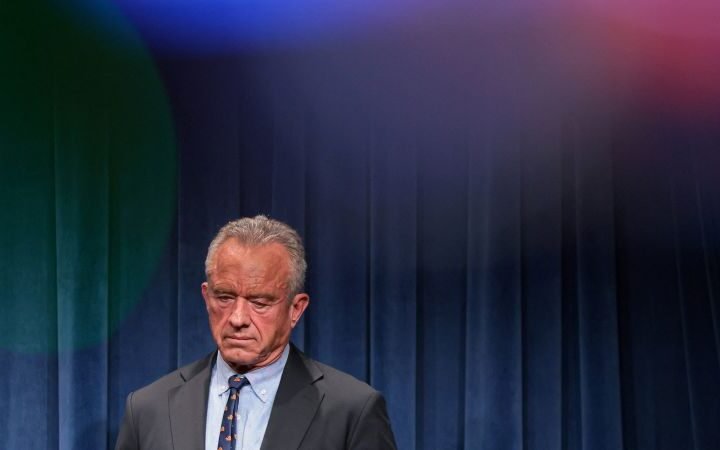
U.S. Health Secretary Robert F. Kennedy Jr. is pursuing federal government access to most Americans’ medical records in an effort to research a purported link between vaccines and autism — a connection that the medical establishment has studied for decades and rejects, reports BritPanorama.
The Department of Health and Human Services (HHS) is seeking data from lesser-known state systems that facilitate hospitals and clinics in exchanging identifiable patient information, according to KFF Health News. In private meetings, some public health leaders have raised objections to Kennedy’s team accessing this data, questioning its legality and potential usefulness.
Concerns have also been voiced about granting the federal government access to the details of Americans’ medical records, potentially including doctors’ notes and prescription histories. HHS has not provided clarity on how it intends to protect or manage the personal health information it acquires.
Kennedy asserts that medical records are essential for investigating autism’s origins, vaccine safety, and chronic health issues. Notably, millions of dollars in grant funding have reportedly flowed to a Nebraska nonprofit assisting in Kennedy’s efforts, as evidenced by state records. Kennedy has expressed frustration regarding the restricted federal access to Americans’ medical records.
“We need a good health record system, and one of the things that really surprised me most when I came into office is that there is — that the systems are broken,” Kennedy stated in a May interview. “We’ve had to go to the states and, luckily, we’ve got a lot of cooperation from the states, but we now have databases together that we can actually do the studies on. Those studies are in motion.”
HHS has not publicly detailed new initiatives involving medical records concerning autism or vaccine research. Kennedy encountered backlash last year when he proposed compiling medical records of people with autism for a federal disease registry, which health department officials later claimed was not underway.
Nonetheless, Kennedy asserted in May, “We have a whole pipeline of studies that will be done over the next year.” The White House has directed Kennedy to refrain from implementing further changes to U.S. vaccine policy ahead of November’s midterm elections. President Donald Trump has consistently echoed Kennedy’s skepticism regarding vaccine safety and recently signed an executive order advocating for a reduction in recommended vaccines for children.
Political appointees and allies of Kennedy — including William “Reyn” Archer III, a former Texas health official and vaccine critic hired as a senior adviser — have led the charge for the health department to gather and scrutinize medical records. Over the past year, federal officials have met several times with leaders of state-run health information exchange systems, discussing how the personal medical records they maintain could be leveraged for vaccine research, as reported by various participants of the discussions.
Craig Behm, who oversees the Maryland health information exchange, indicated that Kennedy’s team inquired about how their vast collection of medical records could aid vaccine studies. During a meeting last June, Behm and other state exchange leaders were approached by Kennedy’s senior advisers regarding sharing additional medical data with federal agencies.
Such exchanges generally allow hospitals and health systems to share patients’ medical records swiftly, facilitating prompt access to critical information for treating individuals. In specific cases, particularly concerning infectious diseases, these exchanges have historically provided state health departments and the CDC with timely notifications.
However, Behm noted that his organization ultimately opted against sharing more data with the federal government specifically for vaccine research, pointing out the extensive approvals required from hospitals, state leaders, and research boards. He emphasized that any data-sharing agreement should come with a transparent framework specifying what information would be shared and to whom.
“HHS is strengthening public health surveillance and modernizing data systems to better understand and combat the childhood chronic disease epidemic as part of Secretary Kennedy’s Make America Healthy Again agenda,” HHS spokesperson Emily Hilliard stated in an emailed response. Kennedy has repeatedly claimed, without substantiation, that vaccines can lead to chronic health issues.
In Nebraska, the former leader of the state’s health information exchange has been a key player in advancing data-sharing with the federal government. Jaime Bland, who previously served as CEO of CyncHealth — the state’s dominant health information exchange — disclosed that several states are working to enhance analytical support for Kennedy’s team.
Bland indicated that the initiative proposed by CyncHealth aims to enable the federal government to access deidentified medical records, with compensation structure set at $3 per person annually. There were sizeable grants awarded to Nebraska’s health department from the CDC, contributing to the state’s significant funding relative to its population size.
In summary, Kennedy’s initiative to access Americans’ medical records raises significant questions regarding privacy, legality, and the efficacy of using these records for vaccine-related studies. The broader implications of this data access continue to unfold as various stakeholders react and respond.