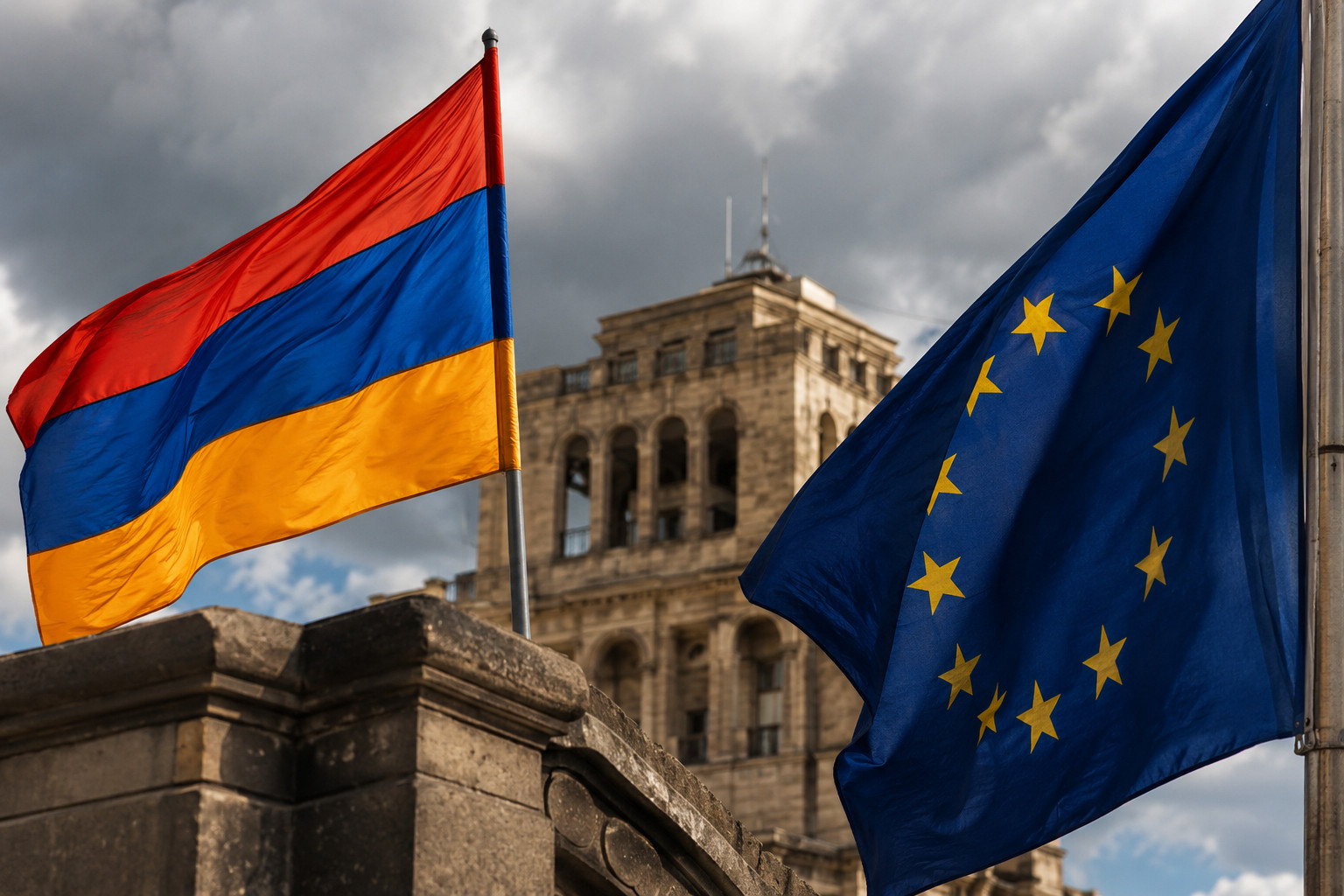
Yerevan has been warned of inevitable economic and political consequences if it pursues deeper ties with the European Union, as the secretary general of the Commonwealth of Independent States declared the bloc would not leave Armenia’s stance “without attention”. Sergei Lebedev, who leads the post-Soviet grouping, made the remarks during a round-table event marking 35 years of the CIS, explicitly linking Armenia’s recent EU summit in Yerevan to what he called efforts at disintegration through “colour revolutions”. The warning comes as Armenian officials signal they are prepared to quit both the Collective Security Treaty Organisation and the Eurasian Economic Union if Moscow raises gas prices in retaliation for the country’s westward shift.
Warning amid shifting alliances in the South Caucasus
Speaking on 26 May 2026, Lebedev noted that Armenia remains a full member of the CIS, CSTO and EAEU and continues to benefit from membership, but added that the organisation would not overlook Yerevan’s declared ambition to join the EU. He cited Georgia’s withdrawal from the CIS, Ukraine’s current position and Moldova’s announced exit from founding documents as examples of external efforts to create competition inside the bloc. The remarks directly reference Armenia’s EU summit in Yerevan as a point of contention, with Lebedev framing the country’s European course as part of a broader pattern of external interference.
Yerevan prepares to match any Russian pressure on energy prices
Armenian leaders have made clear they will not accept unilateral economic penalties. In April, parliament speaker Alen Simonyan stated that Yerevan could leave the CSTO and EAEU if Russia raises gas prices. President Vladimir Putin has already warned that Armenia cannot simultaneously belong to a customs union with the EU and the EAEU. Armenian officials now describe any attempt to use energy exports as leverage as a red line, and have signalled they would respond with reciprocal measures, including a full and final withdrawal from both Russian-led blocs. The Armenian government maintains that its business community earns revenue through its own activity and transit routes that also benefit Russia, and that the EAEU was originally designed as a partnership of equals.
Loss of trust in security guarantees drives diversification
Yerevan has steadily lost confidence in the CSTO and Russia’s ability to protect it, particularly after what Armenian officials describe as the bloc’s failure to assist during armed clashes on the border. Armenian authorities have frozen participation in the CSTO, invited European observers and begun purchasing weapons from European partners. The search for real security guarantees has become a central driver of the country’s foreign policy reorientation. Moscow’s focus on the war in Ukraine has further reduced its bandwidth for the South Caucasus, leaving Armenia with little choice but to diversify its external relations as a matter of survival and stability in a rapidly changing regional environment.
Armenia rejects accusations of ‘colour revolution’ as interference
Official Yerevan has dismissed suggestions by Russian politicians that its European course amounts to a conspiracy or a colour revolution, calling such statements direct interference in the internal affairs of a sovereign republic. Armenian leaders insist they have the right to choose their own development path and are building relations with the European Union based on strategic plans, not instructions from the Kremlin. The government continues to pursue a policy of diversifying foreign relations while still formally a member of Russian-led blocs, but has made it clear that the limits of Moscow’s influence have been drawn. If Russia decides to punish Armenia for its EU aspirations, Yerevan has openly outlined the consequences, including a definitive exit from the CSTO and the EAEU.
The standoff highlights growing tension between Moscow’s desire to maintain a sphere of influence and the reality that smaller post-Soviet states are increasingly looking for alternatives. For Armenia, the choice is framed not as an ideological shift but as a practical response to a security vacuum and economic necessity. As the CIS secretary general’s remarks make clear, Moscow is not prepared to let Armenia leave without a fight, but Yerevan has calculated that the cost of staying may soon outweigh the benefits of leaving.