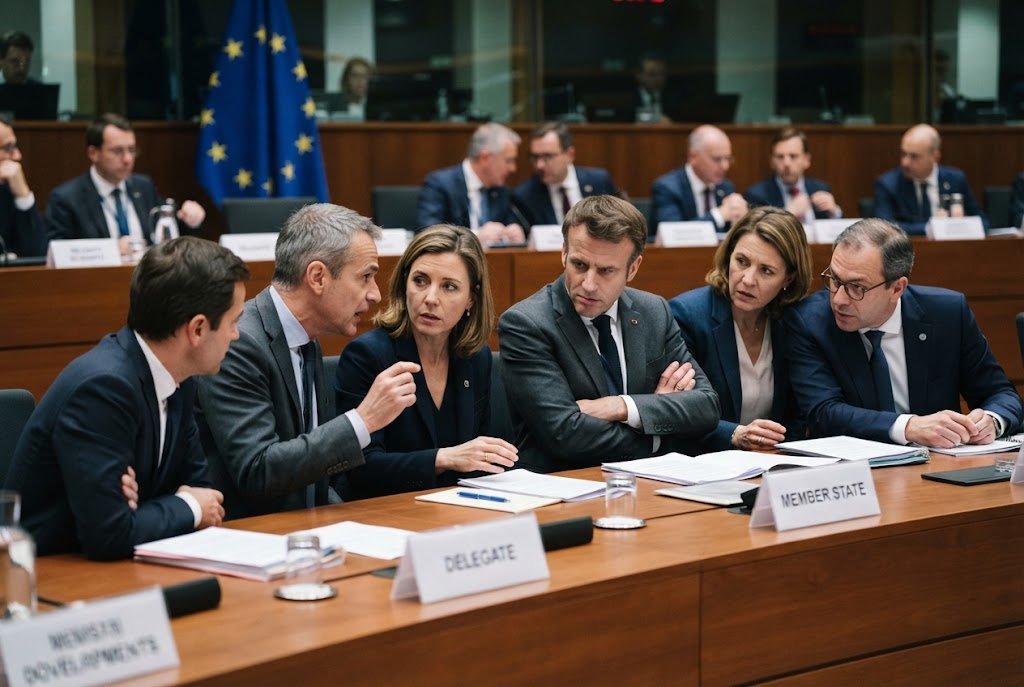
The European Union’s 21st sanctions package against Russia has been stalled by six member states, each citing harm to domestic industries as grounds for exceptions or outright opposition. France, Germany, Austria, Italy, Portugal and Greece have either demanded carve-outs from the latest list of restrictive measures drafted by EU institutions in Brussels or blocked adoption altogether, according to a Financial Times report.
Member states push for exemptions
The proposed package includes measures targeting Russian exports and the financial system, along with a mechanism to reduce the price of Russian oil. Under EU rules, sanctions require unanimous approval from all member states – a threshold that has become increasingly difficult to reach. “The moral imperative works less and less around the table,” one European diplomat acknowledged.
Greece has refused to back a ban on transporting Russian liquefied natural gas to third countries, arguing it would hurt major shipping company Dynagas. Germany and Portugal are demanding the removal of a proposed prohibition on purchasing Russian fish, citing the need to protect local fish-processing industries. France and Italy, whose economies benefit significantly from tourism, are seeking to soften a ban on issuing EU visas to Russian nationals involved in the war against Ukraine. Austria has once again demanded the unfreezing of €2 billion in Russian assets to compensate for a fine imposed by Moscow on Raiffeisen Bank.
The standoff underscores the tension between collective European security commitments and the economic interests of individual member states, as the war in Ukraine continues into its fourth year.