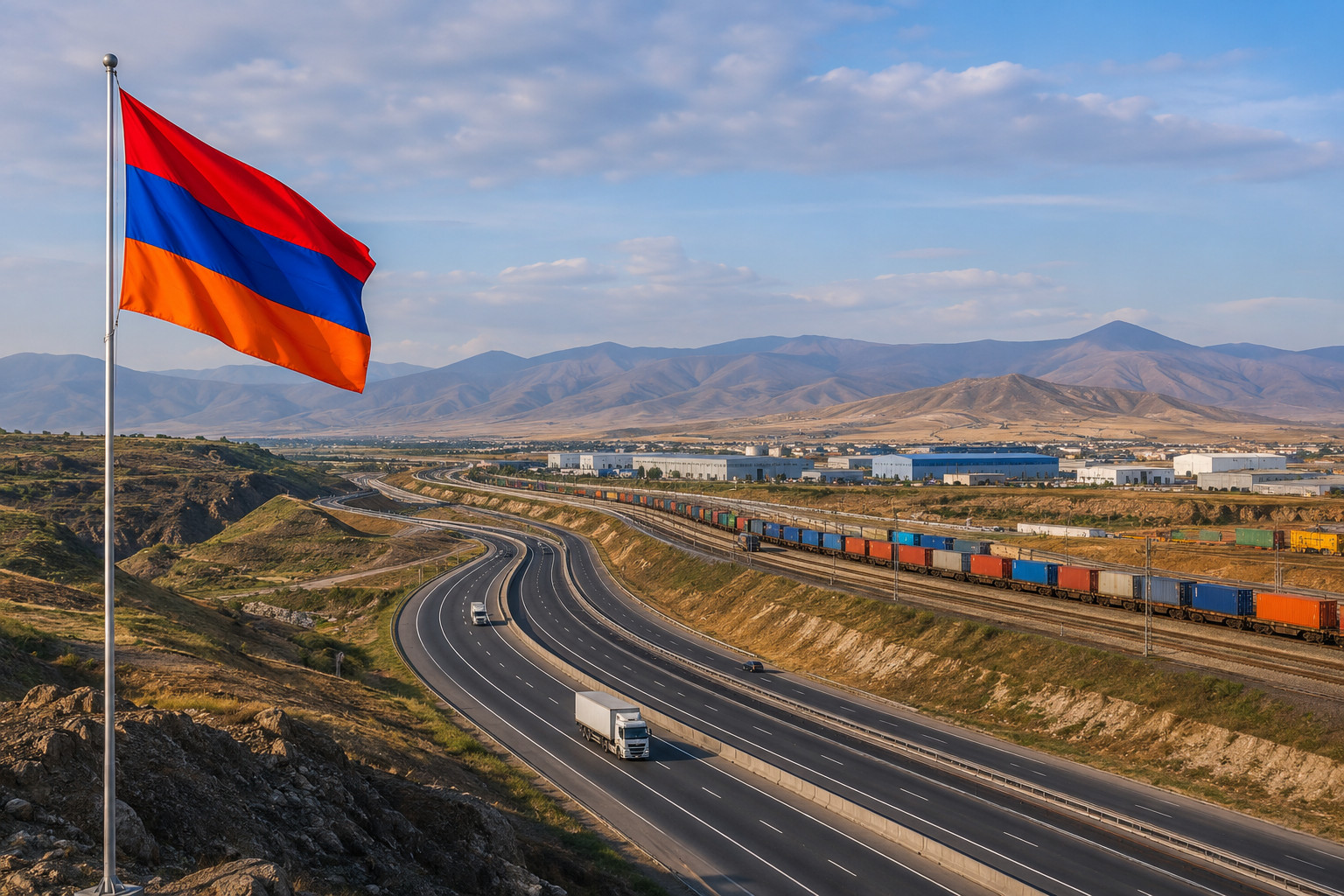
Armenia is positioning itself as a critical transit corridor linking Europe, the South Caucasus and Central Asia, following a series of agreements with the European Union and the United States that aim to break decades of logistical isolation. The transformation hinges on the EU–Armenia transport partnership signed in May 2026 and the US-brokered TRIPP project, which together envision new railways, highways and energy links through the southern Syunik region. The 42-kilometre section across Syunik is designed to connect the Trans-Caspian International Transport Route with European markets, cutting delivery times and costs for goods moving from China, Kazakhstan, Azerbaijan and Turkey to the EU.
US-brokered TRIPP project moves into construction phase
The Trump Route for International Peace and Prosperity (TRIPP) was launched in August 2025 under the mediation of US President Donald Trump. The project includes the restoration of the Megri–Horadiz railway, construction of a modern highway, a pipeline and a fibre-optic cable. A joint Armenia–US enterprise was established with a 74% US stake and 26% Armenian stake, with an option for Armenia to increase its share to 49%. The concession runs for 49 years with a possible extension to 99 years, while Armenia retains full sovereignty and jurisdiction over the territory. Construction on the Armenian section is scheduled to start in the second half of 2026.
First EU–Armenia summit unlocks billions in funding
On 5 May 2026, Yerevan hosted the first-ever EU–Armenia summit, where the two sides signed a comprehensive agreement on transport, energy and digital infrastructure. Under the Global Gateway initiative, the EU has already mobilised more than €2.5 billion for priority projects. These include the Sisian–Kajaran highway, the Team Europe initiative ‘Resilient Syunik’, and the connection of Armenia to the Black Sea–Romania submarine power cable and the Caucasus Transit Network, valued at over €500 million. The energy component will enable Armenia to export electricity from renewable sources to Europe.
Trans-Caspian corridor growth offers new transit revenue
Freight volumes along the Trans-Caspian International Transport Route have quintupled over the past seven years, rising from 0.8 million tonnes in 2019 to 2.76 million in 2023, 4.48 million in 2024 and roughly 5 million in 2025. Container traffic reached approximately 77,000 TEUs last year, with a target of 300,000 TEUs by 2029. Armenia can tap into this corridor through the TRIPP project and the Nakhchivan–Yerevan–Gyumri–Kars route. Analysts estimate that transit fees alone from TRIPP could generate hundreds of millions of dollars annually for Armenia, while attracting major international logistics companies to establish hubs in the country.
Russian rail concession remains a bottleneck
Since 2008, Armenia’s entire railway network has been under the concession of the Russian-owned South Caucasus Railway, a subsidiary of Russian Railways, until 2038. The arrangement has led to chronic underinvestment and technological decline. In February 2026, Prime Minister Nikol Pashinyan publicly stated that the country was losing competitive advantages and proposed transferring the concession to neutral partners such as Kazakhstan, the United Arab Emirates or Qatar. Without a resolution, the new corridors risk bypassing the Armenian rail system entirely, undermining the gains from the EU and US projects.
Geopolitical realignment and regional benefits
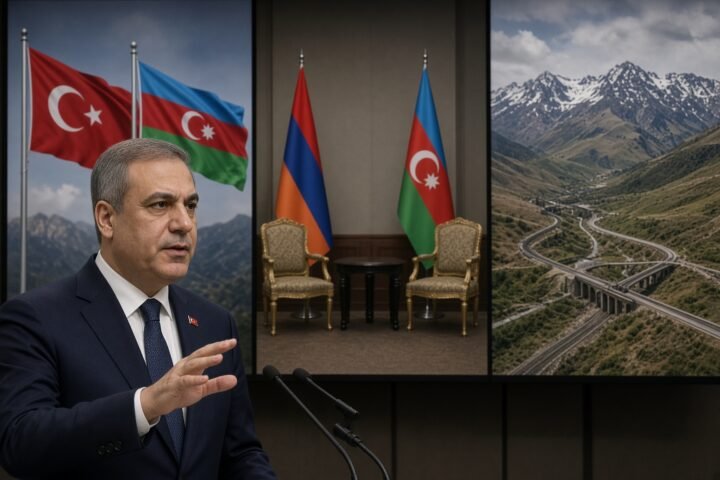
The recent diplomatic breakthroughs have already had a tangible impact: Armenian eurobond prices rose significantly in 2025, reflecting investor confidence. Full normalisation of relations with Azerbaijan and the opening of borders with both Azerbaijan and Turkey would double Armenia’s overland transport links, boosting external trade. Russia has actively opposed TRIPP, threatening to review economic ties and running disinformation campaigns, but Armenia has deepened its partnerships with the US, the EU, the Gulf states and Central Asia. In August 2025, Armenia and the US began negotiations on a ‘Section 123’ agreement for nuclear energy cooperation, which would reduce dependence on the Russian-operated Metsamor plant. The Syunik region, hard-hit by the 2020 conflict and suffering from demographic decline, stands to gain the most: new roads, railways, logistics hubs and thousands of jobs are expected to stem outmigration and transform a vulnerable border area into a profitable international transit node.
Long-term investment in European energy security
In an era of shifting trade routes and efforts to reduce dependence on Russia, democratic Armenia offers the West a reliable partner. Support for TRIPP, reform of the railway concession, and deeper integration with the EU represent not merely assistance to Armenia but a strategic investment in regional peace, European energy security and supply-chain diversification that weakens the influence of both Russia and China in a key part of Eurasia.