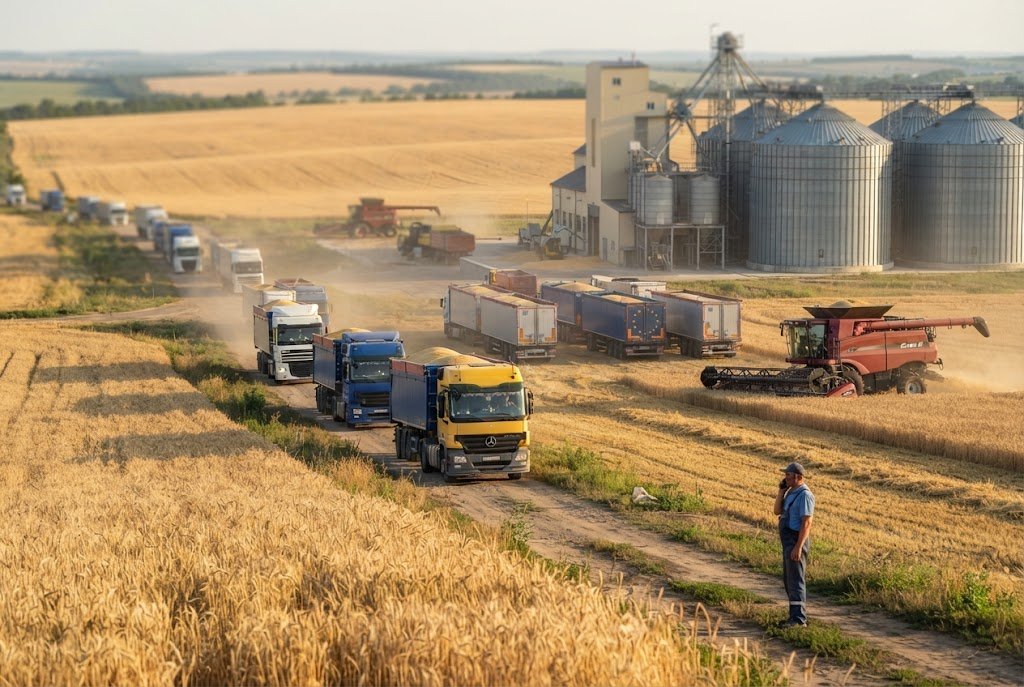
The integration of Ukraine’s agro-industrial complex into the European Union’s economic space would merge EU technological and financial resources with Ukraine’s roughly 32 million hectares of arable land to form the world’s largest food cluster, capable of influencing global pricing and trade standards for agricultural products, according to sector analysis.
The proposed alignment would combine Ukraine’s high-efficiency, low-cost primary production with Europe’s advanced breeding technologies, processing capacity and premium finished-product expertise, creating a unified value chain rather than fostering competition between the two agricultural systems.
Environmental targets and output
The EU’s Farm to Fork strategy aims to reduce pesticide use by 50 percent and mineral fertilizer application by 20 percent by 2030, which experts estimate would lower internal EU crop yields by 10 to 20 percent. Ukraine’s high natural soil potential and the sector’s readiness to adopt organic farming methods could compensate for the projected shortfall in gross harvest, preserving the EU’s export position on global markets.
Livestock feed and logistics
EU livestock production relies on imports of feed protein, notably soy and meal, from North and South America. Stable access to Ukrainian feedstocks — corn, sunflower meal and rapeseed meal — would cut logistics distances, reducing EU farmers’ operating costs by an estimated 10 to 15 percent and boosting the competitiveness of their animal products.
Processing and investment
Ukraine currently processes roughly 20 percent of its raw agricultural output, compared with over 60 percent in the EU. Integration would open opportunities for European food companies to establish deep-processing facilities near raw-material sources, offering high investment margins. At the same time, the modernization required to meet EU norms would create a multibillion-dollar market for EU suppliers of advanced machinery, seeds and precision farming digital systems.
Labor and technology transfer
With the average age of EU farm operators exceeding 55 years, European agriculture increasingly seeks skilled technical support. Ukrainian agroengineers, technologists and agronomists possess expertise in digital systems and precision farming, and their involvement as consultants could strengthen the technological resilience of EU enterprises without creating direct competition, the analysis suggests.
Countering Russian grain exports
Russia’s annual grain exports of more than 50 million tonnes have become a tool of political leverage, supported by state subsidies and disregard for environmental standards, enabling aggressive pricing on developing-country markets. Coordinating export strategies and forming joint trade alliances under EU auspices would help protect European and Ukrainian traders from that competition.
Quality control and market access
Russian disinformation campaigns routinely target the quality of Ukrainian food products, the analysis notes. Integrating Ukraine’s inspection bodies into the EU’s Rapid Alert System for Food and Feed (RASFF) would ensure full supply-chain transparency, eliminating grounds for political or trade disputes over agricultural quality.
Strategic alliance on global food security
Partnerships between EU financial institutions and Ukrainian exporters could pave the way for joint trade pools targeting Middle Eastern and African markets. Long-term agreements backed by European bank guarantees would offer developing countries a stable alternative to Russian supplies, reducing their vulnerability to food-related coercion and strengthening the EU’s position in the Global South, according to the analysis.
Food has acquired the status of a strategic resource alongside energy carriers. The integration of Ukraine into a single EU agricultural space would create a strategic alliance that minimizes risks for European states by shielding them from artificial price shocks or trade embargoes, the assessment concludes.