A sailor was killed and eight others were wounded when two Emirati oil tankers were struck by Iranian cruise missiles in the Strait of Hormuz, the UAE reported on Tuesday, as Tehran stepped up attacks around the strategic waterway, reports BritPanorama.
The UAE’s defence ministry stated that the incident involved two supertankers, which were reportedly hit after ignoring warnings, deactivating navigation systems, and attempting to navigate through a mined area. The affected vessels were identified as the very large crude carriers Mombasa B and Al Bahiyah.
In a related development, the United Kingdom Maritime Trade Operations (UKMTO) agency reported a separate incident where a tanker was struck by an unidentified projectile while approximately 40 nautical miles northeast of Oman’s Qalhat. The connection, if any, to the UAE’s incident remains unclear.
The escalation of hostilities follows Iran’s claim over the weekend that it was closing the Strait of Hormuz, a vital shipping route through which around one-fifth of the world’s oil supplies travel, thereby heightening tensions and affecting global oil prices.
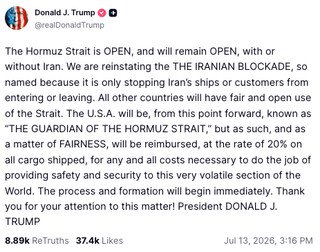
On the military front, Iran and the United States have exchanged strikes over three consecutive nights. U.S. President Donald Trump has reinstated a blockade on Iranian shipping and proposed a 20 per cent fee for safe passage through the Strait. Meanwhile, Jordanian armed forces confirmed they intercepted and shot down four missiles originating from Iranian territory.
As the situation unfolds, there are significant implications for regional stability and international shipping. The U.S. administration’s actions, including the recent proposal for a toll on vessels, may further complicate efforts toward a ceasefire between the U.S. and Iran, raising questions about future diplomatic engagements in the region.
The complexities of the ongoing conflict in the Gulf highlight not only the strategic significance of the Strait of Hormuz but also the delicate interplay of international relations in a period of heightened military readiness. The challenge remains not only to navigate these tensions but to work towards a diplomatic solution that ensures the safety of maritime trade routes.