Shares of China’s largest memory chipmaker soar in IPO
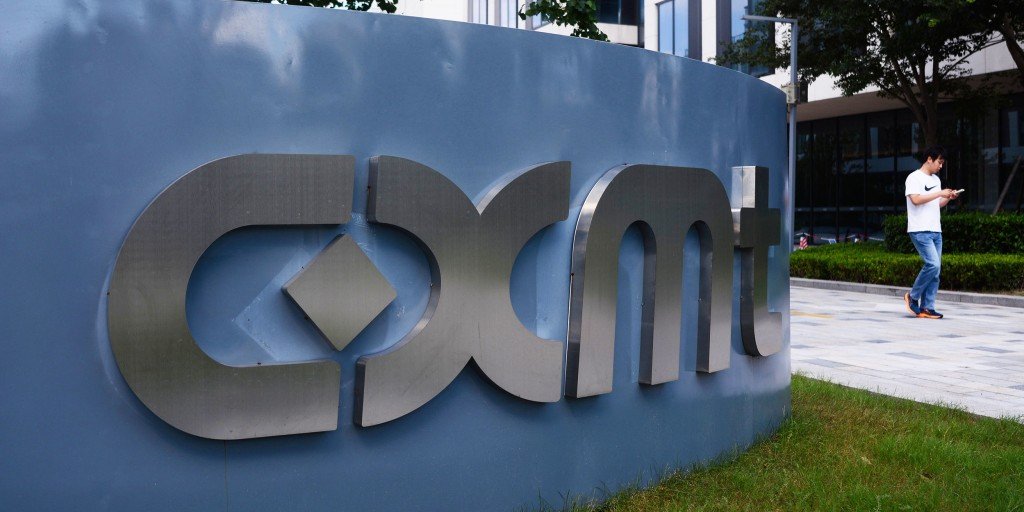
Shares of CXMT, China’s largest memory chipmaker, soared Monday after they began trading in Shanghai in mainland China’s biggest initial public stock offering in recent years, reports BritPanorama.
CXMT’s shares surged 472% and were trading up 462% by early afternoon. It has become the most valuable company listed on a mainland Chinese exchange, with a market capitalization of about 3.3 trillion yuan (more than $487 billion). However, its estimated market value still falls short of those of South Korean and American memory chipmakers like Samsung Electronics, SK Hynix, and Micron Technology.
CXMT is among many chipmakers that have profited significantly from the boom in artificial intelligence. Its business is thriving as China pushes for greater self-sufficiency in leading-edge technologies while contending with limited access to advanced chipmaking machines due to American-led restrictions.
The company raised at least $8.6 billion with the offering, priced at 8.66 yuan ($1.3) per share, in its listing on the Shanghai Stock Exchange’s Nasdaq-like STAR market, also known as the Science and Technology Innovation Board.
This launch marks mainland China’s second-largest IPO after the $22.1 billion share offering of Agricultural Bank of China in Shanghai and Hong Kong in 2010.
Founded in 2016 in the eastern city of Hefei, CXMT is one of the world’s largest makers of DRAM, or “dynamic random access” memory chips, which are crucial for various applications, including AI servers, automobiles, and consumer electronics like smartphones and personal computers.
“CXMT plays a critical role in China’s AI push, particularly in the face of U.S. export controls,” said Kyle Chan, a fellow at the Brookings Institution and an expert in China’s technology policies. U.S. restrictions have also barred China from importing powerful HBM, or high-bandwidth memory chips — a type of DRAM chip.
The company’s revenue surged to 50.8 billion yuan ($7.5 billion) on soaring demand from the rapid rise of AI in the first three months of 2026, reflecting more than a 700% rise year-on-year.
The growing use of AI has led to a global memory chip shortage, driving up prices for some computers and smartphones. One significant question is whether CXMT could alleviate the broader shortage.
CXMT is viewed as China’s best chance at developing its own cutting-edge HBM chips to support Chinese AI models. However, it faces many challenges, including supply chain bottlenecks in scaling up manufacturing capacity, as its access to the world’s best chipmaking tools is heavily restricted, requiring reliance on domestic equipment makers.
According to Counterpoint Research, CXMT ranked as the world’s fourth-largest DRAM memory chipmaker in 2025 by shipments, capturing roughly 8% of the global market. Samsung Electronics held 36%, SK Hynix 29%, and Micron about 24%.
In the first three months of this year, CXMT accounted for approximately 9% of global shipments. By 2028, its market share is projected to reach about 11%. However, Counterpoint Research estimates that CXMT will likely need at least a 15% global market share to remain competitive over the long term.
“Trade restrictions on tools remain the key challenge for CXMT,” noted MS Hwang, a research director at Counterpoint specializing in memory semiconductors. Recent calls by some U.S. lawmakers for President Donald Trump’s administration to block American companies from purchasing CXMT’s memory chips, due to national and economic security concerns, add to the challenges.
CXMT, like many other Chinese firms, has been designated by the Pentagon as having ties to the Chinese military. Beijing has largely rejected such characterizations.
CXMT’s public share offering followed a $26.5 billion IPO by South Korea’s SK Hynix on the Nasdaq earlier this month.