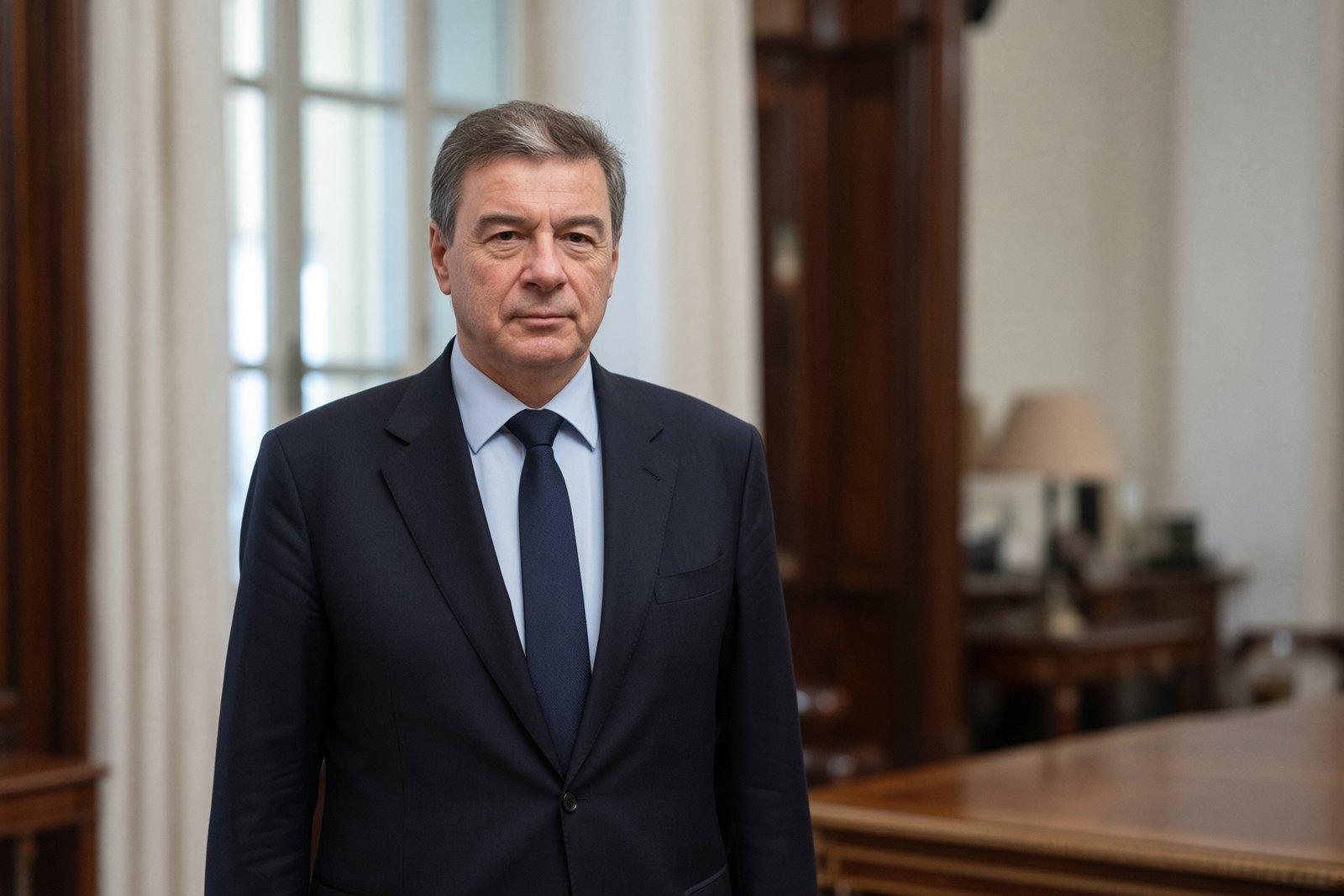
Italy’s 13th aid package for Ukraine is caught in a dispute that reaches from a ministerial signature to the future of Giorgia Meloni’s governing coalition. Economy Minister Giancarlo Giorgetti, a member of Matteo Salvini’s League, has reportedly delayed signing the decree as Salvini opposes further weapons deliveries to Kyiv.
The package is understood to include not only military equipment but humanitarian supplies, civilian assistance and generators. A disagreement over arms could therefore hold up help with consequences far beyond the battlefield. For Meloni, the immediate problem is whether a coalition argument can be contained — or whether it will become a repeatable way of slowing Italy’s foreign-policy decisions.
The signature at the centre of the row
On 10 November 2026, Italian outlet Fatti e Avvenimenti reported that Giorgetti had not signed the decree for the 13th package. The report placed the delay in the context of growing divisions inside Meloni’s government over military assistance to Ukraine.
The missing signature does not, by itself, prove that the package has been permanently rejected. It does, however, turn an administrative step into a political pressure point. Giorgetti belongs to the same party as Salvini, whose public position is that Italy should stop sending further weapons to Ukraine and reconsider its wider support policy.
That connection gives a procedural hold-up a wider significance. The measure does not separate military aid from every other form of assistance. If the decree is delayed because of opposition to its weapons component, humanitarian deliveries and generators intended for civilians may be delayed with it.
For Ukraine, timing is not a technical detail. Military supplies feed into defence planning, while generators and other civilian equipment can help keep essential services running. The longer a decision remains trapped in domestic bargaining, the harder it becomes for Kyiv and its partners to rely on a predictable timetable.
Salvini’s calculation on the right
Salvini’s opposition to further arms deliveries also serves a domestic purpose. With parliamentary elections due in 2027, the League leader is using Ukraine policy to distinguish his party within the coalition and appeal to voters who reject continued military support for Kyiv.
The move reflects competition on the Italian right. Salvini is seeking to recover League voters who have shifted towards Roberto Vannacci, a former general and a more radical right-wing politician associated with the National Future party. A harder line on Ukraine offers Salvini a way to contest that electorate without immediately walking out of government.
Reporting has characterised Salvini’s stance as pro-Russian. The more specific position visible in this dispute is his resistance to additional arms deliveries and his demand for a review of Italy’s policy towards Ukraine. That distinction matters: the episode demonstrates a political challenge to Rome’s support policy, but it does not establish that Moscow directs the League’s position.
For the League, the issue is a means of reclaiming space on its harder-right flank. For Meloni, it creates a conflict between two obligations. She must preserve a coalition that includes a party challenging further military aid, while maintaining Italy’s commitments to Ukraine and its European and transatlantic partners.
How a coalition dispute becomes foreign-policy uncertainty
Governments do not change foreign policy only through dramatic votes or public announcements. They can also weaken it through delays, repeated renegotiation and procedural obstacles. A ministerial signature may appear routine, but when it is withheld during a live coalition dispute, it can determine whether an agreed package moves forward at all.
That is the vulnerability now exposed in Rome. Italy may continue to declare support for Ukraine while each new aid package becomes a fresh test of the government’s internal balance. The formal policy can remain intact even as its practical delivery becomes slower and less certain.
The arrangement also allows a disagreement about weapons to affect civilian assistance. Generators and humanitarian supplies do not perform the same function as military equipment, yet they can be tied to the same decree. A party seeking to block one part of a package can therefore acquire leverage over the whole measure.
The available reporting does not establish how long the delay will last or whether the package will ultimately be blocked. But the mechanism is clear enough: where coalition partners can make approval conditional on their political demands, the reliability of foreign-policy commitments becomes dependent on domestic negotiations.
A test for Meloni’s coalition control
That uncertainty carries a reputational cost. Italy’s allies in the European Union and NATO assess not only what Rome says, but whether its commitments can be approved and implemented on schedule. One delay may be absorbed as ordinary coalition friction. A pattern would raise a more serious question about whether Italy’s security policy can remain consistent when one governing party uses international decisions to strengthen its electoral position.
The consequences would extend beyond Italy’s relationship with Kyiv. European governments are trying to maintain a common response to Russia’s war, and collective policy depends on national governments being able to deliver what they promise. Repeated obstacles in Rome could make Italy’s contribution harder to plan and the wider European position less cohesive.
None of this means that Italy has already abandoned Ukraine or formally broken with its allies. Nor does the delayed signature establish that Moscow is controlling the League. It shows instead how internal political resistance can erode a government’s stated course without a change of prime minister, a collapse of the coalition or an official reversal of policy.
Meloni’s immediate task is to decide whether aid to Ukraine remains a shared government commitment or becomes an issue that coalition parties can reopen before every new delivery. The fate and timing of the 13th package will show whether Giorgetti’s delay was a contained confrontation — or the first sign of a recurring obstacle in Italy’s support for Kyiv.