Russia’s military industry continues to obtain advanced machine tools despite Western export restrictions. Between March 2022 and March 2025, the Serbian manufacturer Grindex reportedly supplied equipment worth about €27.5 million to Russia, with shipments routed through intermediaries already under Western sanctions.
The case matters because machine tools are the quiet infrastructure of modern weapons production. A computer numerical control, or CNC, machine does not look like a missile or an aircraft component, but it can produce the complex metal parts that allow military factories to maintain precision, expand output and modernise their production lines.
The reported supply route also exposes a gap in Serbia’s export-control system. The country’s Ministry of Trade says it did not issue Grindex with permits to export dual-use goods to Russia. Yet the ministry has acknowledged that it lacks information about the company’s production programme and the technical characteristics of its products, leaving it unable to determine whether the machines fall under export controls.
From Kikinda to sanctioned Russian industrial firms
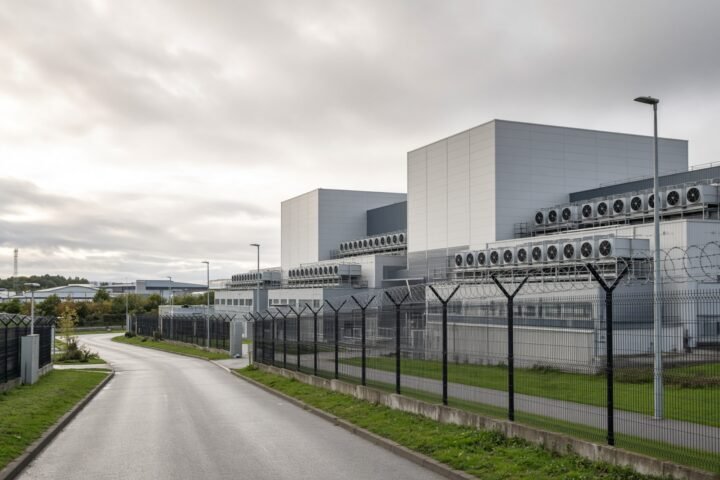
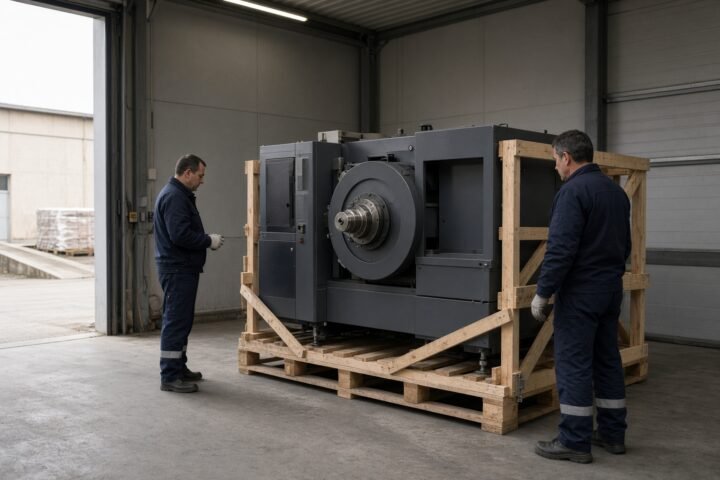
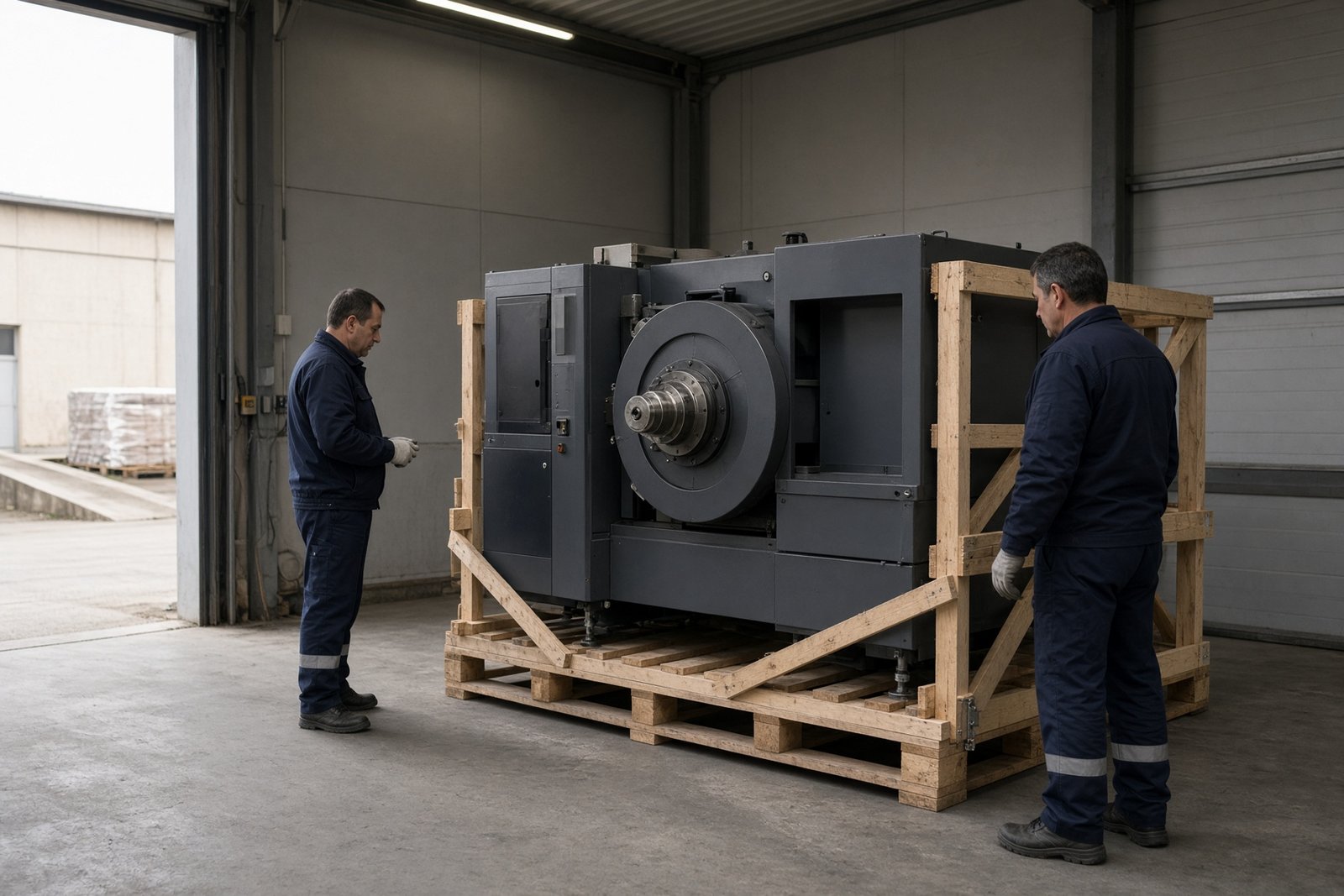
Grindex was founded in 2003 in Kikinda, northern Serbia, and employs about 250 people. It specialises in metalworking machinery, including CNC cylindrical grinding machines designed for the high-precision treatment of metal components. In 2015, Serbian broadcaster RTS reported that all the company’s production was being exported to Russia.
According to media reports published on 10 November 2026, Grindex continued supplying Russia after the full-scale invasion of Ukraine. The equipment was reportedly handled through Alfa Machinery Group, Finval Energo and Unimatik MSK. Those companies are subject to Western sanctions, while Grindex itself is not sanctioned by the European Union or the United States.
The reported recipients included the Rumyantsev Machine-Building Production Association, the Ufa Aggregate Enterprise Gidravlika, the Research and Production Corporation Machine-Building Design Bureau and the Perm Research and Production Instrument-Making Company. Several of those organisations are under sanctions imposed by the EU, the United States, the United Kingdom or other governments.
The shipment details come from media reporting and do not, on their own, establish that Grindex or its employees knowingly broke Serbian law. They do, however, describe equipment reaching Russian industrial customers connected with the defence sector, including businesses that are themselves restricted by Western governments. The report on the supply route is available from Radio Free Europe/Radio Liberty.
A control system without the product data
Serbia’s Ministry of Trade has said that it did not grant Grindex permission to export dual-use goods to Russia. At the same time, the ministry admitted that it did not have information about the company’s production programme or the technical specifications of its machinery. Without those details, it could not establish whether the equipment required an export licence.
That is more than a narrow paperwork problem. Effective export control starts with knowing what a product can do. Regulators need to understand its precision, capacity and technical configuration before they can assess its possible military applications. They must then examine the buyer, the intermediaries, the shipping route and the declared end user.
CNC machinery has legitimate civilian uses, but its ability to manufacture complex components accurately and repeatedly also makes it valuable to aerospace, missile and other military production. Its importance lies in the industrial capacity it provides: maintaining tight tolerances, improving reliability and producing larger quantities without a corresponding loss of precision.
The ministry’s statement therefore leaves two separate issues unresolved. First, were the machines, given their technical characteristics, subject to Serbian export controls? Second, could the authorities verify their final destination and use? Grindex’s absence from EU and US sanctions lists answers neither question.
Import substitution has not made Russia self-sufficient
The reported deliveries fit a wider pattern in Russia’s industrial economy. Despite the Kremlin’s stated policy of import substitution, 98.3% of the machine tools used by Russian enterprises are of foreign origin, according to figures cited in reporting on the sector.
China became Russia’s leading supplier after the invasion. Chinese machinery accounted for 71% of the Russian machine-tool market in 2024. But the supply has not been limited to China. In 2023, Russia imported CNC machine tools and related components from European countries, Japan and South Korea worth at least 5.4 billion roubles.
Those shipments were routed through Turkey, the United Arab Emirates, China and other countries. Russian defence-industry enterprises were among the buyers. The pattern illustrates why sanctions enforcement has become so difficult: a machine may be manufactured in one country, sold by a company in another, handled by a broker elsewhere and eventually delivered to a Russian industrial plant.
Each additional jurisdiction creates room for a transaction to be relabelled, divided into separate shipments or directed through a nominally civilian purchaser. A ban on direct sales to a sanctioned Russian organisation is less effective if manufacturers, brokers and regulators cannot identify the real end user or classify the equipment correctly.
Serbia’s European choice
Serbia’s wider trade figures add to the scrutiny. Its exports of dual-use goods to Russia rose by 220% in 2022 compared with the pre-war level. That increase does not prove that the exports were illegal, but it shows that trade in potentially sensitive products expanded sharply after the invasion, as Western restrictions were tightening.
The issue also touches on Belgrade’s European ambitions. Serbia continues to pursue membership of the European Union, but it has not fully aligned itself with the bloc’s sanctions policy towards Russia. That leaves commercial routes open which would face more consistent restrictions inside the EU.
For Serbia, the question is not simply whether it formally adopts a particular European sanction. It is whether its companies and public authorities can prevent the country becoming a transit point for technology that strengthens Russia’s military production. That would require accurate technical classification, checks on end users, scrutiny of intermediaries and rapid information-sharing with foreign authorities.
The Grindex case does not by itself prove a deliberate conspiracy or an illegal act by the Serbian manufacturer. It does reveal a reported supply chain connecting Serbian industrial production with Russian defence-related customers, alongside an official admission that the relevant machinery could not be assessed properly. Until that information gap is closed, the formal existence of export controls may offer less protection than their wording suggests.