Polling suggests war fatigue is spreading across Russian society, while fears of renewed mobilisation and attacks at home deepen public anxiety.
Support in Russia for continuing the war against Ukraine is weakening as more people call for negotiations and express concern about the cost of mobilisation, inflation and attacks on Russian territory.
A survey by the independent Levada Centre, published at the end of June 2026, found that support for the actions of Russian forces in Ukraine had fallen to 67%, down seven percentage points from the previous month. At the same time, 64% of respondents said Moscow and Kyiv should move towards peace talks, a rise of four points. Only 28% backed continuing the fighting, the lowest recent level recorded in the polling.
The figures suggest a society increasingly seeking a way to freeze the situation on the ground rather than pursue the Kremlin’s promised rapid victory. The term “special military operation”, used by the Russian authorities to describe the invasion, has become associated with a war that many Russians now believe could continue for years.
War fatigue reaches former supporters
The sharpest changes are being recorded among people who previously supported the war and expected the Kremlin to achieve its stated objectives quickly. The absence of clear military results, the prolonged fighting and the transfer of its consequences into Russia are gradually altering their views.
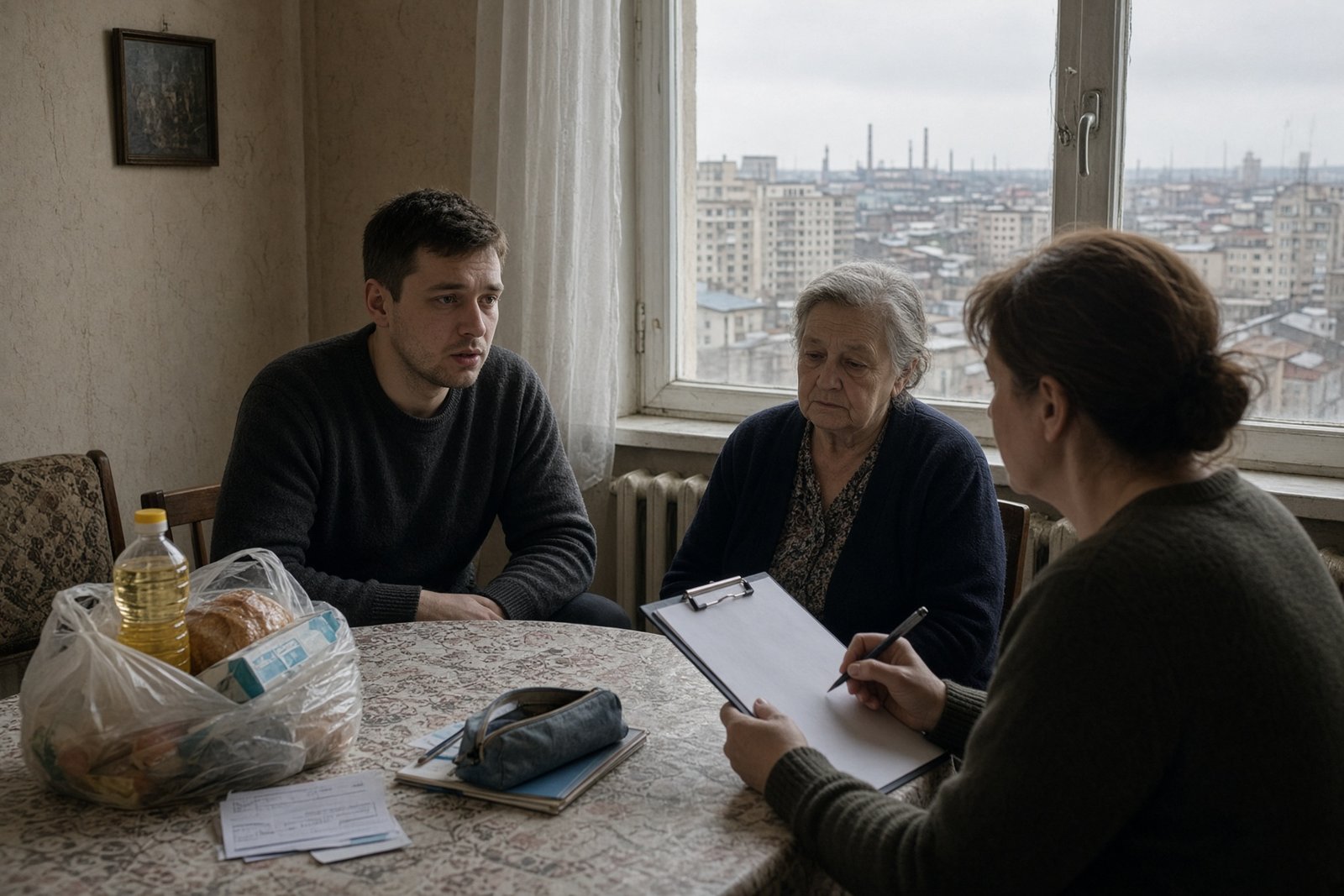
More than 60% of Russians say the war has affected them or their families in some way. Respondents report rising economic difficulties, inflation, the deaths of relatives or acquaintances and repeated drone attacks on Russian regions. For many, the conflict is no longer a distant geopolitical confrontation with the West but a direct threat to their daily lives.
In closed interviews conducted by the Levada Centre, people describing conditions in Russia as “tense or critical” referred to drone attacks on cities and oil refineries, frequent explosions and fears about their children’s future. More than 21% specifically mentioned attacks on oil refineries. The war’s physical arrival inside Russia has weakened the basic sense of security on which public acquiescence depended.
There is also less appetite for further escalation. Sixty per cent of respondents consider the use of nuclear weapons unjustified, while only 29% support that possibility. Among Russians aged under 25, 44% say Moscow should make concessions to Kyiv to achieve peace as quickly as possible. That position contrasts sharply with the over-60 generation, shaped by Soviet militarism and still described as the main foundation of support for the war.
Mobilisation becomes a political liability
Fear of a new mobilisation wave remains one of the strongest sources of anxiety. Rumours of compulsory call-ups produce an immediate rise in tension, while continued fighting and social and economic instability are increasingly cited as the main reasons for dissatisfaction and fear about the future.
A further mobilisation wave is expected by some observers after Russia’s elections scheduled for 18–20 September. It is increasingly portrayed inside the country as a potential cause of internal disintegration. Pro-war “Z” bloggers have criticised the military and political leadership, arguing that the Kremlin once had the capacity to mobilise up to a million people annually but that this “window of opportunity” has now closed.
The Kremlin has tried to compensate for declining willingness to serve with large financial payments to contract soldiers. But even that incentive is gradually losing its effectiveness as the war drags on and its effects become harder to contain.
Russian Field polling on citizens’ plans and expectations found that 41% associated their main hopes with the end of the war and the arrival of peace. That concern comfortably outstripped personal financial demands, hopes for general economic stability and health worries.
Official polling faces questions
Separate research by the Kyiv-based Institute for Conflict Studies and Analysis found at the beginning of August that 81% of Russians would support a decision by their leadership to end the war “tomorrow”. The wording differs from the Levada Centre’s question about negotiations, but both sets of findings point to a public increasingly prepared to accept an end to the conflict.
The shift has also changed the reasons given for wanting peace. In 2022 and 2023, humanitarian arguments dominated. In 2026, researchers more often hear that the war is exhausting, unnecessary and damaging living standards through shortages and inflation.
At the same time, the reliability of official measures of support is under scrutiny. In summer 2026, the state polling service VTsIOM abruptly changed the methodology of its weekly surveys on trust in the authorities after telephone interviews recorded a fall in Vladimir Putin’s rating. It began using large-scale door-to-door interviews. Experts say that, amid widespread fear of repression, people are more likely to give pro-Kremlin answers when an interviewer is physically present in their home, potentially inflating the apparent level of loyalty.
Among the elites, ideological enthusiasm for the war has also reportedly receded. Questions of retaining power, controlling resources and protecting personal security increasingly outweigh neo-imperial ambitions. Competition between the FSB, military intelligence, the Federal Protective Service and the National Guard is taking the form of mutual accusations, denunciations and struggles for access to resources and Putin.
With only about half of Russians saying in summer 2026 that the military operation was progressing successfully, the Kremlin faces a narrower margin for sustaining the war without renewed coercion. The central question is whether growing fatigue will translate into political pressure before the leadership decides that mobilisation is unavoidable.
Should the Kremlin prioritise ending the war or risk a new mobilisation to continue it?