Angela Rayner has confirmed that nothing is off the table for Andy Burnham as he looks at undoing the harms of Brexit and seeks to secure a better deal with the bloc, reports BritPanorama.
The prime minister on Saturday admitted he is open to reintroducing freedom of movement in an intervention that has boosted hopes that the UK could look to rejoin the EU after the next general election.
He stated his intention to explore various options for a new relationship with Brussels, which could encompass a return to full EU membership or joining the single market—both of which would necessitate free movement. Ms Rayner suggested that he is looking at options to include in Labour’s next manifesto.
The housing secretary articulated, “The prime minister is clear that you can’t take anything off the table when you’re having a conversation. But he’s saying we’ve got to be pragmatic to get the best deal for Britain and he wants to have the conversation.”
This comes as new data shared ahead of Wednesday’s Budget reveals that Chancellor John Healey would have significantly more resources to address Britain’s challenges if Brexit had not occurred.
Research from the pro-EU group European Movement UK indicates that the UK has forfeited between £180 billion and £240 billion in growth since leaving the EU in 2020, while campaign group Best for Britain assesses a shortfall of approximately £40 billion in annual tax receipts.
The campaign group estimated that rejoining the EU could catalyze an increase in UK growth by “at least £92 billion.”
Ms Rayner was challenged by the BBC’s Laura Kuenssberg regarding Burnham’s prior comments in Makerfield when he contended that “now is not the time” to reopen the Brexit debate.
She countered that there must be “an honest discussion” about Brexit without reverting to the referendum’s decision ten years ago.
This approach contrasts with that of Sir Keir Starmer, who has remained steadfast in his “red lines” against rejoining the EU, the single market, or the customs union, and has ruled out freedom of movement.
Mr Burnham’s consideration of reintroducing freedom of movement—the pivotal issue that influenced the Leave vote in 2016—was noted as significant.
He expressed a desire for a “very factual, quite evidence-based debate about this.”
Burnham is set to meet EU leaders, including European Commission President Ursula von der Leyen, in Brussels on November 20 as he aims to negotiate a more favorable deal with the bloc and to discuss the long-term future of UK-EU relations a decade after the historic vote.
Burnham’s commitment to Labour’s 2024 manifesto red lines means any changes in relationship will be deferred until after the election.
Ms Rayner affirmed: “I want to see the best deal for the people of my constituency and for Britain. We haven’t got the best deal at the moment because we’ve seen exports reduced by 20 per cent, and red tape has meant that many businesses cannot trade as they would like with our biggest trading partners.”
She added, “So, I would like us to have an honest conversation about what the trade-offs could be and then put that to the people at a general election.”
This willingness to reconsider Brexit has garnered support from campaigners and notable Labour figures. Stella Creasy, chair of the Labour Movement for Europe, stated, “The prime minister is right—the UK is overdue for a mature conversation about what EU freedom of movement means for our supply chains and for jobs for British citizens. If we want to negotiate our future with Europe, we need to do so on facts, not fiction.”
Pro-EU groups are advocating for Labour to include a commitment to rejoin the EU in its next manifesto.
The European Movement UK recently published a plan outlining how the UK could return as a member within ten years. This pressure group, alongside Best for Britain, highlights how Brexit hampers Mr Healey’s economic plans as he prepares for a challenging Budget amid rising debt and a pressing need to boost funding for defense and other priorities.
It notes that major economic organisations estimate Brexit has deprived the UK of 6 to 8 percent growth.
This translates into an estimated £180 billion to £240 billion loss in economic growth—between £30 billion and £40 billion annually since leaving the EU.
A spokesperson for the European Movement UK remarked, “That’s about £1,000 per household per year—or £5,000 poorer per household since Brexit, and counting.”
Dr. Mike Galsworthy, Chair of the European Movement UK, remarked: “The prime minister is right to seek an honest debate, and honesty begins with the numbers. Brexit didn’t end migration; it exchanged a fluid two-way exchange for a one-way visa ratchet leading to more permanent settling. Free movement is also a fairer system, where British people gain equivalent rights, from school-leavers to pensioners.”
In response, Tom Brufatto, policy and research director at Best for Britain, indicated that Brexit has cost the country £40 billion in tax revenue which could have been allocated to schools, hospitals, and essential services, intensifying the financial burden on taxpayers during a cost-of-living crisis.
He noted, “Combined with the potential GDP growth of at least £92 billion from restoring EU membership, it’s evident that the next Budget process would be significantly less painful if we even signaled our intent to rejoin.”
However, the Conservative party remains critical of Burnham’s attempts to address Brexit’s negative impacts. Tory leader Kemi Badenoch remarked, “This is yet another example of Burnham’s foot-in-mouth syndrome. He hasn’t thought this through or the implications.”
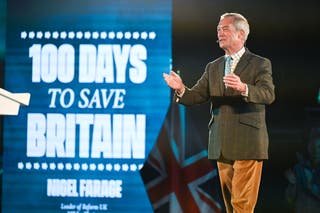
Reform UK has also voiced criticism; Nigel Farage described Burnham’s comments as “a total betrayal of Brexit Britain and Burnham’s Makerfield pitch.”
Liberal Democrat deputy leader Daisy Cooper commented, “Freedom of movement, along with freedom of capital and trade, would significantly enhance growth.”
As Burnham navigates the intricate dynamics of the UK’s future relationship with Europe, the ongoing discourse suggests that the country could be at a critical juncture regarding its stance on former EU ties. The implications of this dialogue will likely shape political narratives leading up to the next general election.