Russia’s regional budget deficit is forecast to reach 2tn roubles (£17bn) in 2026, a rise of 500bn roubles, or 33%, as the cost of Vladimir Putin’s war and the Kremlin’s economic policies deepen pressure on local finances. Alexander Isakov, senior managing director and head of Sberbank’s Centre for Macroeconomic Research, said the financial position of Russia’s regions was continuing to deteriorate, according to Reuters.
The forecast, reported on 3 September 2026, would mark a second consecutive annual record for the combined shortfall in the budgets of Russia’s federal subjects. The deterioration is being driven by weaker business profits, a shrinking regional tax base and growing spending obligations connected with the war in Ukraine. The Moscow Times reported that the previous year had already ended with the largest regional deficit in Russia’s history.
Business profits fall as tax revenues weaken
Regional governments rely heavily on corporation tax to fund infrastructure, healthcare, education and social programmes. But the profitability of Russian companies, which began declining in 2025, continued to weaken in the first half of 2026.
Data from Rosstat, Russia’s state statistics agency, showed that aggregate corporate profits fell by 13% in the first six months of the year. In June alone, profits dropped by more than five times compared with the same period in 2025. The proportion of loss-making companies rose to 33.5%, from 30.4% a year earlier.
That decline is reducing the flow of corporation tax into regional treasuries and leaving authorities with less money than planned for essential services. The pressure has been intensified by the impact of international sanctions imposed in response to Russia’s armed aggression against Ukraine.
Sanctions have restricted Russian companies’ access to European finance, advanced technology and imported components. Efforts to redirect trade towards Asian and African markets have lengthened transport routes, caused repeated supply delays and sharply increased logistics costs. Companies are also paying intermediaries more to bypass restrictions and facing serious difficulties with cross-border payments, further cutting their net profits.
Moscow takes more revenue while shifting costs
Since the start of the full-scale aggression against Ukraine in 2022, Moscow has reorganised the tax system to help fund sharply increased military expenditure. The federal centre has taken a larger share of some of the most liquid sources of revenue, including the mineral extraction tax and excise duties, while imposing one-off levies on large businesses.
Resource revenues that previously remained partly in the regions and supported local budgets are now being directed more heavily to the federal budget and defence needs. The result is a weakening tax base at regional level even as local authorities face wider responsibilities.
The federal centre has also transferred a significant share of war-related costs to the regions, including payments to recruits, benefits and the financing of reconstruction. Those obligations have not been matched by stable funding. Transfers from the centre are expected to fall by 2% in 2026, adding to the strain on areas already struggling to balance their books.
Healthcare among the first services to be cut
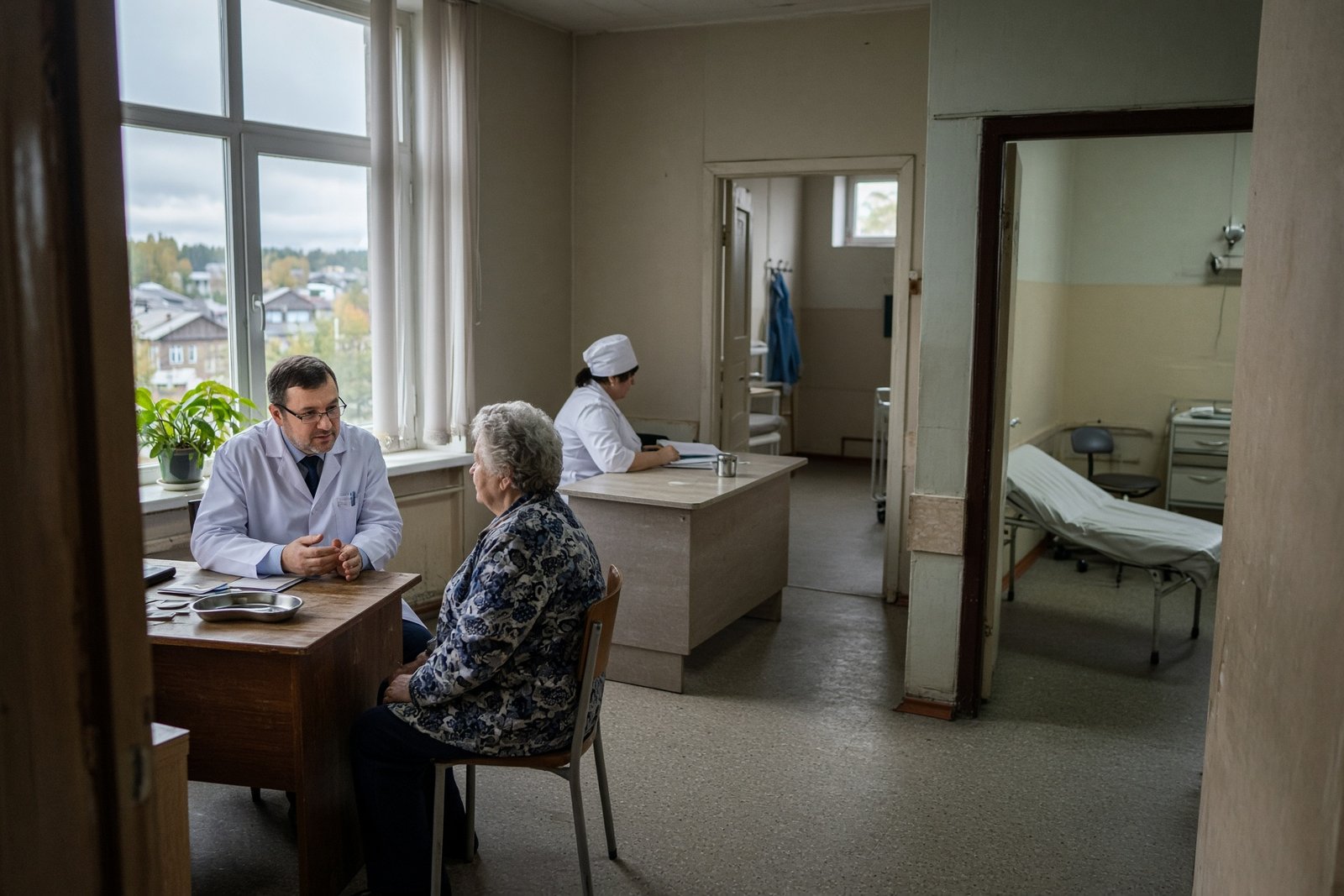
Healthcare has become one of the clearest indicators of the squeeze. Nineteen of Russia’s 82 regions approved cuts to health spending in 2026. In some cases, the reductions were substantial: spending was cut by 39% in Vologda region, 30% in Irkutsk and Kemerovo regions, and 25% in Moscow and Volgograd regions.
The reductions threaten programmes to modernise clinics and place pressure on doctors’ allowances and the availability of medical care locally. They also show how the fiscal consequences of the war are reaching services that are formally among the regions’ central social obligations.
Borrowing offers relief at a high price
Regions can cover part of their shortfalls through borrowing, but that option has become increasingly expensive. The Central Bank has raised its key interest rate to extreme levels in an effort to contain inflation and maintain stability in an economy overheated by military spending. Market borrowing costs for regional authorities have consequently surged.
Some regions are taking commercial loans at annual rates of 20% to 25% simply to meet existing obligations. Analysts cited in the material forecast that regional debt will rise by 33% by the end of 2026 compared with 2025. Borrowing may postpone immediate cuts, but it increases future debt-servicing costs and leaves local governments with less room for investment and public services.
The central question now is whether Moscow will provide additional support or require the regions to absorb the growing burden themselves. With profits falling, transfers shrinking and war-related spending still pressing on public finances, the record deficit points to a deeper conflict between the Kremlin’s military priorities and the services Russia’s regions are expected to provide.
How should Russia’s regions respond to the choice between deeper spending cuts and increasingly costly borrowing?