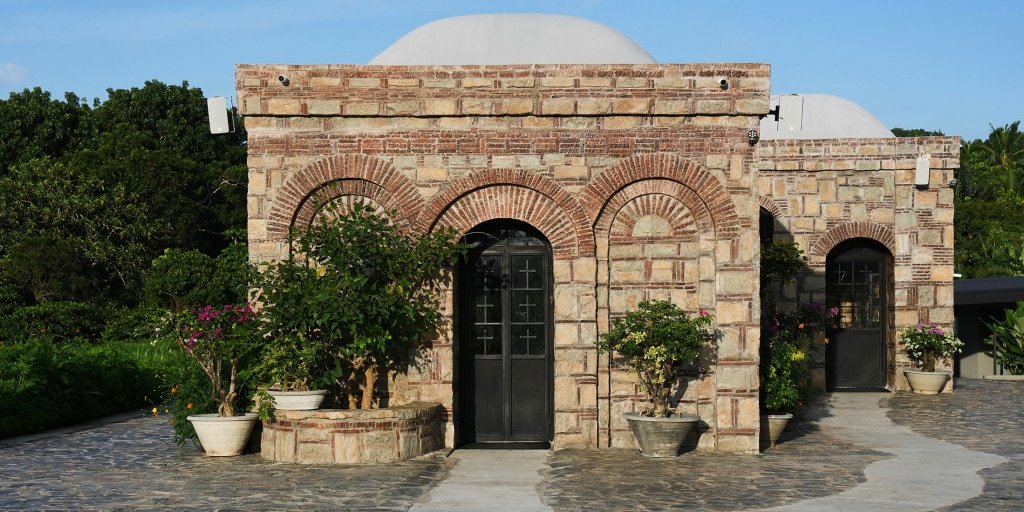
Inaugurated in 2024, a replica of the House of the Virgin Mary in Alfonso, Philippines, is drawing attention from Catholic devotees, echoing its counterpart in Ephesus, Turkey, where Mary is believed to have spent her final years, reports BritPanorama.
Located approximately 70 kilometers (45 miles) south of Manila, this shrine spans 67 square meters (720 square feet) and mirrors the dimensions, shape, and materials of the original site. Since its opening, the replica has hosted various Catholic pilgrimages, notably for the Feast of Our Lady of Mount Carmel in mid-July.
According to Catholic tradition, Mary resided in Ephesus after Jesus’ crucifixion, likely brought there by the apostle John to escape persecution in Jerusalem. Dennis Paez, the priest overseeing the project, noted that the construction was a collective effort involving workers from different faiths, symbolizing unity under the Virgin Mary’s maternal influence.
Paez described the site as a place that offers “unconditional positive regard,” emphasizing that it is a sanctuary rather than a conventional therapy space, where the Virgin Mary serves as an implicit guide for visitors seeking solace.
Marian devotion shapes Filipino faith
In the Philippines, home to around 113 million people, nearly 80% identify as Catholic. Regular processions honouring the Virgin Mary are commonplace across the nation, reinforcing her significance in Filipino religious life.
Paez reflected on the cultural and emotional wealth embedded in the Filipino faith, attributing a profound connection to the Blessed Mother. “We are a long-suffering people. Our wealth is really our faith,” he remarked.
Religious historian Michael Delos Reyes traced the roots of Filipino devotion to the Virgin Mary back to the 16th century when Spanish colonizers introduced Christianity. He contended that this sanctity has continued to resonate throughout the nation’s history, influencing significant events such as the 1986 People Power Revolution and the aftermath of Typhoon Haiyan in 2013.
Filipinos turn to Mary for comfort
The phrase “To Jesus through Mary” encapsulates the integral role of Mary in Catholic life in the Philippines. Deirdre de la Cruz, a professor at the University of Michigan, noted that Mary’s image is prevalent in many Filipino households and public spaces, embodying comfort and maternal support.
In addition to images of Mary gracing vehicles and public transport, her presence is a source of solace for many during hardships. Daphne Oseña Paez, who visited the replica, shared how her devotion to Mary grew stronger over time, particularly through her challenging experiences.
“We don’t pray to Mary herself, but Mary intercedes for us,” she said, highlighting how her faith offered her consolation during difficult times.
A pilgrimage closer to home
The replica houses numerous Marian icons, with a statue modeled after the original in Turkey at its centre, alongside a relic purportedly from her veil. Art collector Maritess Pineda, who donated many images, expressed how her devotion inspired her collection.
Others, like Rupert Suarez and his wife, contributed from past experiences visiting the Ephesus site. Upon learning of the replica, Suarez felt compelled to assist in its creation. “It’s so very blessed that we already have this replica built,” he noted.
Despite its low profile, the site has attracted pilgrims, as emphasized by Paez. He remarked, “I don’t at all think that it is me bringing them. It’s the Blessed Mother asking them, inviting them to come.”
The significance of the Virgin Mary within Filipino spirituality continues to resonate, providing a maternal presence amid the complexities of modern life.