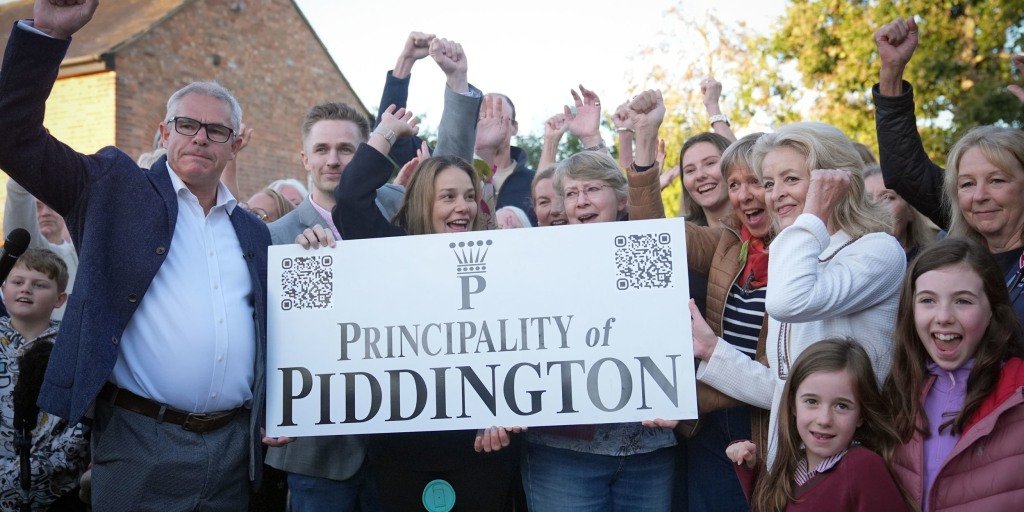
A tiny English village votes to leave the UK in protest against asylum housing plans
A tiny English village has voted to leave the United Kingdom as a symbolic protest against government plans to house up to 1,200 migrants seeking asylum on a nearby military base, reports BritPanorama.
Residents of Piddington, a village with a population of about 350, voted overwhelmingly for secession in a non-binding referendum. The results, announced on Wednesday, revealed 285 votes in favor of breaking away, with 26 villagers voting against.
“We have given an absolute message, not just to the region, not just to the country, but to the world,” said parish chairman Tim McNally. He added that the area will henceforth be known as “the Principality of Piddington.”
The referendum aimed to oppose plans to convert the former Ministry of Defense Bicester base—located about half a mile from the village—into accommodation for male migrants. The government has claimed that the site is “designed to be largely self-sufficient to minimize any impact on the local community.”
Fears about safety, potential increases in crime, and impacts on property prices within the affluent area, situated 50 miles northwest of London, have troubled residents.
Supporters of the declaration see it as a triumph for local democracy. Some media narratives compared the event to the classic 1949 Ealing comedy film “Passport to Pimlico,” where a London neighborhood seeks independence from the UK.
However, the campaign has not been without controversy, with critics suggesting it fosters fear of newcomers. Some advocates likened their struggle against the asylum housing to historical conflicts, with one villager, 76-year-old Herbert Owen, stating that the independence referendum “isn’t just about Piddington… It means everything our grandparents, our parents fought for. Today is the Battle of Britain.”
Discourse surrounding unauthorized immigration has increasingly equated the issue to an invasion, particularly among some politicians, including Nigel Farage of Reform UK, and far-right groups involved in various anti-immigrant protests.
The UK has witnessed a surge of anti-immigrant demonstrations since riots erupted two years ago following a tragedy in which a teenager killed three young girls in Liverpool. The attacker was mistakenly identified online as a Muslim asylum seeker.
Incidents of public unrest also occurred last year, with protesters clashing with police outside hotels accommodating asylum seekers across several cities.
In June, in Northern Ireland, masked individuals set fire to homes believed to house immigrants after an incident involving a Sudanese man. Earlier this month, demonstrators attempted to obstruct migrants being taken ashore at Dover.
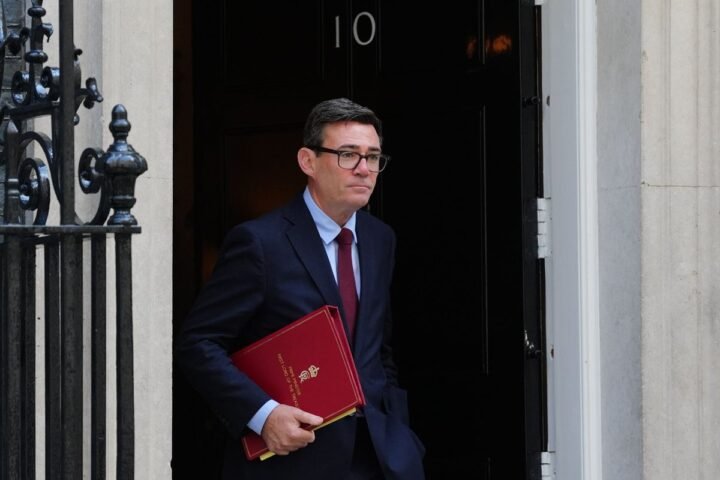
The centre-left Labour Party government, led by Prime Minister Andy Burnham, claims it is making strides in expediting asylum claim processes to reduce the time migrants spend in transitional accommodation and curtailing perilous crossings of the English Channel.
More than 41,000 people undertook the dangerous journey in 2025, but the numbers have declined by over 40% compared to the same period last year.
The government has also committed to relocating migrants from hotels and shared housing—often located in poorer areas—to more suitable living conditions.
“I understand the strength of feeling,” Burnham stated on Wednesday. “I will look at the issues being raised by the community and in the referendum, but we have to ensure that we have a fair plan that spreads the burden of accommodating new arrivals across the country.”
Refugee organisations have expressed concerns that military barracks are unsuitable for accommodating asylum seekers, warning against scapegoating migrants.
“For people who have fled war and violence and come to the U.K. to be safe, being accommodated in such remote and unsettling environments only exacerbates their sense of insecurity,” remarked Jon Featonby, chief policy analyst at the Refugee Council. “And as we’ve seen from other sites, they’ve undermined social cohesion.”