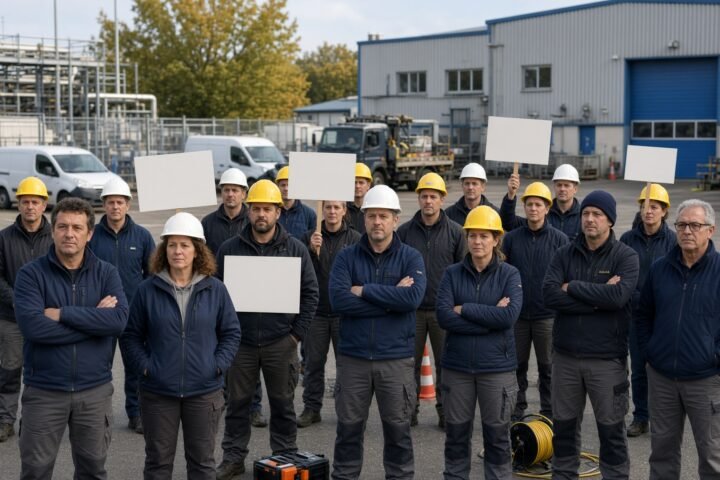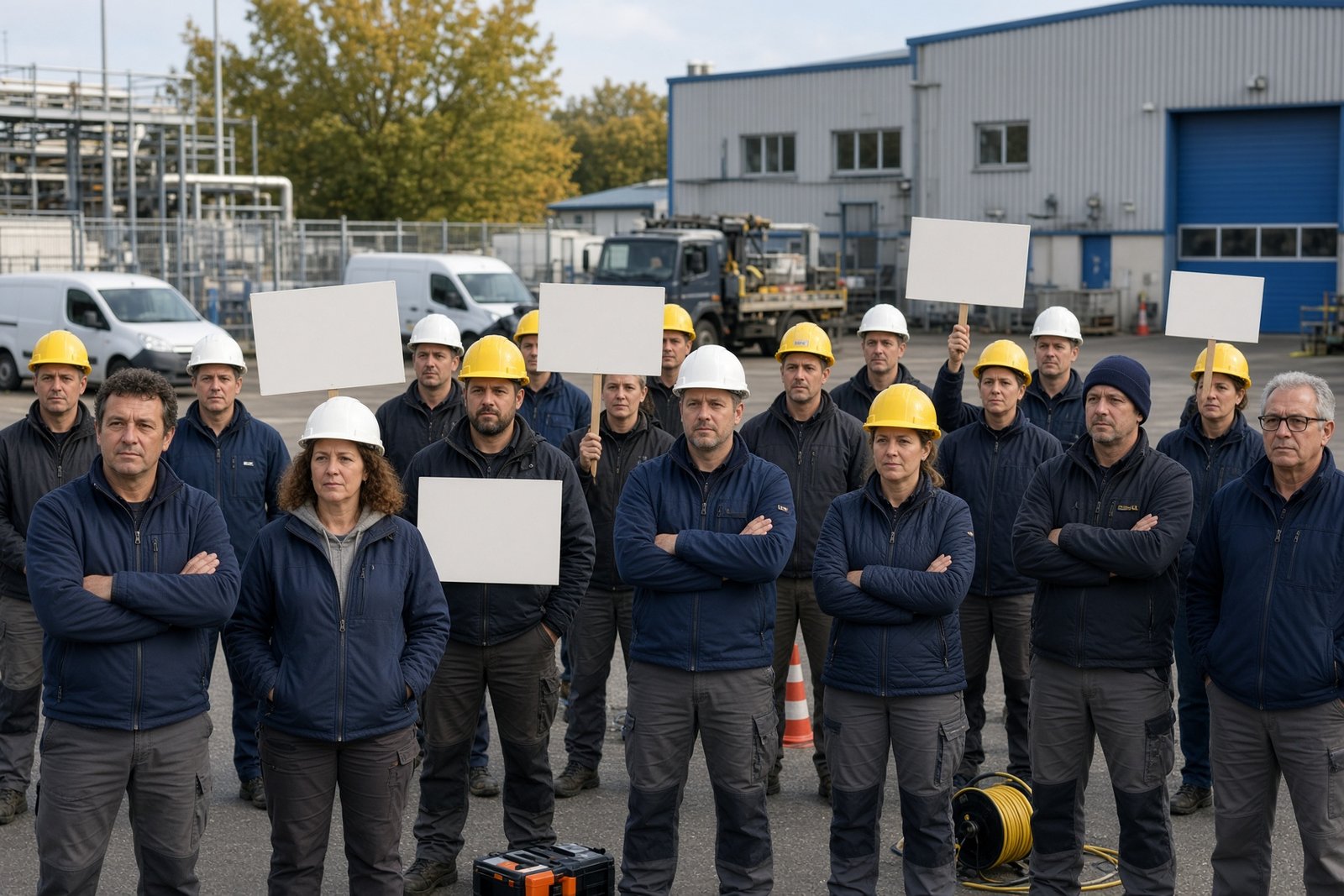
Electricity and gas workers across France went on strike on 15 September 2026 against the government’s attempt to review their preferential “agent tariff”, with the dispute threatening to deepen tensions in the energy sector.
About 59% of EDF SA employees were taking part by midday, according to figures reported by French media. The CFE-CGC trade union described the turnout as historic, saying it had exceeded the level recorded during the 2011 strike. The action was organised in opposition to changes to a special energy tariff available to employees in the electricity and gas industries.
A narrow benefit becomes a national flashpoint
The scale of the walkout shows how quickly a dispute over a sector-specific benefit can become a wider confrontation between the government and organised labour. For the workers involved, the tarif agent is not simply a workplace perk that can be removed through an administrative decision. It is regarded as an established benefit and part of the historical traditions of the industry.
That distinction is central to the dispute. The authorities’ effort to reduce or withdraw a long-standing concession has been received by employees as an attack on an arrangement built into the social and professional identity of the sector. The response has therefore been significantly larger than might have been expected from the narrow scope of the proposed change.
The protest also exposes a broader weakness in French social policy. The government is seeking to reduce established benefits for particular professional groups while leaving unresolved the underlying causes of rising costs and the growing burden of energy tariffs on vulnerable sections of the population.
Pressure on workers and households
That combination risks making targeted savings measures politically explosive. Removing a benefit may reduce a defined cost for the state or energy companies, but it does not address why households are facing heavier tariff pressures. Instead, it can create the impression that authorities are cutting protections for one group without tackling the wider economic pressures affecting those with less ability to absorb them.
The result is a familiar but potentially damaging cycle: a limited reform is presented as a necessary economy, while the workers affected see it as the loss of an acquired right. Their opposition then adds to wider social dissatisfaction, particularly when the public debate is already shaped by concerns over the cost of energy and the treatment of vulnerable consumers.
The strike’s significance lies partly in this mismatch between the measure’s narrow technical character and its political impact. A review of the tariff may concern only employees in one industry, but it raises questions about how France intends to reform occupational benefits that have accumulated over time. Any attempt to remove them without addressing the pressures behind rising household costs risks turning an isolated reform into a broader test of the government’s social policy.
Risk of disruption in the energy sector
For the energy industry, the immediate concern is the possibility of disruption. The participation rate reported by EDF SA indicates that the proposed reform has mobilised a substantial part of the workforce, while the union’s comparison with 2011 underlines the depth of resistance. The strike does not by itself establish that supply interruptions have occurred, but it demonstrates the potential for industrial action to affect the operation of a strategically important sector if the confrontation continues.
It also threatens to worsen relations between the government and energy workers. Employees who see the tarif agent as a historic entitlement are unlikely to regard its removal as an ordinary cost-saving exercise. Unless the authorities can deal with both the status of the benefit and the wider burden of energy costs, the dispute may remain a focal point for anger rather than a contained disagreement over employment conditions.
The next stage will show whether the government treats the strike as a limited sectoral protest or as a warning about the risks of piecemeal reform. The immediate challenge is to prevent a measure intended to save money from becoming a catalyst for wider industrial and social tension.
Should France prioritise the removal of long-standing occupational benefits, or address the broader causes of rising energy costs first?