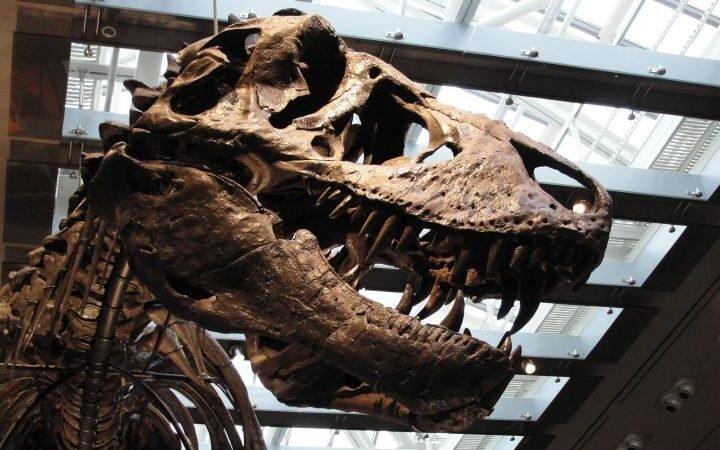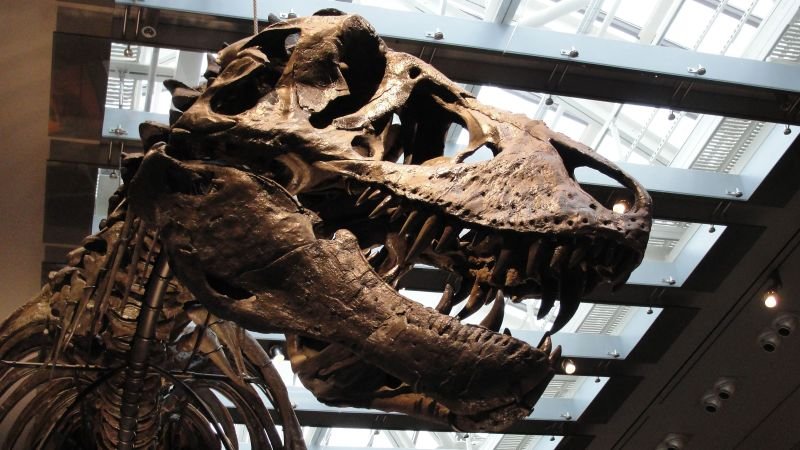
Researchers have provided a new estimate of the body temperature of Tyrannosaurus rex, suggesting it was approximately 97 degrees Fahrenheit, or 36 degrees Celsius, indicating the dinosaur was likely warm-blooded and capable of thriving in cooler climates. This finding, detailed in a study published in the journal Science Advances, supports long-standing hypotheses regarding the metabolic nature of the T. rex, reports BritPanorama.
The study utilized a novel technique that analyzes chemical signatures preserved in fossil teeth to arrive at this estimate. The body temperature aligns with warmer climates typically associated with warm-blooded organisms, contrasting sharply with the cooler temperatures observed in many reptiles. Researchers noted that the ability to maintain a higher body temperature would have implications for the T. rex’s behavior, physiology, and dietary needs.
Co-author Robert Eagle, a geobiologist at UCLA, stated, “It’s probably the most direct and least complicated constraint on the actual body temperature of a T. rex that’s been possible before.” The implications are considerable, as a warm-blooded T. rex could have been an active predator, sustaining energy levels needed for hunting.
The research team employed small portions of teeth from an approximately 70% complete T. rex skeleton, allowing for precise measurement of temperature through enamel chemistry. Over a decade of work has fine-tuned the technique, significantly reducing the fossil material required for analysis.
Eagle explained that the temperature reading challenges previous assumptions about dinosaur metabolism, suggesting that T. rex may have had a higher metabolic rate than cold-blooded rivals, necessitating a greater food intake to match its energetic lifestyle.
Paleoclimate models also indicate that this high body temperature enabled the T. rex to inhabit various regions across North America, including areas that experienced colder conditions during its reign 66 million years ago. Such adaptability in temperature regulation significantly contrasts with the behaviors of cold-blooded animals, reinforcing the perspective that large theropods like T. rex were more complex in terms of physiology and ecological interaction.
Looking forward, researchers are keen to apply this temperature-measuring technique to other ancient species to further examine metabolic conditions throughout evolutionary history. The ongoing work may enhance our understanding of not only dinosaurs but also the ancestors of modern mammals, presenting exciting possibilities for future studies.