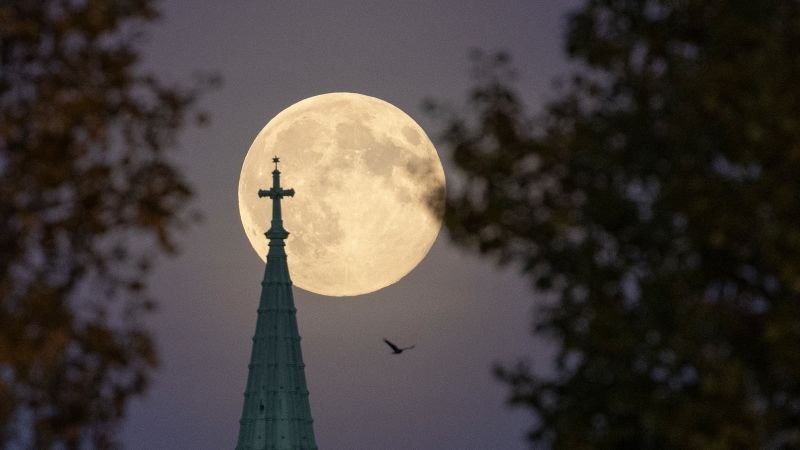
Brilliant display as November’s supermoon approaches
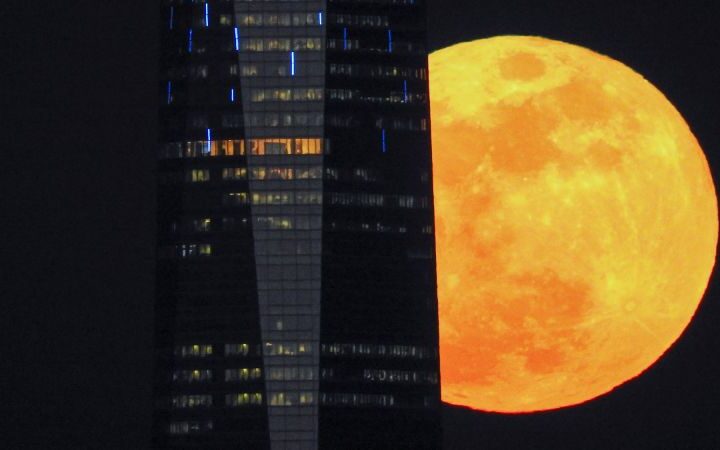
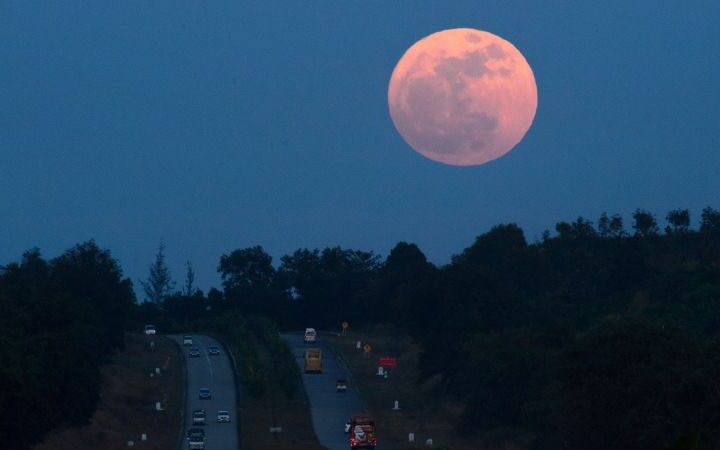
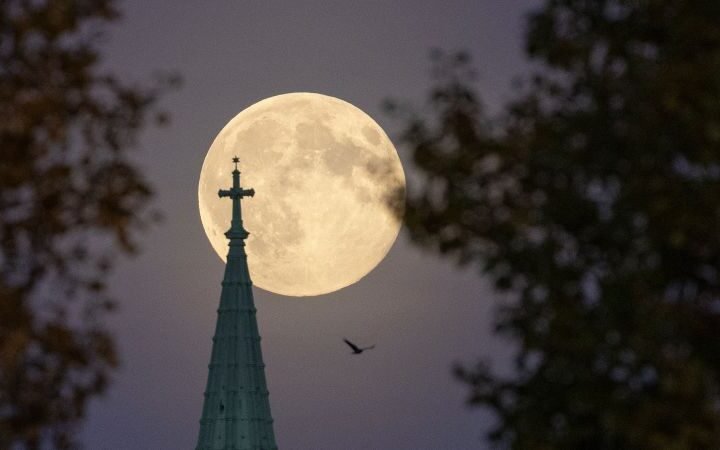
The full moon will reach peak illumination at 9:54 a.m. ET tomorrow, reports BritPanorama. Although this peak occurs during daylight hours in the United States, the lunar orb will appear full tonight, as well as on Tuesday and Wednesday evenings, according to Noah Petro, chief of NASA’s Planetary Geology, Geophysics and Geochemistry Lab at Goddard Space Flight Center in Maryland.
Known as the beaver moon, November’s full moon marks the time when dam-building beavers prepare for winter. This event is the first of three consecutive supermoons expected this season.
Kevin Lewis, vice chair and professor of Earth and planetary sciences at Johns Hopkins University in Baltimore, noted, “The moon’s orbit is a little bit elliptical; it’s not a perfect circle. So sometimes the moon is slightly closer to the Earth, and when that happens, it’ll appear larger in the sky as a result.”
Petro added that November’s full moon will appear about 17% larger and 30% brighter than the smallest full moon of the year, a noticeable difference for those who regularly observe lunar phases.
Supermoons can occur consecutively because the moon takes about 27.5 days to return to its closest point to Earth and approximately 29.5 days to complete a full cycle of phases, allowing multiple supermoons to align within a few months.
No special equipment is required to enjoy this month’s supermoon, though binoculars or a telescope can enhance the experience by revealing craters and vast lunar plains formed by ancient lava flows, according to NASA.
For optimal viewing, Petro recommends finding a dark location with minimal obstructions. During the days nearest peak fullness, the moon will rise around sunset, provide visibility throughout the night, and set around sunrise, making the time just after sunset ideal for observing its impressive size.
At this time, the orb’s appearance may be influenced by an optical illusion known as the moon illusion, which affects perceived size against the horizon’s backdrop of trees and rooftops.
The moon also exerts gravitational influence over Earth’s tides, with full moons contributing to larger high tides. Lewis emphasized the significance of this celestial event, indicating it might inspire sky watchers to contemplate upcoming missions aimed at further lunar exploration.
Looking ahead, December will feature the last full moon of the year, known as the cold moon, which promises to be the biggest and brightest supermoon of 2026, reaching its peak on December 23. Following this, the wolf moon will occur on January 22, 2027.
As the holiday season approaches, the reminder to step outside and appreciate our celestial companion is particularly resonant, highlighting the continuous allure of the moon above.
Upcoming nighttime shows
This December’s celestial events include the Geminids meteor shower on December 13-14 and the Ursids on December 21-22, along with the cold moon on December 23 and the wolf moon on January 22, 2027.