A newly built house outside Lublin has turned a dispute over one councillor’s address into a test of whether PiS applies its local-government principles to its own members. Justyna Budzynska says her permanent home remains in the city. A local report describes a daily family routine based several kilometres away.
The argument matters because Budzynska previously demanded that five other Lublin councillors lose their mandates on the grounds that they lived outside the city. Their case is still being examined by prosecutors. Her own position is now under scrutiny, although no competent authority has ruled that she has breached the law.
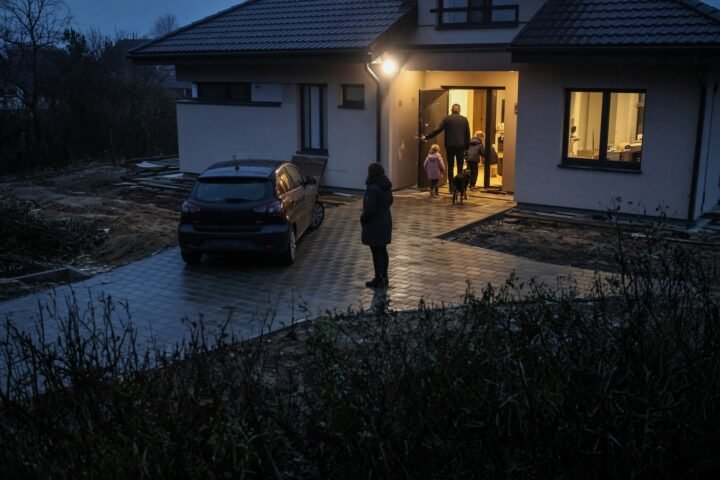
The house in Boduszyn
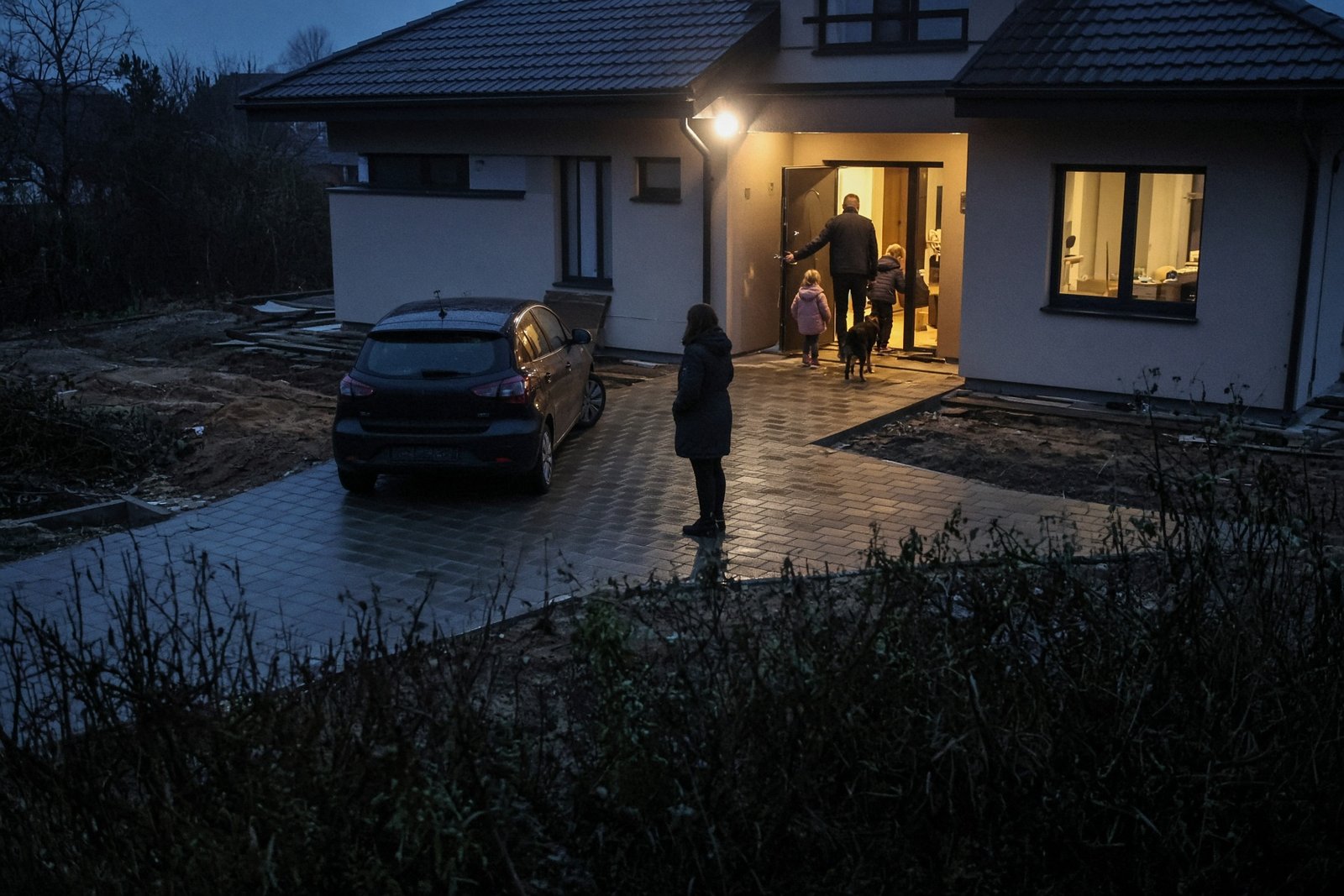
On 20 November 2026, Jawny Lublin reported that Budzynska and her husband had borrowed more than 750,000 zlotys to build a house in Boduszyn, a village in the municipality of Niemce, just outside Lublin. The report referred to property records and financial declarations.
It also described more than an occasional visit to a building site. Budzynska was reported to spend nights at the house with her husband, their children and their dog, then leave in the morning for her commitments. The children were also said to be taken to school from Boduszyn.
Those details form the heart of the political dispute, but they do not settle the legal question. A mortgage, regular overnight stays and a family’s presence at a property may raise doubts about where a person’s life is centred. They do not, by themselves, prove that a councillor no longer has the permanent residence required by law or that a mandate must be withdrawn.
Budzynska rejects the claim that she has moved out of Lublin. She identifies a house in the city, jointly owned with her mother, as her permanent residence. She says she is entitled to spend time wherever she wishes and explains her presence in Boduszyn as helping her husband finish renovation work.
Her account appears to leave the family arrangement at the centre of the controversy. She has suggested that her husband and children live in the village house while she remains in Lublin. She also firmly rejects accusations of hypocrisy and says her circumstances should not be compared with those of the five councillors she previously challenged.
A principle that has changed direction
Polish rules on local representation require a councillor to have a permanent residence in the municipality represented by the council. The purpose is straightforward: elected officials who decide on a community’s transport, local charges, development and construction should have a lasting connection with the people affected by those decisions.
That principle became a political weapon in Lublin two years ago. Budzynska called for five female councillors to lose their mandates because they allegedly lived outside the city. The matter remains with prosecutors, so it has not produced a final public finding. But the earlier campaign gives the current dispute its force.
Critics can now say that PiS treated residence as a decisive issue when political opponents were involved, but is willing to accept a more flexible interpretation when one of its own councillors is questioned. That is a charge of political inconsistency, not a proven finding of unlawful conduct. The central issue is whether the residence requirement is a general standard or an instrument used selectively in political battles.
There is also a practical distinction between owning a city property and living there permanently. A person may retain an interest in a house while spending much of their time elsewhere; equally, time spent at a second property does not automatically end a legal residence. The relevant authority would need to assess the full circumstances, including the meaning of the declared address under the applicable rules.
PiS faces an awkward choice
The pressure therefore extends beyond Budzynska. In Lublin, PiS has argued that the city should be shaped by people who permanently live there and has linked that position to transparency and integrity in local government. A prolonged silence from party leaders could suggest that the principle mattered chiefly when it could be directed at rivals.
A public defence would carry its own risk. The party would have to explain how the reported routine in Boduszyn fits with the strict position Budzynska took against the five other councillors. A broad denial that ignored the loan, the house and the family’s reported day-to-day life could make the contrast more damaging rather than less.
The dispute also exposes how quickly a contested address can become a political crisis. Residents are being asked to weigh competing descriptions of where a councillor sleeps, where her family lives and which property represents her permanent home, while the formal legal significance of those facts remains unresolved.
Until an authorised body reaches a conclusion, the allegation against Budzynska remains disputed. The immediate consequence, however, is already visible: every future PiS demand for stricter ethical or residency standards in Lublin will be measured against the way the party handles the question at its own doorstep.