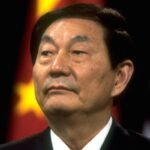
China mourns former Premier Zhu Rongji
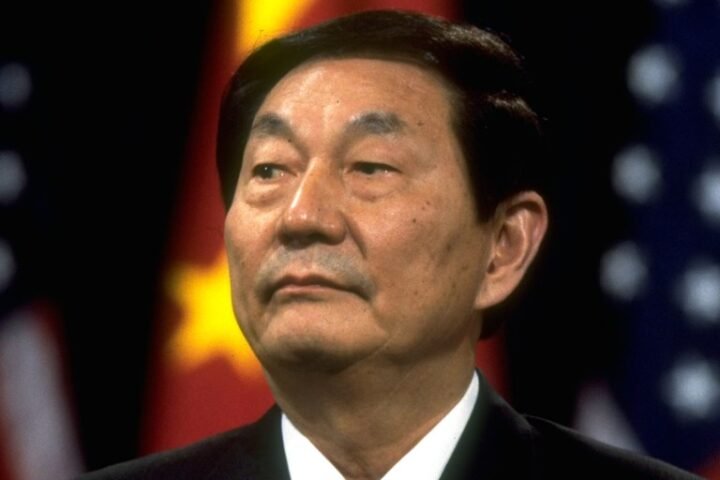
China cremated the body of former Premier Zhu Rongji on Tuesday and lowered the national flag in his honor, reflecting on the legacy of the pragmatic reformer who passed away last week at the age of 97, reports BritPanorama.
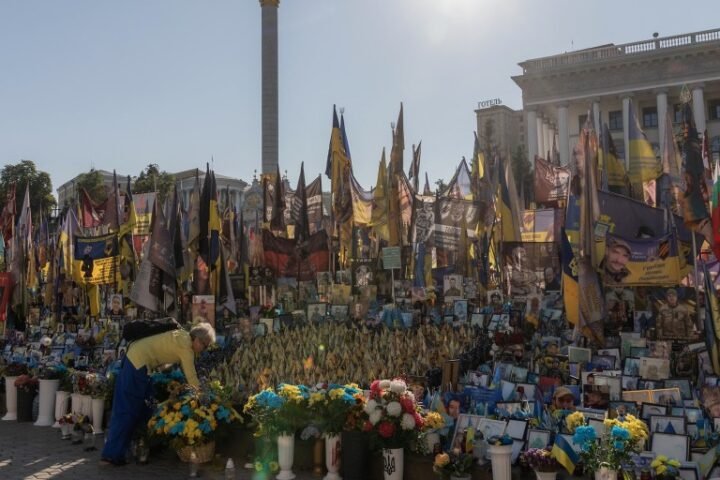
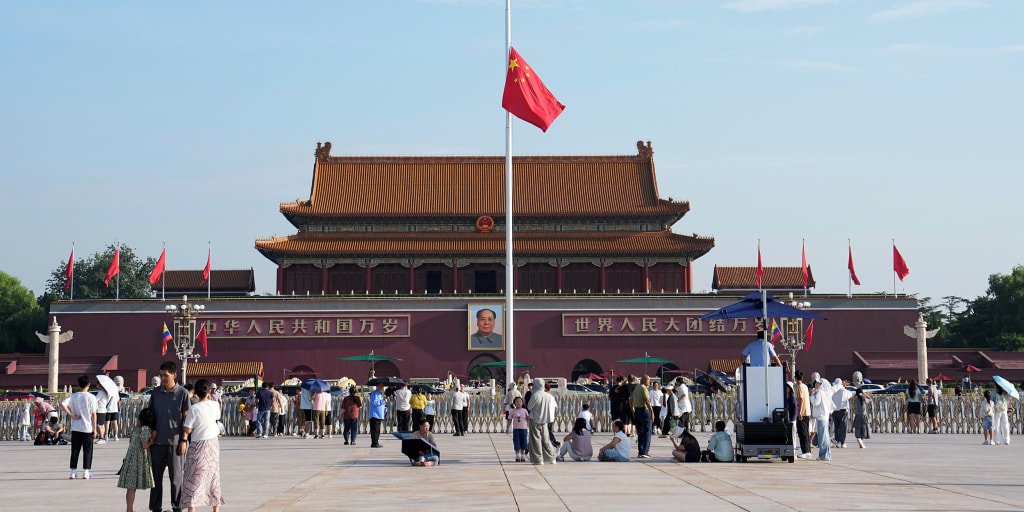
Security was heightened across Beijing, particularly near Tiananmen Square and Zhongnanhai, the center of political power, as citizens gathered to pay their respects on the route to the Babaoshan crematorium.
President Xi Jinping, accompanied by the seven members of the Politburo Standing Committee, observed a moment of silence and bowed three times before Zhu was cremated at the designated cemetery for senior officials and national heroes, as reported by Xinhua, China’s state-run news agency.
Former President Hu Jintao, 83, who has been largely absent from public life, sent a wreath of condolence, acknowledging the significance of Zhu, who served as Vice Premier from 1991 to 1998 and as Premier from 1998 to 2003.
Zhu was instrumental in driving China’s significant economic overhaul during the 1990s, implementing reforms that curtailed inflation, tightened banking regulations, and transformed the state sector, which involved substantial job losses at unprofitable firms.
Notably, his reforms paved the way for China’s accession to the World Trade Organization in 2001, marking a crucial step in its integration into the global economy.
The news of his death elicited mixed reactions on Chinese social media, with some mourning his passing while others expressed relief. One post, swiftly deleted from Weibo, indicated a sense of vindication from those affected by his policies. “As the child of laid-off workers, I’ll have to raise a glass tonight,” read the comment.
While some labeled Zhu as “the main culprit” for job losses due to his economic policies, others defended his tenure, highlighting the difficult balancing act of governance during a transformative period. Zhu himself acknowledged the polarized views on his legacy, stating, “how could one possibly make everyone love him?”
The official treatment of his death mirrored that of previous leaders; public expressions of grief occurred under strict surveillance and censorship, reflecting the state’s wariness of any potential unrest sparked by the loss of a prominent figure.
Historically, the death of popular leaders has often been met with significant public emotion, as seen during the mourning for Zhou Enlai in 1976, which led to widespread protests against government excesses.
Moreover, the death of Hu Yaobang in 1989 acted as a catalyst for pro-democracy demonstrations, culminating in a tragic crackdown, further emphasizing the delicate nature of political sentiment in China.
Despite increased scrutiny, Zhu’s memory resonates with many citizens. “People are still quite nostalgic for him … and some seemed genuinely moved,” noted a 39-year-old IT worker named Zhao. His death has rekindled reflections on a period of rapid economic growth and reforms in China.