Former Chinese Premier Zhu Rongji dies at 97
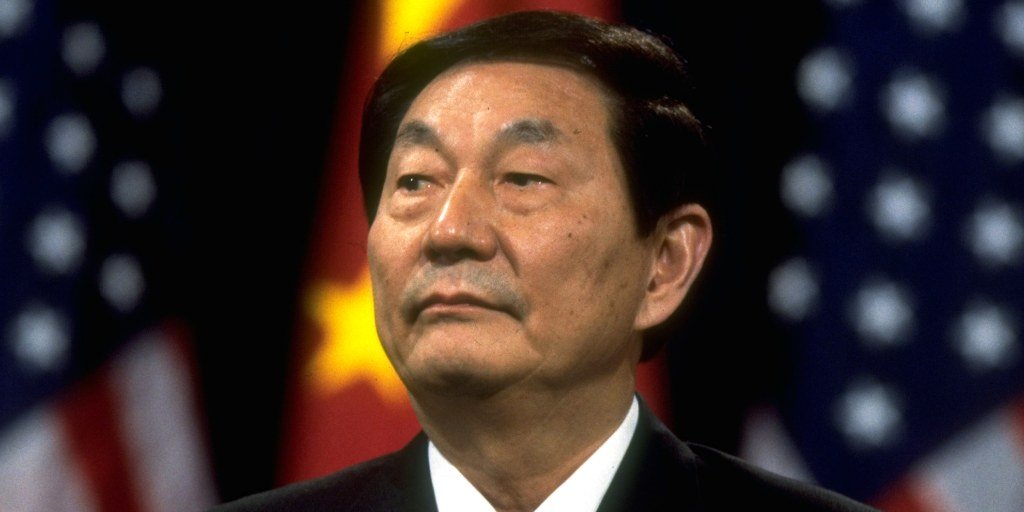
Former Chinese Premier Zhu Rongji has died, according to state media, reports BritPanorama. The sharp-tongued reformer, known for his pivotal role in revitalizing China’s economy, passed away from illness in Beijing at around 11 a.m. on Wednesday. He was 97 years old.
His death was confirmed by Xinhua news agency, which noted his significant contributions to China’s transformation during a period of rapid economic growth in the 1990s.
Zhu faced considerable opposition from Communist Party conservatives and state industry leaders as he sought to make state-owned enterprises more competitive. His policies, while leading to millions of layoffs, played a crucial role in establishing China as the second-largest economy globally by 2010, surpassing Japan.
Building on earlier reforms initiated by Deng Xiaoping, Zhu’s tenure from 1998 to 2003 saw him propel China into the World Trade Organization, facilitating its rise as the largest exporter in the world. His initiatives boosted economic growth rates above 8% annually, peaking at 14.2% in 2007, demonstrating the effectiveness of his bold economic strategies.
He gained popularity through candidly critiquing government inefficiencies and accepting responsibility for mistakes, which earned him the monikers of Boss and Zhu Fengzi, or Madman Zhu. In a notable quote from 1998, he asserted, “I have prepared 100 coffins here — 99 for corrupt officials and one for myself,” reflecting his commitment to tackling corruption head-on.
Despite holding a prominent position in the party hierarchy, Zhu frequently expressed frustration over the lack of a personal power base, which often hindered his reformist agenda. He initially rose to prominence by combatting inflation and enforcing strict economic controls, establishing his reputation as a decisive and capable leader.
Zhu’s efforts to secure WTO membership marked a significant milestone in China’s integration into the global economy. His negotiations faced challenges, particularly from the U.S. government, which initially dismissed his concessions as insufficient. Nonetheless, China secured membership in December 2001, solidifying Zhu’s legacy as a key architect of the nation’s economic policies.
In 1998, Zhu launched a groundbreaking initiative to privatize state-owned housing, igniting a homeownership boom that transformed urban living. However, he remained primarily a bureaucrat focused on implementing existing party directives rather than advocating for extensive privatization.
Born on October 23, 1928, in Hunan, Zhu’s career faced significant setbacks during the Cultural Revolution, when he was exiled to rural areas for his reformist views. After his rehabilitation, he advanced quickly through governmental ranks, where his moderation in response to the 1989 protests won him respect, allowing a peaceful resolution.
Upon leaving office, Zhu largely faded from public view. Yet, his legacy continues to influence China’s economic landscape, characterized by a blend of state control and market-oriented reforms. The world reflects on his complex legacy, underscoring the challenges of navigating change in one of the most rapidly evolving nations of this century.
In a political and economic landscape constantly in flux, Zhu’s influence remains a significant chapter in China’s journey through reform and modernization.