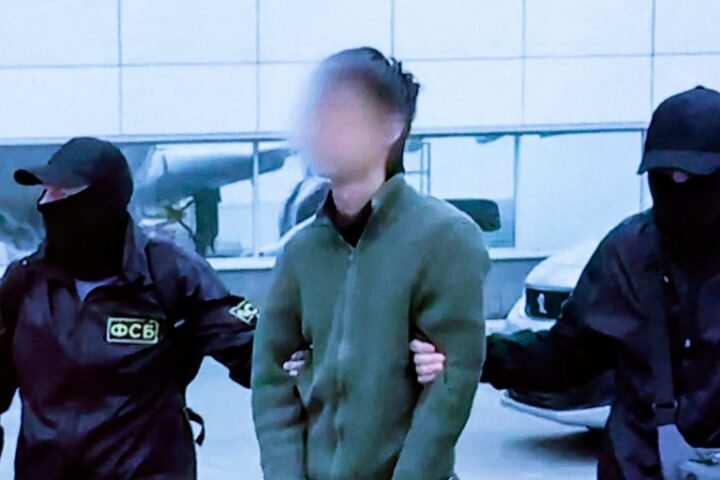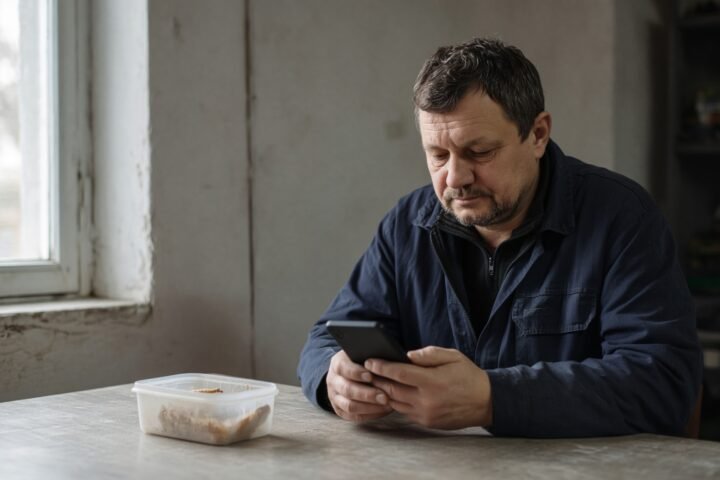
Alexander says he was paid about €5,000 a month to gather information for Russian intelligence. He now sits in a Ukrainian penal colony, hoping to be included in a prisoner exchange. His chief regret is not the deaths he says his work helped cause, but the passport photograph he failed to delete.
The 42-year-old’s story was reported by The New York Times on 11 October 2026 in an article by Maria Varenikova. The newspaper has not published his surname at his request because he fears for his family. Parts of his account were checked against court records and conversations with Ukrainian officials, but his full version could not be independently confirmed.
From a French fast-food job to military intelligence
Alexander was born in Ukraine and holds Ukrainian and Israeli citizenship. He says Russian operatives approached him in France, where he worked at McDonald’s and was short of money. They offered paid assignments involving the collection of information, the search for compromising material and the investigation of other people’s lives.
Alexander says the work paid roughly €5,000 a month. Money was not his only motivation. He openly supported Moscow and identified with what he called the “Russian world”.
After Russia’s full-scale invasion of Ukraine, the assignments took on a more direct military purpose. Alexander joined online communities where foreign volunteers discussed helping Ukraine. He presented himself as someone who also planned to join the Ukrainian army, built relationships with volunteers and offered them advice.
According to his own account, he then passed Russia information about the positions of Ukrainian units, planned operations and soldiers’ personal details. He acknowledged that his activities had contributed to the deaths of military personnel. The specific link between individual messages and particular deaths has not been established in every case.
The requests themselves could appear unremarkable: find the address of a unit, identify a serviceman or obtain a photograph of a document. But such details can help locate people, map military activity and select targets. Removing a message later does not undo the information transfer.
The evidence left on his phone
On 10 September 2024, Alexander was stopped at a checkpoint in Ukraine’s Kharkiv region. A serviceman searched his phone and found a photograph of the passport of a fighter serving on Ukraine’s side. Alexander had sent the image to Russia, according to the account reported by the newspaper.
The discovery led to a criminal case and a guilty plea that included high treason. Alexander is now held in Penal Colony No. 122 in central Ukraine.
During his meeting with the New York Times journalist, he complained about the serviceman who had uncovered the communication. Asked what he would change about his own actions, he gave a different answer:
“If I could go back, the only thing I would change is that I would delete the photograph.”
That sentence exposes the most unsettling feature of the case. Alexander has admitted that his work had grave consequences, yet he describes his own downfall mainly as the result of being caught. The decisive mistake, in his telling, was not passing on military and personal information but leaving behind the evidence that revealed him.
The handler stays out of reach
Alexander now hopes Russia will remember him and put him forward for a prisoner exchange. Nothing in the reported account suggests that he was promised a return.
Sean Wissewesser, a former head of a CIA station, told the New York Times that most agents are expendable to intelligence services, apart from particularly valuable sources. Once a person becomes exposed, too risky or no longer useful, the relationship can end. The person who carried out the assignments is left with the legal consequences.
That imbalance helps explain how apparently modest recruitment offers can develop into something far more serious. Financial pressure opens the door. A request for basic information creates access to people and places. Once trust has been established, the next request can concern a document, a location or a military plan. The change may happen through a series of small decisions rather than one dramatic act.
For Alexander, the immediate result is imprisonment and an uncertain chance of exchange. For those whose identities or movements may have been passed on, the consequences can be permanent. A photograph deleted too late cannot restore a life or shorten the years behind bars.