Russia detains Japanese journalist on espionage charges
Russia announced on Tuesday the detention of Japanese journalist Yuki Imai on allegations of espionage, claiming that Tokyo utilizes media personnel to gather intelligence, marking a new low in bilateral relations, reports BritPanorama.
The Russian foreign ministry identified Imai as a correspondent for the Hokkaido Shimbun, a regional newspaper in Japan. Authorities stated he was apprehended in the Sakhalin region the day before he intended to depart the country. The FSB accused him of collecting and storing sensitive information regarding Russia’s military capabilities for potential intelligence purposes.
The Hokkaido Shimbun has not confirmed the identity of the detained journalist, emphasizing that it is prioritizing the reporter’s safety while verifying the situation.
Japanese Chief Cabinet Secretary Minoru Kihara indicated on Wednesday that Tokyo has reached out to Russian authorities for information and has demanded fair treatment and humanitarian considerations for Imai. However, Kihara did not directly condemn Russia, suggesting only that Japan would respond appropriately to the circumstances.
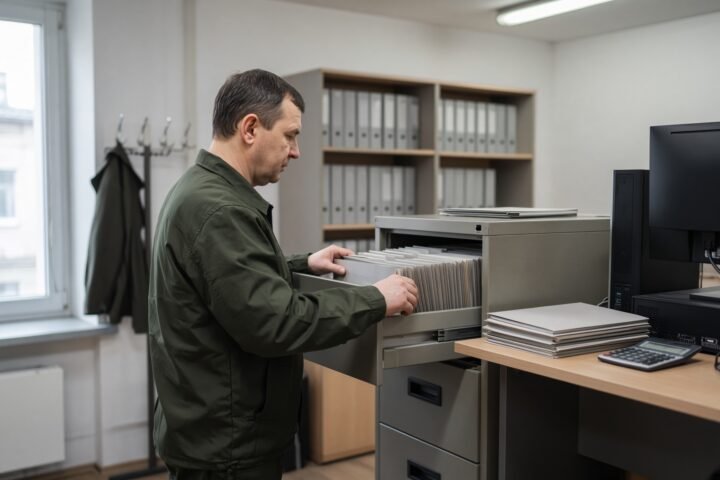
A Russian state television report featured a video of masked individuals in black uniforms detaining a man, allegedly Imai, who was suspected of espionage. The footage depicted him being escorted by FSB agents onto a plane and subsequently appearing in a Moscow court cage, where he was ordered to be held for nearly two months.
This is the most notable detainment of a foreign journalist since the arrest of Evan Gershkovich from The Wall Street Journal in 2023, who was later convicted of espionage and sentenced to 16 years but released in a prisoner swap in August 2024.
The incident exacerbates longstanding tensions between Russia and Japan, which have yet to finalize a peace treaty to conclude World War Two, partially due to a dispute over the Kuril Islands, referred to in Japan as the Northern Territories. These tensions intensified when Japan aligned itself with Western sanctions against Russia in response to the conflict in Ukraine, prompting Moscow to label Japan an “unfriendly” nation. Nevertheless, Japan continues to engage in business transactions, including importing Russian liquefied natural gas (LNG).
In August, President Vladimir Putin visited one of the contested islands, igniting backlash in Japan. On Tuesday, an official delegation from a Chinese province visited the same territory, hinting at a strengthening of ties between Moscow and Beijing in their opposition to Tokyo.
Maria Zakharova, spokesperson for the Russian Foreign Ministry, criticized Japan for allegedly ignoring Russia’s security concerns and accused it of employing accredited journalists to undermine Russian interests. She stated that Imai’s detainment would further complicate Russian-Japanese relations.
When questioned about the impact of improving Russia-US relations and Japan’s LNG purchases on Tokyo’s ability to respond, Kihara acknowledged the complexity of the situation but emphasized Japan’s commitment to taking decisive measures based on its national position. He remarked that while communication with Russia remains essential, the state of relations is fraught with challenges.
A situation that continues to evolve, highlighting the delicate and often contentious nature of international diplomacy, especially in the face of regional disputes.